



Krill oil benefits are increasingly discussed in nutrition research, particularly for heart health, joint comfort, and omega-3 absorption. But which of these claims are actually supported by human clinical trials?
Understanding the difference between measurable improvements and proven clinical benefits can help you make an informed decision.
Krill Oil Benefits: The Science Behind Its Health Claims
1. How Does Krill Oil Affect Blood Omega-3 Levels?
One of the clearest nutritional benefits of krill oil is its ability to increase EPA and DHA levels in the bloodstream.
A 2026 Superba Boost randomised trial involving 72 healthy adults compared Superba Boost® krill oil with fish oil over 12 weeks, using approximately comparable omega-3 doses.
Researchers observed:
- EPA: Blood EPA levels increased by 6.88 mg/dL with krill oil, compared with 4.90 mg/dL with fish oil. This represents a 40.4% greater increase.
- DHA: Blood DHA levels increased by 4.22 mg/dL with krill oil, compared with 2.84 mg/dL with fish oil. This represents a 48.6% greater increase.
Krill oil may increase circulating omega-3 levels more effectively in certain formulations, but higher blood concentrations do not necessarily translate into better long-term health outcomes.
You can also explore how an omega-3 blood test works to understand how EPA and DHA status is assessed.
2. What Does Krill Oil Do To Cholesterol and Triglycerides?
Krill oil has been studied for its potential effects on blood lipids, including cholesterol and triglycerides.
A 2023 systematic review and meta-analysis examined 14 randomised trials involving 1,458 participants.
Researchers reported improvements in:
- Triglycerides: A type of fat circulating in the bloodstream.
- LDL cholesterol: Commonly referred to as bad cholesterol.
- Total cholesterol: The overall amount of cholesterol measured in blood.
Study populations, krill oil doses and treatment durations differed, so the findings cannot be applied automatically to every supplement.
Crucially, the review did not establish reductions in heart attacks, strokes or cardiovascular deaths.
If a lipid test in India shows elevated cholesterol or triglycerides, discuss diet, physical activity and medical treatment with a qualified clinician instead of relying on a krill oil supplement to manage the condition.
For broader context, explore which supplement ingredients have stronger human evidence.
3. Can Krill Oil Improve Skin Hydration and Elasticity?
Skin health is an emerging area of krill oil research.
A 2024 Superba Boost study involving two placebo-controlled trials found that taking 1 g or 2 g of krill oil daily for 12 weeks improved skin hydration, elasticity, and moisture retention compared with placebo.
In the study above, participants taking 1 g of krill oil daily experienced a reduction in skin water loss from 14.47 to 13.83 g/m²/hour after 12 weeks. Although this reduction was statistically significant compared with placebo (p = 0.002), the absolute change was small.
Researchers also observed improvements in skin hydration and elasticity. These findings suggest a measurable effect on moisture retention, but further research is needed to establish whether the changes translate into noticeable improvements in skin appearance or everyday skin health.
Researchers reported improved skin hydration, elasticity, and reduced water loss from the skin. In the 1 g study, average transepidermal water loss decreased from 14.47 to 13.83 g/m²/hour.
| Study | Participants completing | Daily krill oil | Duration |
| Study 1 | 51 healthy adults | 1 g | 12 weeks |
| Study 2 | 50 healthy adults | 2 g | 12 weeks |
These were small, supplier-funded studies with notable dropout.
4. Does Krill Oil Help Joint Pain? The evidence is mixed.
Joint health is among the most frequently discussed potential benefits of krill oil.
A 2024 study published in JAMA, involving 262 adults with knee osteoarthritis, found that 2 g of krill oil daily did not significantly improve knee pain over 24 weeks.
However, a subsequent 2026 meta-analysis of six randomised trials involving 971 participants reported improvements in certain pain and physical-function outcomes, particularly over four weeks.
The bottom line is that krill oil may provide modest joint-related benefits in some populations, but results are inconsistent.
It should not replace recommended osteoarthritis treatments, physiotherapy, or appropriate physical activity.

Is Krill Oil Better Absorbed Than Fish Oil?
Krill oil is often marketed as more bioavailable because some of its omega-3 fatty acids are attached to phospholipids.
This can help your body absorb and use EPA and DHA more efficiently, potentially increasing omega-3 levels in your blood.
The 2026 human trial supports this possibility, showing greater increases in circulating EPA and DHA with krill oil than with fish oil at matched doses.
For a reader choosing between krill oil tablets and fish oil capsules, this distinction is practical: blood concentrations are a nutritional measurement, not proof of fewer heart attacks, less pain or better brain function.
Different brands also provide different amounts of EPA and DHA per serving. Compare the labelled dose, formulation, quality evidence and cost per milligram of EPA+DHA.
Krill Oil Side Effects and Who Should Avoid It?
You should take additional precautions if you:
- Have a crustacean or shellfish allergy: Avoid krill oil because of the potential for allergic reactions.
- Use blood-thinning medicines: Consult your doctor before taking omega-3 supplements.
- Are pregnant or breastfeeding: Discuss the suitability and dosage of marine omega-3 supplements with your healthcare provider.
- Have another relevant medical condition: Seek individual medical advice before supplementing.
High doses used in clinical research should not be treated as general daily recommendations.
For additional guidance, read about supplement side effects and medication interactions.
How to Choose Krill Oil Tablets in India?
When purchasing krill oil tablets or softgels in India, focus on the nutrition label, formulation, and suitability rather than the number of benefits advertised.
The Food Safety and Standards Authority of India (FSSAI) provides guidance on interpreting packaged food labels.
Here are five practical checks:
- Check EPA and DHA content: A 500 mg krill oil capsule does not necessarily contain 500 mg of EPA and DHA. Check the individual and combined amounts per serving.
- Check the FSSAI details: Look for the FSSAI logo, licence number, ingredient list, batch information, and expiry date. A licence number does not independently prove clinical effectiveness.
- Check dietary suitability: Krill oil is animal-derived and unsuitable for vegetarians. Review the non-vegetarian symbol and any fish or crustacean ingredients.
- Compare value: Calculate the cost per 100 mg of EPA+DHA rather than comparing bottle prices alone.
- Review quality and safety information: Look for reliable contaminant-testing information, appropriate storage instructions, and clear product warnings.
For a practical serving-size guide, read how much EPA and DHA you need.
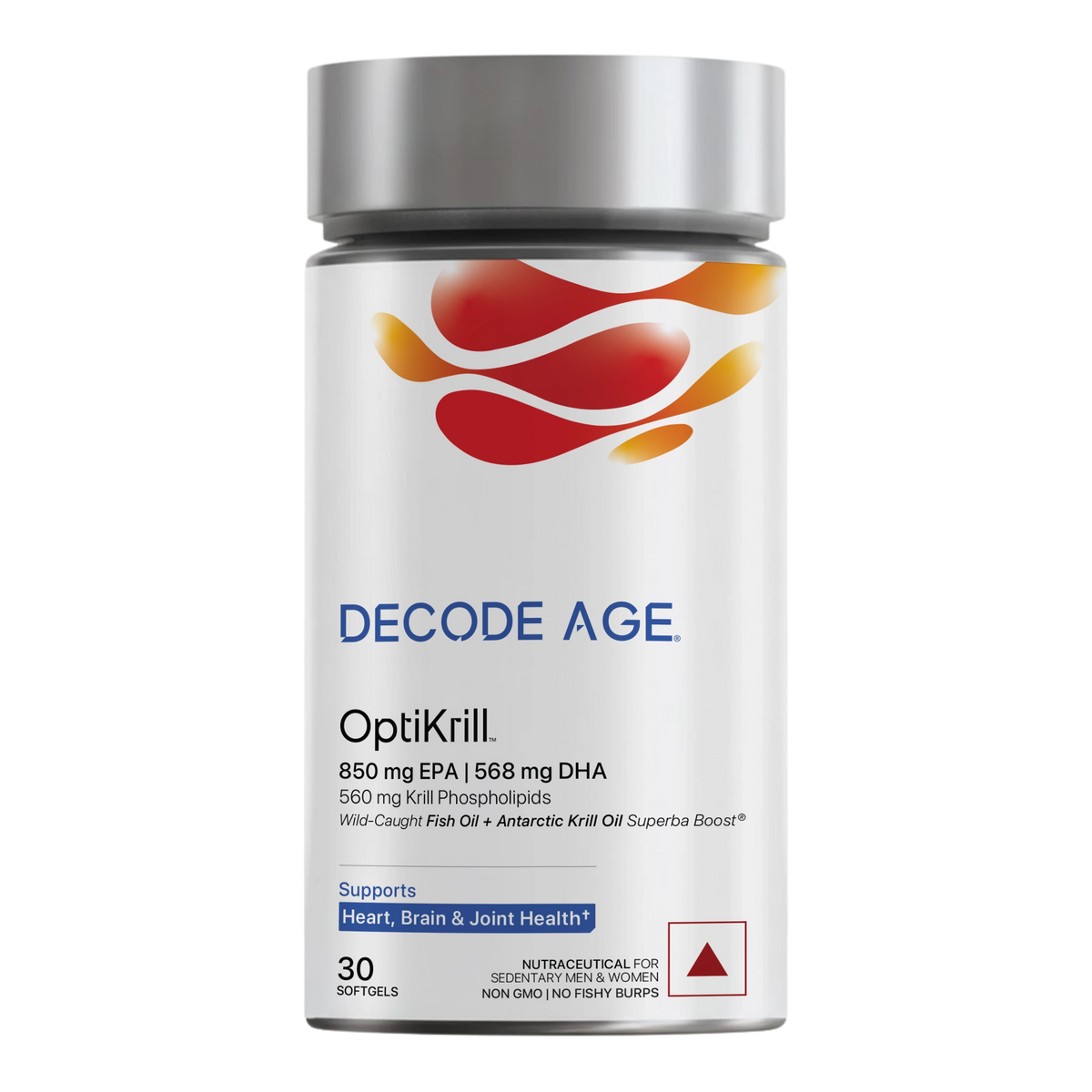
You can also review our OptiKrill™ formulation as an example of a supplement combining krill oil with fish oil.
Krill Oil Evidence: What Matters Beyond the Claims
Krill oil can provide EPA and DHA, raise blood omega-3 levels, and potentially improve certain lipid markers. However, evidence for joint symptoms, inflammation, and PMS is less consistent.
The decision should begin with existing dietary habits. People who regularly consume oily fish may already obtain meaningful amounts of EPA and DHA, while vegetarians may prefer algae-derived alternatives.
Human research also suggests possible improvements in some cholesterol and triglyceride measurements, while early Superba Boost® trials have reported changes in skin hydration and moisture retention.
Those outcomes are promising, but they are not the same as proving prevention of heart disease, reversal of skin ageing, or treatment of inflammation.
Choose evidence over broad benefit lists, and speak with a qualified clinician if you are considering omega-3 supplementation for a medical condition.
FAQs
1. What is krill oil?
Krill oil is a marine-derived supplement extracted from tiny crustaceans. It contains EPA and DHA omega-3 fatty acids, phospholipids, and naturally occurring astaxanthin.
2. What is krill oil good for?
Krill oil provides EPA and DHA and can increase blood omega-3 levels. Human studies also suggest possible improvements in certain cholesterol and triglyceride markers.
3. Who should not take krill oil?
People with crustacean or shellfish allergies should avoid krill oil. Those taking blood-thinning medicines, pregnant or breastfeeding individuals, and people with relevant health conditions should consult a healthcare professional before use.
4. What is the difference between fish oil and krill oil?
Both contain EPA and DHA. Krill oil contains phospholipid-associated omega-3s and astaxanthin, whereas conventional fish oil often provides more EPA and DHA per serving.
5. What is krill oil made of?
Krill oil is extracted from small marine crustaceans, commonly Antarctic krill. It contains marine fats, phospholipids, EPA, DHA, and astaxanthin. Because it is animal-derived, it is not suitable for vegetarians.
6. What is Superba Boost®, and has OptiKrill™ been clinically tested?
Superba Boost® is the branded krill oil ingredient used in OptiKrill™. Human clinical studies have investigated the ingredient for outcomes including omega-3 levels and skin health.
Disclaimer: This article is for educational purposes only and is not intended to diagnose, treat, cure, or prevent any disease. Consult a healthcare professional before using supplements for a medical condition.


Leave a comment
All comments are moderated before being published.
This site is protected by hCaptcha and the hCaptcha Privacy Policy and Terms of Service apply.