



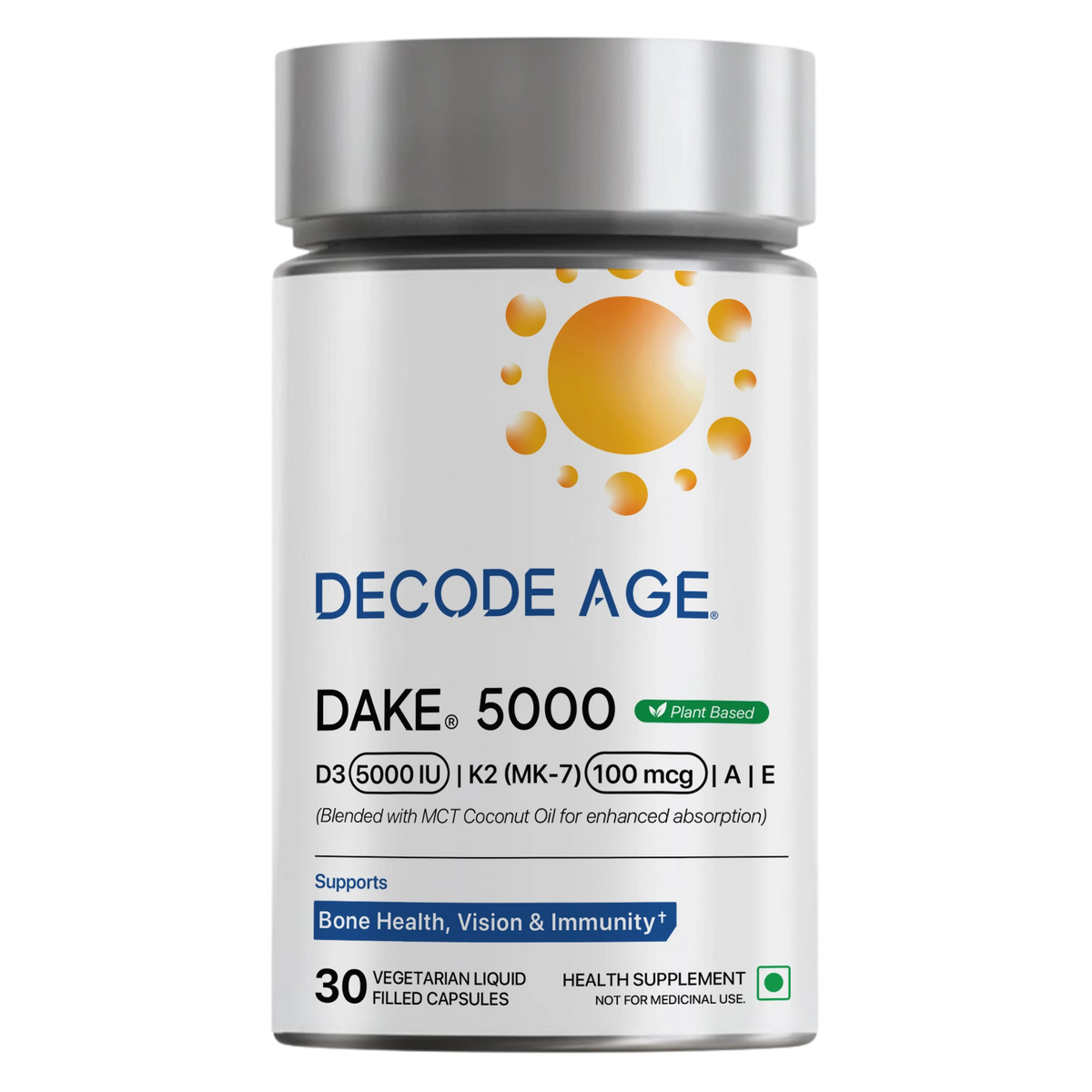
Many Indians are low in more than just vitamin D. If I spend most of my day indoors, eat very low-fat meals, or have gut issues, I may also fall short on vitamins A, K2, and E. That is where a DAKE supplement - a stack of D3, A, K2, and E - can make sense.
The main idea is simple: D3 helps absorb calcium, K2 helps direct it towards bones, vitamin A supports vision and immune function, and vitamin E helps protect cells from oxidative stress. Taken together, they cover a gap that a D3-only product may miss.
What I would keep in mind is this:
- D3 alone may not cover the full fat-soluble vitamin gap
- K2 matters for calcium placement
- A and E add immune, eye, and cell support
- These vitamins absorb better with a meal that contains fat
- Testing and safe dosing still matter
In this piece, I’d focus on the core takeaway: DAKE is not about taking more pills for the sake of it. It is about making fat-soluble vitamin intake more complete, more steady, and easier to follow in daily Indian life.
What the DAKE Stack Is and Why It Matters

DAKE Stack: 4 Fat-Soluble Vitamins and What Each One Does
The DAKE stack brings together four fat-soluble vitamins: D3, A, K2, and E. The point isn’t just that these nutrients sit in the same bottle. It’s that they act like parts of the same team.
What makes DAKE matter is this shared role. These four vitamins do different jobs, but those jobs connect. So instead of treating them as four separate supplements, it makes more sense to look at them as one linked system.
Vitamin D3: The Calcium and Immunity Signal
Vitamin D3, or cholecalciferol, helps tell the gut to absorb calcium and also plays a part in immune regulation. D3 is the main form used to improve vitamin D status. In simple terms, it helps set the process in motion.
Once that happens, the rest of the stack starts to make more sense. K2 helps steer that calcium where it should go, while A and E help support the immune and cellular side of the picture.
Vitamin A, K2, and E: The Missing Partners
Vitamin K2, especially in the MK-7 form, helps move calcium into bones and teeth while helping stop it from building up in soft tissues like arteries [1].
Vitamin A supports vision, immune defence, and D3-linked immune signalling. Vitamin E helps protect cell membranes from oxidative stress [2].
That’s why these nutrients are grouped together. They’re not four random additions. Each one fills a gap the others don’t.
Why These Four Work Better Together
D3 increases calcium availability. K2 helps guide that calcium into bones and teeth. A supports immune signalling alongside D3. E helps limit oxidative stress at the cellular level [1][2].
Seen together, the logic is simple: each vitamin handles a different part of the same biological chain.
That combined action is why the DAKE stack is tied to support for calcium handling, immune defence, and cellular protection.
How DAKE Fits Indian Lifestyles
For many Indian adults, the hard part isn’t knowing nutrition matters. It’s sticking with it. Long hours indoors, uneven meal timings, and mixed food quality can make it tough to get everything your body needs from diet alone. DAKE brings four nutrients into one daily routine, which makes the main issue quite simple: how do you keep intake steady day after day?
Bone, Immune, Metabolic, and Vascular Health in One Stack
Taken together, these nutrients support bone integrity and healthy calcium handling [1]. Vitamin A supports vision and immune defence, while vitamin E helps with antioxidant protection. As a group, they support bone, immune, vascular, and oxidative balance, especially after 30. Instead of handling each need with a separate product, the DAKE stack puts them into one daily plan.
Food and Lifestyle Still Matter
Supplements work best when they sit alongside good food habits, not when they replace them. Take the stack with your largest meal, ideally one that contains fat.
Why a Single Stack Improves Daily Consistency
Handling four separate supplements often means more bottles, more refill dates, and more small decisions every morning. That may not sound like much, but for busy adults, this extra effort can slowly chip away at adherence over time.
One daily stack cuts that friction. It makes the routine easier to follow and easier to repeat. And that’s the point: steady intake matters more than a stop-start approach. The next step is using the stack the right way, because timing and dose matter.
sbb-itb-55c436e
How to Use the DAKE Stack Safely
How to Take Fat-Soluble Vitamins Correctly
Once you’ve chosen the stack, the next part is simple: timing, testing, and staying within safe limits. With DAKE, the main rule is easy to follow: take it with a meal that contains fat. Fat-soluble vitamins absorb better when they’re taken alongside dietary fat [1]. And this isn’t a one-off play. Daily use for 8–12 weeks is usually what moves blood levels in a meaningful way [1][4].
When Testing and Personalisation Make Sense
A baseline vitamin D test is a practical place to begin because it tells you what gap you’re trying to fix [2]. Without that, you’re guessing. One clinical trial found that steady supplementation increased vitamin D levels by 43% over 12 weeks [3]. If you want a more tailored plan, broader biomarker testing can help match supplement doses to your actual nutrient status instead of relying on generic advice [3].
Safety Checks and When to Seek Medical Advice
Fat-soluble vitamins are stored in the body, mainly in the liver, so they can build up over time if you take too much [1]. That’s why dose matters. Standard adult doses are usually conservative and fall within safe limits for healthy adults [2]. With pre-formed vitamin A (retinol), toxicity is more likely when someone takes 20,000 IU or more every day for several months [5].
Some people should speak with a doctor before starting the stack:
- Anyone taking anticoagulant medication should get medical advice before using vitamin K2, because it plays a direct role in blood clotting [2][4].
- People with liver or kidney disease should seek clinical guidance, since both organs help process fat-soluble vitamins [1][4].
- Pregnant or breastfeeding women should avoid high-dose fat-soluble vitamin stacks unless a doctor is supervising, especially because excess preformed vitamin A carries known risks in pregnancy [4][5].
If you’re buying a supplement in India, check for an FSSAI licence number on the label. That’s the main sign the product meets India’s food safety rules [6]. Safe dosing makes steady, long-term use more realistic, and that’s what supports bone, immune, and vascular health.
DAKE as Part of a Broader Longevity Plan
Why Fat-Soluble Vitamin Levels Matter More After 30
Once safety is covered, the next job is maintenance. The aim is simple: keep fat-soluble vitamin levels steady as the body gets older.
After 30, even small nutrient shortfalls can add up faster. That’s where a steady DAKE routine can help. It supports several systems that tend to get more attention with age: calcium placement into bones through K2, calcium uptake and immune support through D3, cell defence against oxidative stress through vitamin E, and ready-to-use vitamin A in retinol form [1][2][5].
This matters because fat-soluble vitamins don’t work well as random add-ons. They’re more useful when intake stays regular and the body has time to maintain stable levels.
The Gut Microbiome and Vitamin K: What the Research Shows
Vitamin K is the clearest link between gut health and DAKE.
Research shows that gut bacteria also play a part in vitamin K status [4]. That makes the vitamin K2 piece of DAKE worth a closer look, especially because the MK-7 form stays in the body longer than K1. In plain terms, that longer half-life may help support steadier vitamin K activity over time [1].
It’s a good reminder that nutrient status isn’t only about what you swallow. Absorption, gut function, and daily consistency all shape the result.
A Practical Takeaway
The most useful takeaway is straightforward: take DAKE with fat and keep the routine steady.
Taking it with a meal that includes healthy fats may help absorption [1]. Think curd with nuts, eggs, paneer, avocado, or a meal cooked with ghee or olive oil. Small habit, big difference.
FAQs
Who should take a DAKE supplement?
A DAKE supplement stack brings together vitamins D3, A, K2 and E to help cover common gaps in fat-soluble vitamins. It’s aimed at people who want support for bone density, immune function, metabolic health and long-term healthy ageing.
This kind of stack may be useful if your daily diet doesn’t give you enough of these micronutrients, or if you prefer a more joined-up approach to wellness instead of taking nutrients in a scattered way. Since these are fat-soluble vitamins, take them with meals to help your body absorb them better.
Can I take DAKE without a vitamin D test?
Yes, but a vitamin D test is the most reliable way to spot a deficiency and match DAKE to your health profile.
If you don’t test, stick to standard daily formulas and be careful not to treat them like a high-dose fix. Fat-soluble vitamins stay in the body, so taking them without knowing your starting level - or going past the daily recommended amount - can lead to nutrient imbalances. For both safety and better results, it’s best to use DAKE with guidance from a healthcare professional.
What should I eat with a DAKE supplement?
Take your DAKE supplement stack with a meal. Vitamins D3, A, K2 and E are fat-soluble, so they’re absorbed better when you have them with some dietary fat.
A meal that includes healthy fats can help your body use these nutrients better. It may also be gentler on the stomach and help cut down on discomfort.


Leave a comment
All comments are moderated before being published.
This site is protected by hCaptcha and the hCaptcha Privacy Policy and Terms of Service apply.