






For over a decade, scientists have known that falling NAD+ levels are closely linked to the ageing process. But why those levels fall, how the body tries to compensate, and what we can do about it, those answers have been evolving rapidly. In January 2025, Professor Shin-ichiro Imai of Washington University published a landmark review in npj Ageing that stitches together years of research into a unified framework he calls NAD World 3.0. This paper doesn't just confirm what longevity enthusiasts have long suspected about NAD+ and NMN; it reveals an entirely new layer of biological sophistication that makes the case for NMN supplementation stronger than ever.
Let's break it down.
What Is NAD+ and Why Does It Matter?
Nicotinamide adenine dinucleotide (NAD+) is a coenzyme found in every living cell of your body. It is involved in over 500 metabolic reactions and is essential for energy production, DNA repair, gene regulation, and the activity of sirtuins, a family of proteins often called the "guardians of the genome." Without adequate NAD+, cells cannot produce energy efficiently, repair damaged DNA, or maintain the epigenetic patterns that keep genes functioning properly.
Here's the problem: NAD+ levels decline significantly as we age. This decline is now widely accepted as one of the central driving forces behind the ageing process. The NAD World 3.0 paper traces the evolution of this understanding across three iterations of the framework, each building on discoveries.
The NAD World: A Brief History
NAD World 1.0 (2009)
The original concept proposed that two key molecules: SIRT1 (a sirtuin enzyme) and NAMPT (the rate-limiting enzyme in NAD+ biosynthesis), work together to regulate a body-wide network connecting NAD+ metabolism, circadian rhythm, and ageing. Its boldest prediction was that the systemic decline in NAD+ levels is what drives ageing. Fifteen years on, this prediction has been validated across hundreds of studies.
NAD World 2.0 (2016)
The updated framework identified three key tissues in the ageing network: the hypothalamus as the "control centre," skeletal muscle as a "mediator," and adipose (fat) tissue as a "modulator." It also predicted that a molecule called eNAMPT, secreted from fat tissue, plays a crucial role in communication between these organs.
NAD World 3.0 (2025)
The latest version introduces two game-changing elements: the Slc12a8 NMN transporter and eNAMPT-containing extracellular vesicles, both of which form multi-layered feedback loops that the body uses to regulate NAD+ levels across tissues. It also elevates the small intestine to a fourth key tissue, a "signal generator" for systemic NAD+ homeostasis.
Why Do NAD+ Levels Fall With Age? The Inflammageing Connection
One of the most important contributions of the NAD World 3.0 framework is its clear explanation of why NAD+ levels decline. The answer lies in a phenomenon called inflammageing the chronic, low-grade inflammation that accumulates as we get older.
Inflammageing is driven by two main sources. First, immune cells such as macrophages, microglia, and T lymphocytes become chronically activated over time, secreting inflammatory molecules like IL-1β, IL-6, and TNF-α. Second, senescent cells, damaged cells that stop dividing but refuse to die, accumulate in tissues and release their own cocktail of inflammatory signals, known as the senescence-associated secretory phenotype (SASP).
These inflammatory signals trigger a double blow to NAD+ levels. On one side, they reduce the production of NAD+ by decreasing the expression of NAMPT, the key enzyme that synthesises NAD+. On the other hand, they increase the consumption of NAD+ by upregulating CD38, a major NAD+-degrading enzyme. The result is a vicious cycle: lower NAD+ means less sirtuin activity, which means less suppression of inflammation, which drives NAD+ levels even lower.
What Happens When NAD+ Declines: Two Critical Consequences
The NAD World 3.0 framework highlights two major downstream effects of falling NAD+ levels.
1. Mitochondrial Dysfunction
As NAD+ drops, the NAD+/NADH ratio shifts, slowing down oxidative phosphorylation, the primary process by which mitochondria generate ATP (cellular energy). Studies in the human brain using advanced MRI spectroscopy have shown a gradual decline in both NAD+ levels and the NAD+/NADH ratio during healthy ageing. Similar patterns have been observed in skeletal muscle and plasma. There's also a specific nuclear-mitochondrial communication pathway, mediated by SIRT1 and a transcription factor called HIF-1α, that breaks down when nuclear NAD+ levels fall. NMN administration has been shown to restore this communication and rescue the expression of mitochondrial energy-production genes in animal models.
2. Epigenetic Erosion
NAD+ decline also drives global changes to the epigenome, the chemical tags on DNA and proteins that control which genes are active. SIRT1 and SIRT6, both of which depend on NAD+, play critical roles in maintaining these epigenetic patterns. When NAD+ drops, SIRT6 can no longer suppress the reactivation of ancient retrotransposon sequences (LINE-1 elements) embedded in our DNA. These reactivated elements trigger inflammatory interferon responses, further fuelling the inflammageing cycle. Recent research has proposed that epigenetic erosion, driven in part by DNA damage and NAD+ depletion, may be a root cause of mammalian ageing.
The NMN Transporter Discovery
Perhaps the most exciting element of NAD World 3.0 is the definitive characterisation of Slc12a8, a dedicated transporter that moves NMN directly into cells. This discovery addresses a long-standing debate in the field about how NMN actually works when taken as a supplement.
Here's what the research shows:
- NMN transport is remarkably fast. When NMN is taken orally, it enters the bloodstream within 5–10 minutes. This speed is critical because it means NMN can be absorbed intact before it degrades into nicotinamide in the gut.
- The transport is Slc12a8-dependent. In cells lacking this transporter, NMN uptake drops by approximately 90%. The transporter is highly specific to NMN and does not transport nicotinamide riboside (NR) or other related molecules.
- Slc12a8 is upregulated when NAD+ drops. This is a built-in feedback mechanism; when cells sense falling NAD+ levels, they increase their capacity to absorb NMN. However, this compensatory response weakens with age, which may partly explain why older individuals experience more pronounced declines in NAD+.
- NMN is not converted to NR during rapid transport. Using a newly developed double isotope-mediated mass spectrometry method (dimeLC-MS/MS), researchers confirmed that there is no significant conversion of NMN to NR within the rapid transport window. This settles an important debate and establishes that NMN enters cells as an intact molecule.
NMN vs. NR: A Pharmacokinetic Difference
The paper also highlights a significant pharmacokinetic distinction between NMN and NR. While NMN transport happens in minutes, NR transport appears to operate on an hourly timescale. Orally administered NR is largely degraded to nicotinamide in the gut before absorption, whereas NMN can be transported intact thanks to its rapid Slc12a8-mediated uptake. This is particularly relevant because high concentrations of nicotinamide can actually inhibit sirtuin activity, potentially counteracting the very benefits one is trying to achieve.
The Small Intestine: A New Player in the NAD+ Network
NAD World 3.0 designates the small intestine as the fourth key tissue in the body's NAD+ regulatory network, functioning as a "signal generator." Here's why this matters:
The jejunum and ileum (parts of the small intestine) are where NMN is primarily absorbed via Slc12a8. NMN exists naturally in the gut lumen, originating from food sources and potentially from gut microbiome activity. One compelling study showed that transferring healthy gut bacteria to diseased mice significantly increased their serum NMN levels, suggesting that a healthy microbiome may contribute to NMN production.
This positions the gut as more than just a passive absorption site; it's an active regulator of how much NMN enters systemic circulation, adding a fascinating new dimension to the gut-longevity connection.
eNAMPT: The Hypothalamus-Fat Tissue Communication Highway
The second major pillar of NAD World 3.0 is eNAMPT (extracellular NAMPT), an enzyme secreted primarily from adipose tissue into the bloodstream. Unlike intracellular NAMPT, which produces NMN inside cells, eNAMPT circulates in the blood, often packaged inside tiny extracellular vesicles, and produces NMN systemically.
Research has demonstrated that:
- eNAMPT levels in the blood decline with age in both mice and humans.
- Supplementing aged mice with eNAMPT-containing extracellular vesicles extended their lifespan and improved their physical activity, sleep quality, and metabolic function.
- eNAMPT drives circadian rhythms in locomotor activity and energy expenditure, connecting the NAD+ network to the body's internal clock.
- A specific group of neurons in the hypothalamus (DMH^Ppp1r17^ neurons) regulate ageing and lifespan through hypothalamic-adipose inter-tissue communication involving eNAMPT.
This creates a fascinating feedback loop: adipose tissue sends eNAMPT to the hypothalamus, which uses it to maintain NAD+ levels and regulate whole-body metabolism and ageing. When this communication breaks down, as it does with age, the entire system deteriorates.
NMN and Age-Related Muscle Loss: New Hypothalamic Evidence
One of the most clinically relevant findings discussed in NAD World 3.0 concerns sarcopenia, the progressive loss of muscle mass and strength that affects millions of older adults. Researchers found that Slc12a8 is expressed in the lateral hypothalamus (LH), and when its expression was reduced in this brain region, mice showed decreased energy expenditure, reduced endurance, and significant loss of fast-twitch muscle mass.
Strikingly, the molecular defects observed in these mice mirrored those seen in naturally aged animals. And when Slc12a8 was overexpressed in the lateral hypothalamus of old mice, it significantly improved their energy expenditure, endurance, muscle mass, and strength, effectively ameliorating age-associated sarcopenia and frailty.
This finding suggests that NMN may help combat muscle loss not only by acting directly on muscle tissue but also by supporting a critical brain-muscle communication pathway.
What This Means for You
The NAD World 3.0 framework provides the most comprehensive scientific rationale yet for NMN supplementation as an anti-ageing strategy. Here's what to keep in mind:
- Start early, but it's never too late. NAD+ decline begins well before visible signs of ageing appear. Early supplementation may help maintain the feedback loops described in NAD World 3.0, while later supplementation can still activate compensatory mechanisms like Slc12a8 upregulation.
- Timing matters. Given that NMN transport via Slc12a8 occurs within minutes and that NAD+ metabolism is linked to circadian rhythms, taking NMN in the morning aligns with the body's natural metabolic patterns. Avoid taking it late in the day.
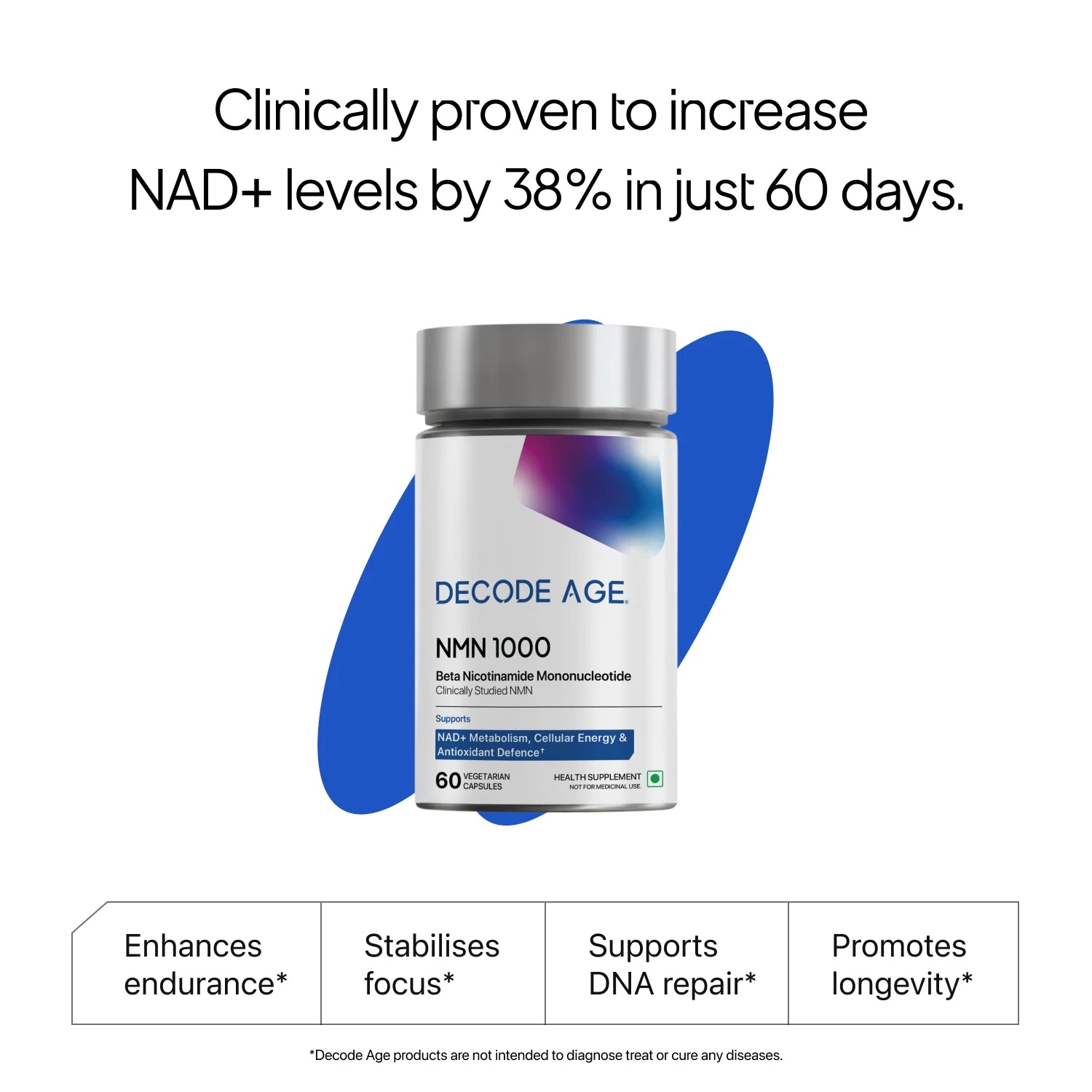
- Quality and form matter. The β-form of NMN is the bioavailable form that your body can actually use. Look for supplements that specify this, such as Decode Age's β-NMN, which is clinically validated to boost NAD+ levels.
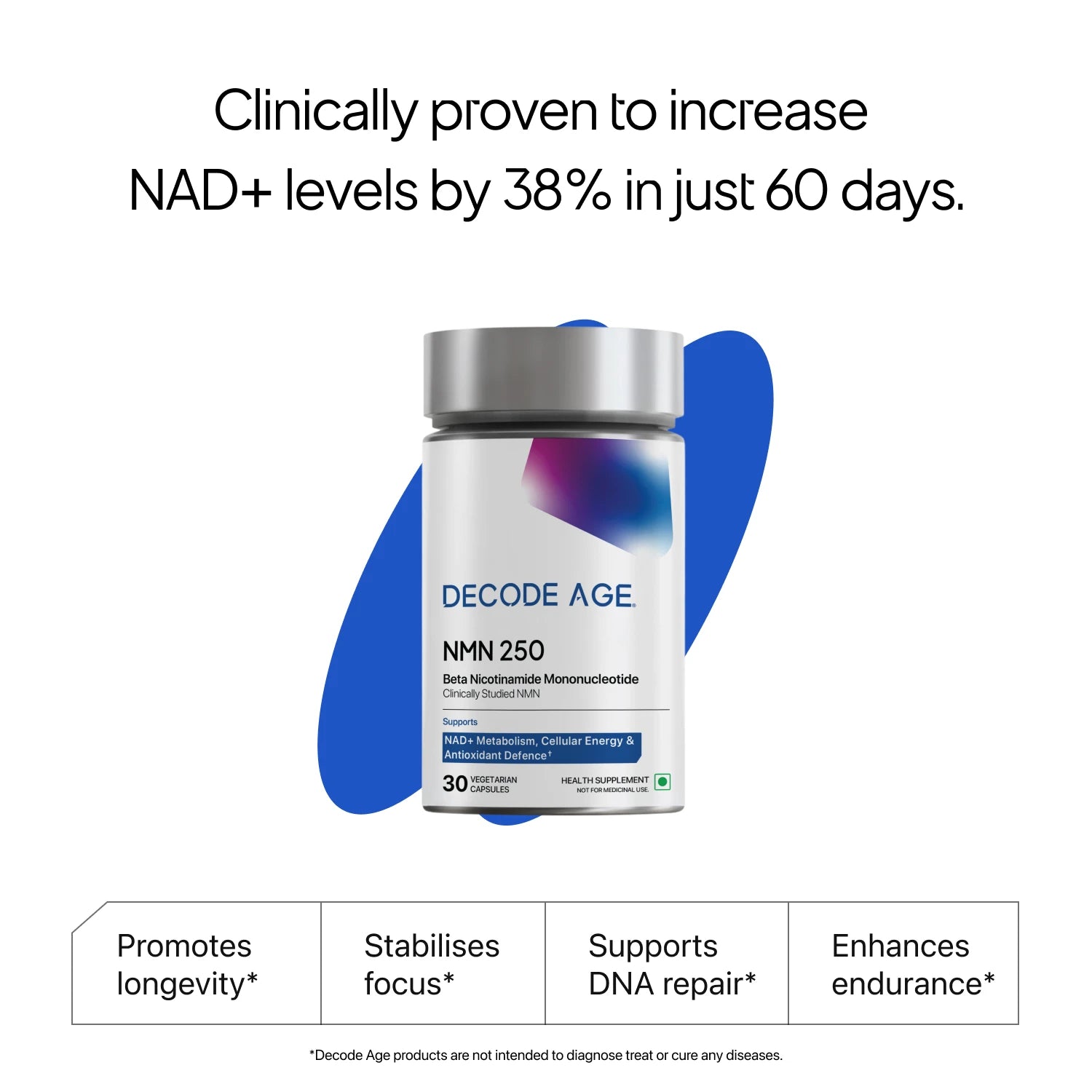
- Dose thoughtfully. The research cautions that very high doses of NMN in older individuals could produce excess nicotinamide (a degradation product), which at high concentrations may inhibit sirtuins. A graduated approach, starting at 250 mg and increasing to 500–1000 mg based on tolerance, is a sensible strategy.
- Support your gut health. Given that the small intestine is now recognised as a key regulatory tissue in the NAD+ network, maintaining a healthy gut microbiome through diet, prebiotics, and probiotics may enhance the effectiveness of NMN supplementation.
- Address inflammation. Since inflammaging is the upstream driver of NAD+ decline, combining NMN with anti-inflammatory strategies, regular exercise, stress management, adequate sleep, and anti-inflammatory nutrients like trans-resveratrol and spermidine may produce synergistic benefits.
The Bigger Picture
What makes NAD World 3.0 so compelling is its integrative vision. Ageing isn't driven by a single broken pathway; it's a systemic unravelling of interconnected feedback loops spanning the gut, brain, fat tissue, and muscles. NAD+ sits at the centre of this network, functioning as both a metabolic fuel and a signalling molecule that coordinates tissue communication across the entire body.
NMN, as a direct precursor to NAD+ with its own dedicated transporter, is uniquely positioned to intervene in this process. The science is no longer asking whether NAD+ decline drives ageing; that question has been answered. The frontier now is understanding how to optimally restore and maintain NAD+ levels throughout life.
Disclaimer: This blog is for informational purposes only and is not intended to diagnose, treat, cure, or prevent any disease. Always consult your healthcare practitioner before starting any new supplement regimen.


Leave a comment
All comments are moderated before being published.
This site is protected by hCaptcha and the hCaptcha Privacy Policy and Terms of Service apply.