



An omega 3 test measures fatty acids in your blood instead of relying only on what you remember eating. The results can help you understand your EPA and DHA status.
The credits and views mentioned in this short belong to the creator. Decode Age doesn't claim it to be our own.
What Does an Omega 3 Test Measure?
- EPA (eicosapentaenoic acid): Found mainly in oily fish, seafood, and some omega-3 supplements.
- DHA (docosahexaenoic acid): A component of cell membranes, particularly in the brain and retina.
- ALA (alpha-linolenic acid): Found in flaxseeds, chia seeds, and walnuts. Your body converts only a limited amount into EPA and DHA.
Most tests focused on long-chain omega-3 status measure EPA and DHA, not your total fat intake. According to the NIH Office of Dietary Supplements, red-blood-cell fatty acids reflect intake over a longer period than plasma measurements.
To understand why these fatty acids matter and how much you may need, explore our guide to omega-3 dosage, EPA and DHA.
Why Might You Get Your Omega 3 Levels Checked?
- If you follow a vegetarian or vegan diet and rely mainly on plant sources of omega-3.
- Have changed your diet or supplement routine and want to check whether your blood levels have changed.
- Have been advised by a clinician to assess your fatty-acid status.
A blood result cannot predict your individual risk of a heart attack. It adds nutritional context, not a replacement for cholesterol, blood pressure, or other recommended checks.
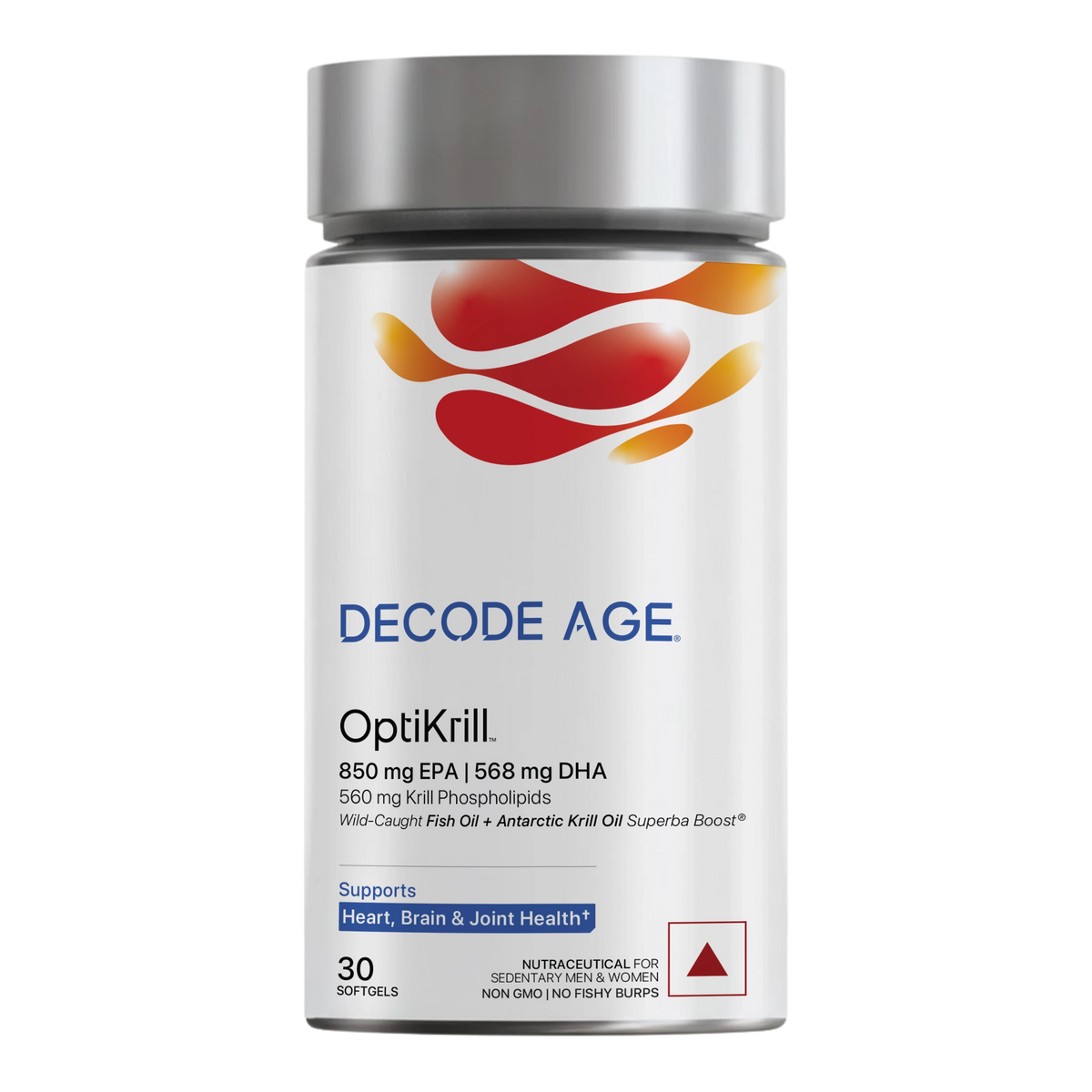
Shop Now: OptiKrill Krill Oil + Fish Oil Omega-3
How Does an Omega 3 Blood Test Work?
Your omega 3 blood test may involve a small blood sample from a vein or a finger-prick kit. The method matters because different samples tell slightly different stories.
| Test type | What it tells you | What to check |
| Red blood cell fatty acid test | EPA and DHA incorporated into red blood cells over roughly three to four months | Does the report provide the recognised red-cell index? |
| Plasma or serum test | Fatty-acid levels that can change more with recent meals | Do not compare its percentage directly with a red-cell result |
| Dried blood spot | A convenient finger-prick sample; some methods estimate red-cell values | Ask whether the result is measured or converted to a red-cell-equivalent value |
If your report gives EPA and DHA in mg/L rather than a percentage, do not treat that number as a red-cell index. If you plan to repeat the test, using the same method is helpful.
Omega-3 Index: What Does Your Number Mean?
The Omega-3 Index is EPA plus DHA expressed as a percentage of the total fatty acids measured in red-blood-cell membranes.
Researchers commonly discuss these proposed ranges:
| Result | How to understand it |
| Below 4% | Lower EPA and DHA status in the research framework |
| 4% to 8% | Middle range |
| Above 8% | A frequently proposed desirable range |
These bands come from research associations, including a 2024 global omega-3 status analysis.
Omega-6 to Omega-3 Ratio: Is It Worth Tracking?
The Omega-6 to Omega-3 Ratio compares the amounts of these two groups of fats in a sample.
- Omega-6 fats are essential too. They are not automatically harmful.
- The ratio can change because omega-3 levels rise, omega-6 levels fall, or both.
- Knowing your actual EPA and DHA status is generally more useful than trying to eliminate omega-6 foods.
A 2024 population study found associations between higher blood ratios and mortality.
How Can You Obtain the Test in India?
Look for laboratories that clearly state what they measure, rather than booking the first package labelled 'omega-3'.
- Choose the goal: Do you want a red-cell EPA+DHA percentage or a broader omega-3/omega-6 profile?
- Check the sample and method: Ask whether the provider measures red cells, whole blood, or plasma, and whether the report includes a calculated index.
- Confirm preparation: Fasting requirements differ. Follow the specific lab's instructions rather than assuming you must fast.
- Ask about the report: Check turnaround time, reference information, collection options, and whether the laboratory can explain the result.
What Should You Do After Getting Your Results?
- Review your meals: Include fatty fish such as sardines or mackerel if you eat seafood. Flaxseeds, chia seeds, and walnuts provide ALA, while algae-derived oil can supply DHA and sometimes EPA without fish. Explore our balanced eating guide.
- If considering supplements: Compare the combined EPA+DHA per serving, not the total oil weight. Our fish oil versus krill oil comparison explains the difference. You can also check the EPA and DHA amounts on the Decode Age OptiKrill product page if it suits your dietary needs.
- Avoid self-prescribing high doses: Check with a clinician first if you take blood-thinning medicines, have a history of atrial fibrillation, or are pregnant. Read more about supplement safety and interactions.
- Retest when it will be meaningful: After a sustained change, around three to four months is a commonly used interval for comparing red-cell status. A 2026 randomised trial found that DHA supplementation increased the measured index over 12 weeks, although that biomarker change does not prove long-term health benefits.
A Useful Number, Not Your Whole Health Story
Testing can replace some of the guesswork around your omega-3 intake, especially if you don't eat fish or want to see whether a sustained dietary change has affected your EPA and DHA status.
Use the result as one piece of information, alongside a balanced diet, your medical history, and advice suited to you.
FAQs
Is omega-3 testing necessary for everyone?
No. Most people do not need routine omega-3 screening. It may be useful for a specific nutritional question or when a healthcare professional recommends it.
Is fasting required before testing?
Not always. Requirements vary by laboratory and panel. Check the instructions from the provider you book with.
Will a regular cholesterol test show my EPA and DHA levels?
No. A standard lipid profile usually measures cholesterol and triglycerides, not individual omega-3 fatty acids.
How soon can I test again after changing my diet?
For a red-blood-cell-based result, roughly three to four months allows time for a more meaningful comparison. Follow your clinician's advice if your situation requires a different interval.

Leave a comment
All comments are moderated before being published.
This site is protected by hCaptcha and the hCaptcha Privacy Policy and Terms of Service apply.