



You may know how much fish you eat or how many omega-3 capsules you take. But do you know how much EPA and DHA actually reach your red blood cells?
An omega-3 test helps answer that question.
What Is an Omega-3 Test and What Does It Measure?
An omega-3 test is a blood test that measures how much of two long-chain omega-3 fatty acids, EPA (eicosapentaenoic acid) and DHA (docosahexaenoic acid), your body is carrying.
Most tests report EPA and DHA as a percentage of the total fatty acids in a blood component. The best-known version is the Omega-3 Index, which looks at red blood cell membranes.
Red blood cells live for around three to four months, so the result reflects your longer-term intake rather than what you ate in the last few days.

What Is the Omega-3 Index?
The Omega-3 Index is the combined amount of EPA (eicosapentaenoic acid) and DHA (docosahexaenoic acid), expressed as a percentage of all fatty acids in red blood cell membranes.
Both are long-chain omega-3 fatty acids, but they have distinct roles:
- EPA: Found primarily in oily fish and marine oils; involved in producing signalling molecules that regulate inflammatory responses.
- DHA: Found in seafood and algal oils; an important structural fat in the brain, retina, and other cell membranes.
Example: If your result is 6%, EPA and DHA together make up 6% of the fatty acids measured in your red-cell membranes. It does not mean 6% of your blood consists of omega-3.
The NIH Office of Dietary Supplements explains that red-cell fatty acids reflect intake over the previous 120 days.
Omega-3 Index Range: What Do 4%, 6% and 8% Mean?
The most widely discussed interpretation bands come from Harris and von Schacky's 2004 research.
| Result | Interpretation | Meaning |
| Below 4% | Low | Review how much oily fish or omega-3 supplement you take. A low number is a prompt to check your intake, not a diagnosis of illness. |
| 4% to 8% | Intermediate | There’s room to improve. Consider eating more oily fish or discussing supplements with your doctor. |
| 8% to 12% | Desirable | Some observational studies link this range with more favourable health outcomes. Keep up your current intake. |
What if your result is 6%? You are in the intermediate group. That gives you a baseline to compare with future results, not a medical diagnosis or a reason to self-prescribe high doses.
A higher result does not guarantee disease prevention, and 8% is not a proven optimal target for every individual.
For an introduction to choosing a laboratory test, read the omega-3 index test guide.
What Do Blood EPA and DHA Measurements Tell You About Health?
Your Omega-3 Index reflects your longer-term EPA and DHA status, not just what you ate in the last few days. Because of this, researchers have studied whether people with higher levels of these omega-3s in their blood tend to have better health outcomes.
What the research has found
- Lower risk of death: A 2021 pooled analysis of 17 long-term studies, covering 42,466 participants, found that people with the highest omega-3 levels had a 15-18% lower risk of dying from any cause than those with the lowest levels. This was after adjusting for other factors that could affect the results.
- Low levels are common worldwide: A 2024 analysis of 328 studies found that average omega-3 levels are low or very low in many countries, including India.
In simple terms, the research does not show that raising your Omega-3 Index will prevent disease or help you live longer. A change in a blood marker and a change in real health outcomes are two separate questions.
If you’re thinking about changing your diet or starting a supplement based on your result, it’s a good idea to talk with your doctor first.
How Does an Omega-3 Test Work?
An omega-3 test measures the fatty acids in a small blood sample. The sample can be taken from a vein or with a finger-prick, depending on the laboratory. What matters most is which part of the blood the lab analyses, because that changes what your result means.
The three main methods:
- Red blood cell analysis: This reports EPA and DHA as a percentage of the fatty acids in your red blood cell membranes. Because red blood cells last for months, it reflects your longer-term status. This is the method behind the Omega-3 Index.
- Plasma or serum analysis: This measures the fatty acids in the liquid part of your blood. It is more affected by recent meals and intake, so a fish dinner the night before can influence the result.
- Dried blood spot: This uses a finger-prick sample dried on a card. Some providers use it to estimate a red-cell-equivalent index rather than measuring isolated red cells, so it is worth checking how your provider calculates the number.
What to check on your report
- Which blood component was analysed (red cells, plasma, serum, or dried blood spot)
- Whether the result is a percentage or a concentration such as mg/L
- Whether the index is measured directly or estimated
What can you do with your result?
If your number is lower than you'd like, there are sensible, low-risk steps to consider:
-
Choose oily fish you can find locally: Sardines, mackerel, and hilsa are commonly eaten in parts of India, and imported salmon is another option. A couple of servings a week is a common starting point.
- If you are vegetarian, know the limits of plant sources: Flaxseed (alsi), chia, and walnuts (akhrot) contain ALA, a different omega-3. The body converts only a small amount of ALA into EPA and DHA, so these foods are healthy but may not raise your index much on their own. Our balanced diet guide provides a wider nutritional perspective.
- Consider a supplement if diet falls short: Algae-based options suit vegetarians and vegans, while fish oil suits those who eat fish. Check the actual EPA and DHA content on the label rather than the total oil amount.
- Talk to your doctor first: This matters especially if you take blood-thinning medication, have a medical condition, are pregnant, or are unsure what dose suits you.
- Retest after a few months: The index changes slowly, so retest after about three to four months of consistent changes, using the same lab and method each time.
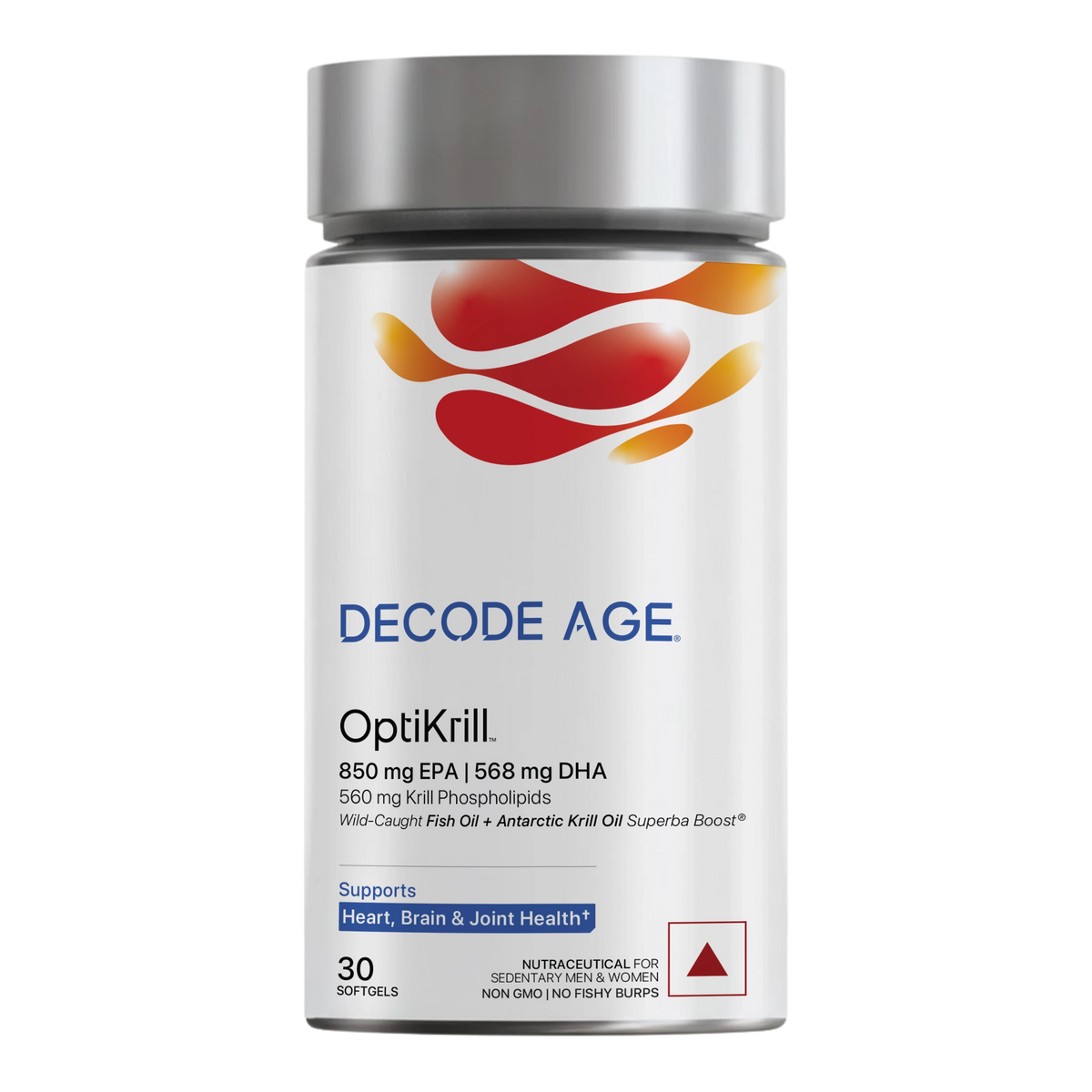
Our EPA and DHA dosage guide explains what to check, while its krill oil research guide discusses the evidence for marine formulations.
Omega-3 Testing in India: What Should You Check?
Before booking, ask:
- Does the laboratory report a measured Omega-3 Index or an estimate calculated from another sample type?
- Is the result expressed as a percentage, and what fatty acids form the denominator?
- Does the laboratory require fasting or special sample preparation?
- Can you repeat the same test using the same method in a few months?
Testing is optional for most healthy adults unless there is a specific nutritional or clinical question.
Your Omega-3 Result Is a Starting Point, Not a Verdict
- The Omega-3 Test is a simple way to see how much EPA and DHA your body has been carrying over recent months.
- Results below 4% are considered low, 4% to below 8% intermediate, and 8% to 12% the proposed desirable range.
- Studies link higher levels with lower mortality, and low status is common in India. But those links are observational, so they don't prove that raising your number will change your health.
- Use your result as a starting point for a conversation with your doctor, not as a verdict. Small, steady changes to your diet are usually the most practical place to begin.
FAQs
1. What Is the Omega-3 Index?
It is EPA plus DHA as a percentage of the fatty acids measured in your red blood cell membranes. It reflects longer-term omega-3 status rather than a single meal.
2. What Are the Proposed Target Ranges?
Researchers commonly describe below 4% as low, 4% to below 8% as intermediate, and 8–12% as desirable. These are proposed ranges, not universally accepted diagnostic thresholds or personalised treatment goals.
3. How Is the Omega-3 Index Measured?
A laboratory measures red-cell fatty acids directly or, with certain finger-prick methods, estimates the equivalent result from dried blood. Check the sample type and method on your report.
4. How Long Does It Take to Change Omega-3 Levels?
Changes develop over weeks and months. Around three to four months of consistent dietary intake is a practical interval before retesting red-cell status; the response varies by person.
Disclaimer: This article is for educational purposes and does not replace medical advice. Supplements are not intended to diagnose, treat, cure, or prevent disease.


Leave a comment
All comments are moderated before being published.
This site is protected by hCaptcha and the hCaptcha Privacy Policy and Terms of Service apply.