







Getting a good night’s sleep can feel like a luxury in today’s fast-paced world. Whether you struggle to fall asleep, wake up during the night, or simply don’t feel rested in the morning, the solution may lie in two often-overlooked minerals—magnesium and zinc.
These essential nutrients do far more than support general health—they play a powerful role in regulating sleep patterns, calming the nervous system, and promoting deep, restorative rest. Backed by science and recommended by health experts, magnesium and zinc have emerged as natural allies in the quest for better sleep.
In this ultimate guide, we’ll explore how these minerals work, the best ways to include them in your routine, and what the research really says about their effectiveness. Whether you’re exploring biohacking supplements in India or simply looking for natural sleep solutions, this guide will help you optimise your routine.
Magnesium's Effects on Sleep
How Magnesium Supports Sleep
Magnesium plays a key role in promoting restful sleep by activating the parasympathetic nervous system and influencing neurotransmitters that regulate sleep. This essential mineral works through various cellular processes to support the body's natural sleep-wake cycle.
"Magnesium helps regulate gamma aminobutyric acid, also known as GABA, which calms brain activity, making it easier to fall asleep."- Laura Iu, CDN, Registered Dietitian and Owner of Laura Iu Nutrition
Magnesium helps the body prepare for sleep in several ways:
- Melatonin Production: Aids in converting tryptophan into melatonin, a hormone critical for sleep signaling.
- GABA Activation: Boosts the function of GABA receptors, which help the brain transition into a relaxed state, making it easier to fall asleep.
- Muscle Relaxation: It helps regulate the movement of calcium in and out of muscle cells, promoting relaxation and preventing muscle cramps or tension. By relaxing muscles, magnesium contributes to an overall sense of calm, which is crucial for falling asleep.
These biological processes highlight why magnesium, especially from a high-quality magnesium blend supplement, is often linked to better sleep quality and duration.
Research on Magnesium and Sleep
Scientific studies back up magnesium's role in improving sleep. A 2021 review of three studies found that the best magnesium supplements can significantly improve sleep quality in older adults. [1].
In studies involving elderly individuals with primary insomnia, magnesium supplementation improved:
- Total sleep duration
- Sleep efficiency
- Time needed to fall asleep
- Fewer early morning awakenings
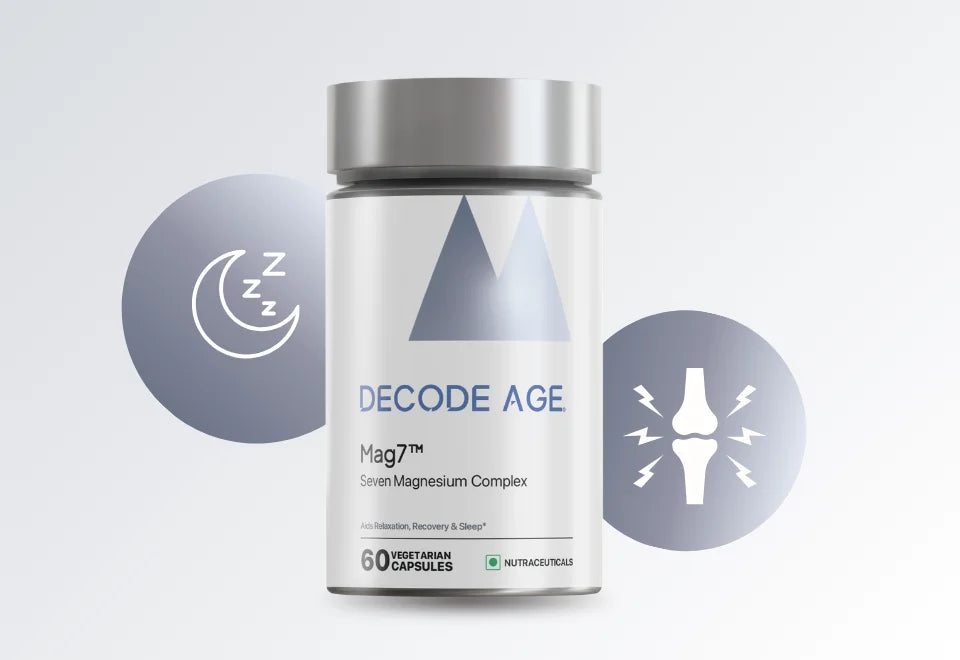
A magnesium deficiency can disrupt sleep patterns and reduce the quality of deep sleep [2], making it essential to maintain adequate intake through diet or targeted options like Decode Age MAG7.
Zinc and Sleep Quality
How Zinc Supports Sleep
Zinc plays a key role in regulating sleep through various biological processes. Here’s how zinc contributes to better sleep:
- Balances neurotransmitters: It helps regulate glutamate and GABA activity, which are crucial for brain relaxation.
- Boosts melatonin production: Zinc interacts with the pineal gland to support melatonin, the hormone that governs sleep cycles.
- Reduces oxidative stress: Its antioxidant properties can alleviate oxidative stress, a factor often linked to insomnia.
During deep non-REM sleep, higher zinc levels are associated with growth hormone release, further supporting restorative sleep.
Research Linking Zinc to Sleep Quality
Studies consistently show a connection between zinc levels and sleep quality. Individuals who sleep 7–9 hours tend to have higher serum zinc levels compared to those with irregular sleep patterns.
Clinical studies have shown that zinc supplementation improves sleep quality across different populations, reinforcing its importance in a balanced sleep-support strategy.
Magnesium and Zinc Together
Sleep Benefits
Magnesium and zinc work together to improve sleep by enhancing each other's absorption. Research involving older adults with insomnia showed that a combination of magnesium, zinc, and melatonin significantly improved sleep quality, with 59% becoming "good sleepers" versus 14% in the placebo group.
This synergy is why many modern biohacking supplements in India combine these nutrients for optimal results.
Best Use Guidelines
Daily Dosages for Adults:
| Gender | Magnesium | Zinc |
|---|---|---|
| Men | 300 mg | 9.5 mg |
| Women | 270 mg | 7.0 mg |
Timing and Tips:
- Take supplements with food about an hour before bedtime.
- Avoid taking calcium supplements at the same time as magnesium and zinc.
Food Sources:
- Magnesium-rich options: spinach, nuts, beans, whole grains.
- Zinc-rich options: red meat, poultry, shellfish, nuts.
Usage and Sources
Let’s dive into how to use magnesium and zinc effectively for improving sleep, including recommended dosages and where to find these nutrients.
Daily Amount Guidelines
The amount of magnesium and zinc you need depends on factors like age, gender, and life stage. Here’s a quick guide to the Recommended Dietary Allowance (RDA) for adults:
| Age & Life Stage | Magnesium RDA | Zinc RDA |
|---|---|---|
| Adult Men (19+) | 420 mg | 11 mg |
| Adult Women (19+) | 320 mg | 8 mg |
| Pregnant Women | 350–400 mg | 11 mg |
| Breastfeeding Women | 310–360 mg | 12 mg |
For supplements, it’s best to limit magnesium intake to 350 mg daily to avoid potential side effects like diarrhoea or stomach upset.
Food Sources
Adding magnesium- and zinc-rich foods to your meals is a natural way to meet your daily needs. Here are some good options:
- Magnesium-rich foods: Dark leafy greens, seeds, whole grains, legumes.
- Zinc-rich foods: Oysters, shellfish, grass-fed beef, pumpkin seeds, lentils.
According to research from Health Canada, many people, especially Canadians, don’t get enough magnesium through diet alone since it’s mainly found in unprocessed plant-based foods.
Choosing the Right Supplements
If you’re considering supplements, keep these tips in mind:
- Look for magnesium forms like citrate, glycinate, chelate, or malate - these are absorbed more efficiently. Check the label for "elemental magnesium" content.
- Take supplements with food and aim for at least two hours before bedtime. Spacing out doses helps your body absorb minerals better.
- Pick products that are third-party tested, free of unnecessary fillers, and use bioavailable forms of minerals.

Organic magnesium salts, such as citrate and glycinate, are generally easier for the body to absorb compared to inorganic options like magnesium oxide or chloride. Before starting any new supplement, consult a healthcare provider to ensure it’s right for you.
Safety Information
Understand the potential risks before using magnesium and zinc supplements for sleep.
Common Side Effects
| Supplement | Common Side Effects | Prevention Tips |
|---|---|---|
| Magnesium | Diarrhea, nausea, vomiting | Take with food and stick to the recommended supplemental dose (350 mg for magnesium, 40 mg for zinc). |
| Zinc | Stomach upset, metallic taste | Take with food to minimize discomfort. |
| Combined Use | No additional side effects when taken together | Follow dosage guidelines. |
These limits apply to supplements only, not total dietary intake.
It’s also important to consider how existing health conditions or medications might interact with these supplements.
When to Consult a Doctor
Always talk to your healthcare provider before starting magnesium or zinc supplements, especially if you have certain health conditions or take medications that could interact.
Conditions requiring extra caution include:
- Heart disease: Magnesium may act as a natural calcium channel blocker, which can influence blood pressure.
- Kidney problems: Impaired kidney function can lead to dangerous magnesium buildup.
- Diabetes: Supplements may affect blood sugar levels.
Some medications can also interact with these supplements. For instance, magnesium might interfere with the absorption of antibiotics like tetracyclines and fluoroquinolones, as well as medications for blood pressure, diabetes, thyroid issues, and proton pump inhibitors (PPIs). To avoid complications, take magnesium at least two hours before or after other medications.
To ensure safety and effectiveness, work with your healthcare provider to determine the right dosage based on your health needs and medications. They can help monitor for interactions and adjust your supplement plan as needed.
Sleep Success Tips
Daily Sleep Habits
Building a steady evening routine can do wonders for your sleep. Including magnesium and zinc in your diet is a great way to promote better rest.
Here are a few ideas to enhance your evening routine:
- Add magnesium-rich foods like spinach or legumes to your dinner.
- Cut back on screen time and avoid stimulants before bed.
- Take supplements about an hour before bedtime, if needed.
- Try relaxation techniques to activate your parasympathetic system (your body's "rest and digest" mode).
If you're looking for foods packed with magnesium and zinc, here's a quick guide:
| Food | Serving Size | Daily Value |
|---|---|---|
| Pumpkin seeds | 1 oz | 37% |
| Chia seeds | 1 oz | 26% |
| Spinach (cooked) | ½ cup | 19% |
| Soymilk | 1 cup | 15% |
| Black beans | ½ cup | 14% |
These habits, paired with smart lifestyle changes, can help you sleep better over time.
Supporting Sleep Practices
"Sleep aids like magnesium can be helpful in the short term, but they are not a long-term solution for chronic sleep problems. Consider making lifestyle changes. Maintaining a regular sleep schedule, practising good sleep hygiene and managing stress are often more effective for improving sleep in the long term." - Dr. Chester Wu
To further improve your sleep, try these strategies:
- Stick to a regular sleep-wake schedule, even on weekends.
- Use relaxation techniques to manage stress effectively.
- Limit your intake of caffeine and other stimulants, especially in the afternoon.
Research backs the benefits of certain supplements. For example, a study in a long-term care facility found that a combination of melatonin (5 mg), magnesium (225 mg), and zinc (11.25 mg) led to noticeable improvements in sleep quality.
Conclusion
Magnesium and zinc are powerful allies for better sleep. When combined, they enhance each other's effectiveness and support deeper, more restorative rest. By integrating nutrient-rich foods, healthy sleep habits, and targeted supplements like Decode Age MAG7, you can take a more structured, science-backed approach to improving your sleep and overall well-being.
How to Start Improving Sleep
- Focus on nutrient-rich foods: Add magnesium-packed options like leafy greens, nuts, and whole grains, along with zinc-rich foods such as red meat, shellfish, and legumes.
- Consider supplementation if needed: If your diet falls short, start with low-dose supplements. Magnesium glycinate is a great choice for better absorption and taking it with food can help avoid stomach issues.
- Fine-tune your approach: Monitor how your body responds and adjust dosages as necessary. Studies show that combining magnesium (225 mg), zinc (11.25 mg), and melatonin can significantly improve sleep quality, especially in older adults.
These steps provide a straightforward way to incorporate magnesium and zinc into your routine, helping you sleep better and wake up feeling refreshed.
FAQs
- What is Decode Age MAG7, and how does it help with sleep?
Decode Age MAG7 is a magnesium blend supplement designed to support relaxation, muscle recovery, and better sleep quality by improving magnesium absorption and calming the nervous system.
- Is Decode Age MAG7 a good magnesium blend supplement for sleep?
Yes, Decode Age MAG7 combines multiple bioavailable forms of magnesium, making it an effective magnesium blend supplement for promoting relaxation, reducing stress, and improving sleep quality.
- Are Decode Age products considered biohacking supplements in India?
Yes, Decode Age offers advanced formulations like Decode Age MAG7, making them a popular choice among users exploring biohacking supplements in India for sleep and recovery.
- Can Decode Age supplements help improve energy and sleep together?
Yes, a Decode Age energy supplement supports cellular function and recovery, which indirectly improves sleep quality by helping the body restore balance and reduce fatigue.
- When should I take Decode Age MAG7 for the best results?
For optimal results, take Decode Age MAG7 about an hour before bedtime with food. This allows the magnesium blend supplement to support relaxation and prepare your body for restful sleep.





1 comment
Nina Arvanitidis
This was the best online summary I have read about magnesium and zinc after combing through many different sources. Very thoughtfully and succinctly laid out information. Thank you!
Leave a comment
All comments are moderated before being published.
This site is protected by hCaptcha and the hCaptcha Privacy Policy and Terms of Service apply.