



Ageing is often accompanied by a natural decline in cellular energy and repair mechanisms, largely due to reduced levels of NAD+ (Nicotinamide Adenine Dinucleotide) - a molecule essential for energy production and DNA repair. By middle age, NAD+ levels can drop to nearly half of youthful levels, impacting mitochondrial efficiency and overall vitality. This has sparked interest in NMN (Nicotinamide Mononucleotide), a precursor to NAD+, as a potential solution to replenish these levels.
While NAD+ supplements directly supply the molecule, their larger size limits absorption through cell membranes. NMN, being smaller, enters cells more efficiently and converts into NAD+ through a one-step process. Research suggests NMN supplements taken orally are more effective, with measurable increases in NAD+ levels within hours. This efficiency can vary depending on the delivery method, such as regular versus liposomal NMN. However, NAD+ infusions offer an alternative for those seeking immediate effects, albeit at a significantly higher cost.
This article explores how NMN and NAD+ differ in terms of absorption, cellular uptake, and their role in supporting healthy ageing. You'll also learn about the latest research, dosing recommendations, and practical insights tailored to help you make an informed choice.
Age Backwards? The Truth About NMN and Longevity
sbb-itb-55c436e
What Are NAD+, NADH, and NMN?
To appreciate the science behind NMN supplementation, it's crucial to understand these three molecules and their roles in cellular function.
NAD+ (Nicotinamide Adenine Dinucleotide) is a coenzyme found in every living cell, essential for numerous biological processes. It exists in two forms: oxidised NAD+ and reduced NADH. NAD+ acts as an electron acceptor during metabolic reactions, while NADH transports these electrons to the mitochondria, where they are used to produce ATP - the cell's main energy source [8]. Think of NAD+ as an empty container ready to collect electrons, and NADH as the same container now "charged" with energy. To maintain this cycle, the body relies on a smaller molecule to replenish NAD+ levels.
This is where NMN (Nicotinamide Mononucleotide) comes into play. NMN is a precursor molecule used to synthesise NAD+. With a molecular weight of about 334 g/mol - roughly half that of NAD+ (around 663 g/mol) - its smaller size makes it easier for cells to absorb. NMN enters cells through a specialised protein known as the Slc12a8 transporter, identified in 2019. Inside the cell, an enzyme called NMNAT (nicotinamide mononucleotide adenylyltransferase) converts NMN into NAD+ in a single enzymatic reaction through the salvage pathway [3] [5].
"NAD+ is the final working coenzyme, while NMN is a raw material your body uses to build and replenish it." - Helimeds Editorial [2]
Once NAD+ is synthesised, it takes on two critical roles. First, it activates sirtuins (SIRT1–SIRT7), proteins responsible for DNA repair, gene regulation, and mitochondrial health [3] [6]. Second, it fuels PARP enzymes, which detect and repair DNA damage caused by daily environmental stressors [6] [8].
Here’s a quick comparison of these molecules:
| Molecule | Form | Primary Role | Molecular Weight | Cellular Entry |
|---|---|---|---|---|
| NAD+ | Oxidised | Supports DNA repair, sirtuin activation, and metabolism | 663 g/mol | Limited membrane permeability [5] |
| NADH | Reduced | Transfers electrons for ATP production | 663.4 g/mol | Mainly functions in mitochondrial electron transport [1] |
| NMN | Precursor | Provides the building blocks for NAD+ synthesis | 334 g/mol | Enters via the Slc12a8 transporter [1] [3] [5] |
How NAD+ Levels Decline with Age
The drop in NAD+ levels as we age is a complex phenomenon influenced by multiple interconnected biological changes. It’s not a single culprit but rather a combination of factors that contribute to this decline.
By the time we reach middle age, typically between 40 and 60 years, NAD+ levels in tissues can plummet to nearly half of what they were at age 20. This reduction has a profound impact on mitochondrial function and the body’s ability to repair DNA [1][3].
Three primary mechanisms are responsible for this decline:
- Chronic low-grade inflammation triggers the enzyme CD38, which rapidly breaks down NAD+ faster than the body can replenish it.
- Reduced Nampt expression hinders the salvage pathway, which is crucial for rebuilding NAD+ stores.
- Increased DNA damage activates PARP enzymes, which consume NAD+ in the repair process [1][7].
As NAD+ levels drop, several critical functions are affected. Mitochondria become less efficient at converting nutrients into ATP, sirtuin activity declines, reducing the regulation of genes and stress responses, and DNA repair slows down - all of which are hallmarks of the ageing process [1][3][8]. Clinically, these changes often present as symptoms like persistent fatigue, slower recovery after exercise or illness, cognitive decline, and poor glucose metabolism [1].
On top of these internal factors, lifestyle habits such as inadequate sleep, poor diet, lack of physical activity, excessive UV exposure, and oxidative stress place additional strain on NAD+-dependent repair systems. This growing imbalance underscores the importance of finding ways to restore NAD+ levels. One promising approach is NMN supplementation, which has shown potential in replenishing cellular NAD+ levels. Up next, we’ll explore how NMN supplementation can help address this decline.
NMN and NAD+: Key Differences
As we age, NAD+ levels naturally decline, which makes understanding NMN's role as its precursor quite important. NAD+ is a crucial molecule that powers cellular reactions, while NMN serves as the immediate precursor required for its production.
One of the primary distinctions lies in their molecular size. NAD+ has a molecular weight of approximately 663 g/mol, which is too large to pass through cell membranes directly. On the other hand, NMN, with a molecular weight of about 334 g/mol, can enter cells directly using a specific transporter protein known as Slc12a8, primarily found in the small intestine. Once inside the cell, NMN is converted into NAD+ by the enzyme NMN adenylyltransferase (NMNAT). This process explains why NMN supplements are more effective when taken orally.
When it comes to bioavailability, oral NAD+ faces significant challenges. It is largely broken down by digestive enzymes in the gastrointestinal tract, leaving only about 10–20% available for use [3]. In contrast, NMN is stable during digestion and can appear in the bloodstream within just 15 minutes [3]. By boosting NAD+ levels, NMN not only supports energy metabolism but also contributes to DNA repair and improves mitochondrial function.
Here’s a quick comparison of their key differences:
| Feature | NMN | NAD+ |
|---|---|---|
| Molecular Weight | ~334 g/mol (smaller) | ~663 g/mol (larger) |
| Primary Role | Precursor for NAD+ synthesis | Active coenzyme for cellular reactions |
| Direct Cellular Uptake | Yes, via Slc12a8 transporter | No, cannot cross cell membranes intact |
| Oral Bioavailability | High (stable during digestion) | Low (≈10–20%, mostly degraded in the gut) |
| Best Delivery Route | Oral capsules, sublingual, or powder | Intravenous (IV) infusion |
| Speed of Action | Detectable in blood within 15–60 minutes | Immediate via IV; minimal impact orally |
While intravenous NAD+ supplementation bypasses the digestive system and ensures full bioavailability, it requires medical supervision and comes with a higher price tag. These distinctions highlight why NMN supplements are a more practical and effective option for replenishing NAD+ levels in ageing cells.
How NMN Raises NAD+ Levels in Cells
NMN, thanks to its smaller molecular size, has an edge over direct NAD+ when taken orally. Its ability to be absorbed and converted efficiently highlights its role as a powerful NAD+ booster.
NMN enters cells swiftly through the Slc12a8 transporter, a specialised gateway that facilitates its movement across cell membranes. Once inside, it undergoes a rapid conversion to NAD+ via the enzyme NMNAT. This one-step process, part of the salvage pathway, ensures that NMN delivers its benefits with minimal delay, making it highly effective.
Research shows that NMN can appear in the bloodstream within just 15 minutes of oral ingestion, and blood NAD+ levels start to rise measurably within 2 hours [3][5].
Interestingly, recent findings from 2026 have uncovered another absorption route. Gut bacteria can metabolise a portion of NMN into nicotinic acid, which then enters the bloodstream and boosts NAD+ levels through the Preiss-Handler pathway, which boosts energy naturally [5]. This dual mechanism - direct cellular uptake and microbiome-driven conversion - enhances NMN's ability to restore NAD+ levels, supporting overall cellular health. The speed and efficiency of these pathways provide a robust foundation for improving cellular metabolism.
Once NAD+ levels are replenished, the benefits extend to mitochondrial function. NAD+ is a critical component in the Krebs cycle and oxidative phosphorylation, the processes by which mitochondria convert nutrients into ATP. A human trial conducted in 2026 [3] demonstrated that taking 1 gram of NMN daily doubled circulating NAD+ levels within two weeks. Notably, older participants experienced a 56%–80% improvement in walking distance, reflecting enhanced mitochondrial efficiency.
"NMN sits one enzymatic step away from NAD+ in the biosynthesis pathway: NMN → NAD+ via the enzyme NMNAT." - Dr. Julian Douwes M.D. [1]
What NAD+ Does for Cellular Health and Longevity
Boosting NAD+ levels can activate pathways tied to longevity, making it a cornerstone for cellular repair and energy production. This molecule influences nearly every aspect of cellular function, highlighting its critical role in maintaining health as we age.
NAD+ plays a key role in mitochondrial energy production by acting as an electron carrier in the Krebs cycle and the electron transport chain. These processes convert nutrients into ATP, the fuel that powers cellular activities. When NAD+ levels decrease, mitochondrial efficiency drops, mimicking conditions of oxygen deficiency. This leads to reduced energy production and accelerates biological ageing [1]. The energy generated by NAD+ is also essential for enzymes that govern cellular repair and longevity.
One of NAD+’s most important functions is fuelling enzymes like sirtuins (SIRT1–SIRT7) and PARP. Sirtuins are involved in mitochondrial biogenesis through PGC-1α, promote autophagy, and regulate inflammation linked to ageing. Meanwhile, PARP enzymes rely on NAD+ to repair DNA damage caused by oxidative stress, UV exposure, and metabolic activity. As DNA damage accumulates with age, PARP activity increases, consuming large amounts of NAD+ and leaving less available for sirtuins. This highlights the importance of restoring NAD+ levels, often through NMN supplementation, to support healthy ageing [1][8].
"NAD+ is a required substrate for three classes of enzymes that are central to how your body ages: Sirtuins, PARPs, and CD38." - Your Health Magazine Contributor [8]
Restoring NAD+ levels also enhances metabolic function. In a 10-week randomised controlled trial led by Yoshino et al. at the Washington University School of Medicine, 250 mg of NMN was administered daily to postmenopausal women with prediabetes. The study found a significant improvement in skeletal muscle insulin signalling and sensitivity, independent of weight changes. This demonstrates that replenishing NAD+ can directly improve cellular metabolic function (Science, 2021) [1][2][7]. These findings highlight how NAD+ not only supports energy production but also aids in regulating metabolism. As Dr. Julian Douwes M.D. explains, "The gap between 'normal' aging and accelerated aging often shows up first in mitochondrial efficiency and DNA repair capacity." [1]
| Process | Role of NAD+ | Impact on Longevity |
|---|---|---|
| Mitochondrial Respiration | Electron carrier for ATP production | Sustains cellular energy and combats fatigue [1][3] |
| DNA Repair | Substrate for PARP enzymes | Reduces mutations and ensures genomic stability [1][7] |
| Sirtuin Activation | Cofactor for SIRT1–7 | Regulates genes and enhances stress resistance [1][3] |
| Metabolic Signalling | Enhances insulin sensitivity | Mitigates age-related metabolic decline [1][2] |
NMN vs NAD+ Supplements: Absorption and Cellular Uptake
NMN is quickly converted into NAD+ once inside cells, but its absorption process sets it apart from direct NAD+ supplements. Understanding how these supplements deliver NAD+ to cells is key to evaluating their effectiveness.
Oral NAD+ faces significant challenges due to its larger molecular size, which leads to substantial degradation in the gut. This limits its bioavailability to just 10–20% [3]. In contrast, NMN has a smaller molecular weight and uses a specialised absorption mechanism. The Slc12a8 transporter, identified in 2019, enables NMN to bypass these digestive hurdles and enter cells directly through the small intestine [5][9]. Within 15 minutes of ingestion, NMN can be detected in the bloodstream, and it significantly increases blood NAD+ levels within two hours [3][5]. Once inside the cell, NMN is converted into active NAD+ through a well-established pathway [3][5].
A notable 2026 human study published in Nature Metabolism demonstrated that taking 1 gram of NMN daily doubled circulating NAD+ levels in just 14 days [3][5].
| Feature | NMN (Oral) | NAD+ (Oral) |
|---|---|---|
| Molecular Weight | 334 g/mol | 663 g/mol |
| Cellular Entry | Via Slc12a8 transporter | Requires conversion to precursors |
| Bioavailability | High, stable through digestion | Low (10–20%); largely degraded in the gut |
| Speed of Action | Detectable in blood within 15 minutes | Minimal intact absorption |
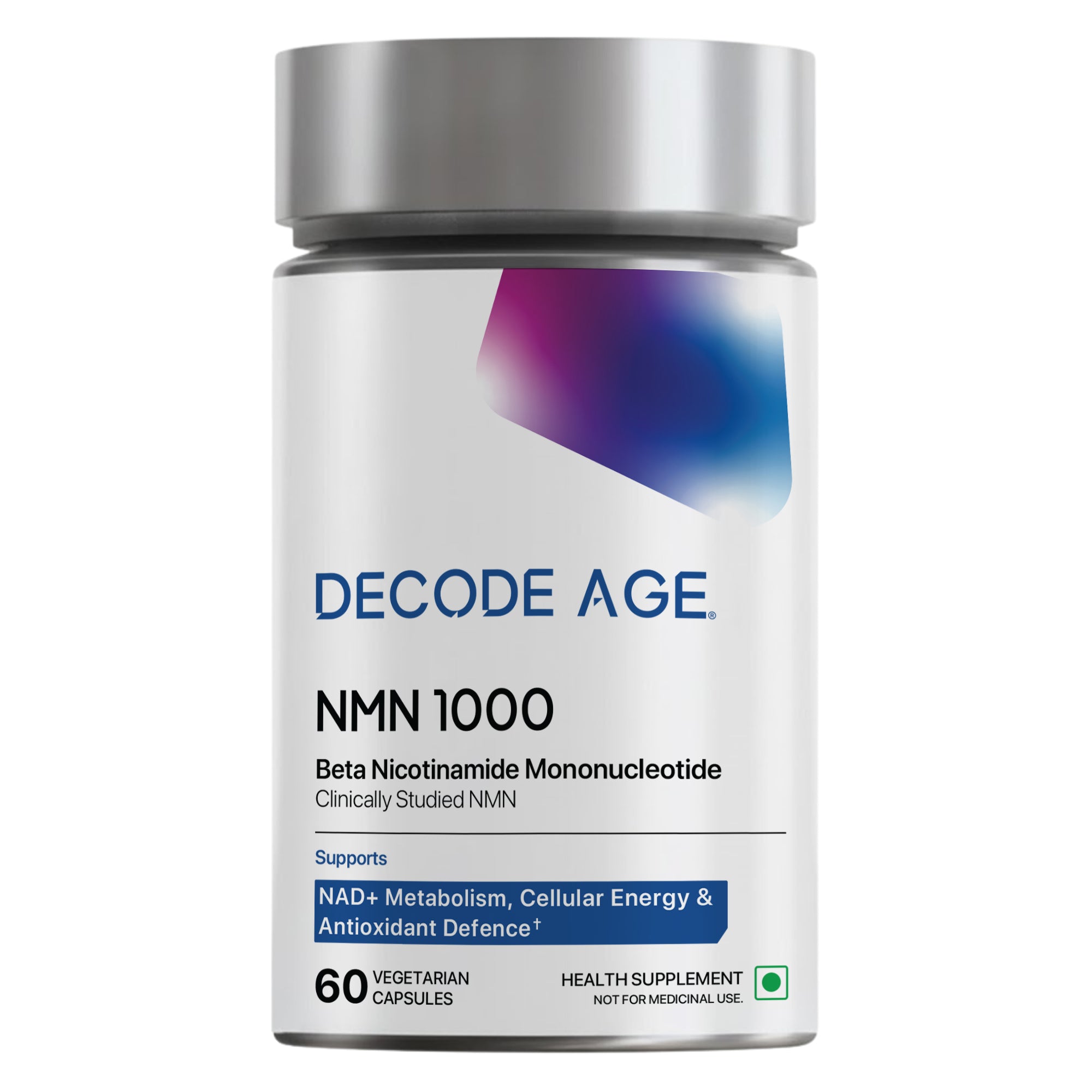
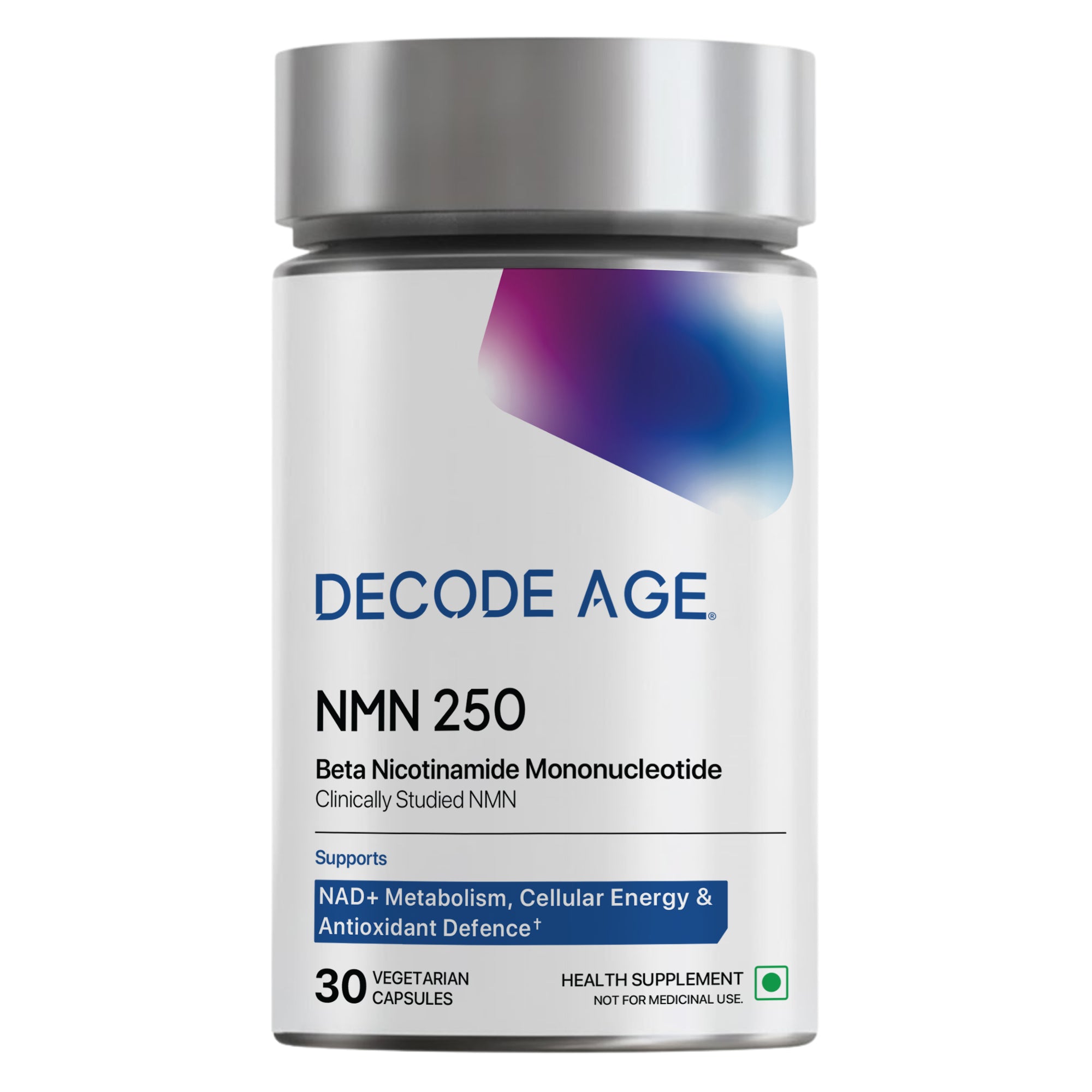
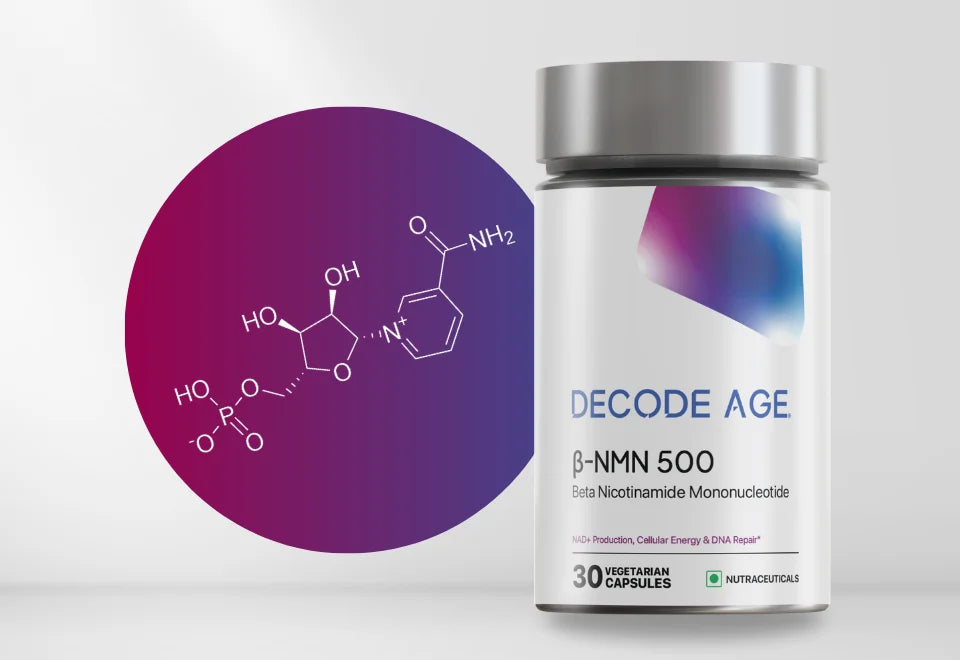
These molecular differences highlight why supplement formulations matter. Techniques like sublingual administration or enteric-coated capsules can further enhance NMN's absorption by bypassing stomach acid and first-pass liver metabolism [5]. Decode Age's NMN supplement, for instance, is designed with 99.8% pure Grade 1 NMN, a benchmark for maximising bioavailability while minimising unwanted byproducts like excess nicotinamide [5].
Additionally, for doses exceeding 500 mg, pairing NMN with TMG (trimethylglycine) helps support the methylation cycle, which is taxed by increased NAD+ metabolism [1][5]. This efficient cellular uptake directly contributes to improved energy production, enhanced DNA repair, and the longevity benefits covered in earlier discussions.
What Current Research Says About Longevity
Longevity research is currently divided into findings from animal studies and evidence from human trials. This distinction is important for understanding how results from controlled experiments translate into real-world outcomes for humans.
Animal studies have shown promising results. For instance, mice treated with NMN or other NAD⁺ precursors demonstrated improved muscle function, enhanced metabolic health, restored mitochondrial activity in ageing tissues, and even modest extensions in lifespan [4][2]. These findings have sparked significant interest in the potential of NAD supplementation to support human longevity.
In human trials, the most consistent outcome has been a reliable increase in blood NAD⁺ levels following NMN supplementation. A 2026 study revealed that taking 1 g of NMN daily could double NAD⁺ levels within just 14 days [3]. Beyond this, specific benefits have been observed in targeted groups. For example, NMN supplementation improved muscle insulin sensitivity in postmenopausal women with prediabetes [3][4]. However, it's important to note the limitations. As of May 2026, no well-controlled human study has conclusively shown that NMN or other NAD⁺ supplements can extend lifespan or reverse biological age vs chronological age, as measured by DNA methylation clocks [4]. Furthermore, most human studies are short-term, lasting only 8 to 12 weeks, and involve small participant groups, which restricts the ability to draw conclusions about long-term effects [2].
Trevor Kaak, the Founder of RecoveryStack, summarises the current state of research:
"The pattern: blood NAD⁺ goes up reliably. Downstream clinical effects are inconsistent and modest. No precursor has shown a change in biological age clocks in well-controlled human studies that I'm aware of." - Trevor Kaak, Founder, RecoveryStack [4]
Recent research from 2026 has also uncovered a potential link between NMN and gut health. NMN appears to act as a prebiotic, encouraging the growth of beneficial gut bacteria such as Enterocloster aldensis. These bacteria can convert NMN into nicotinic acid, which supports NAD+ production via the Preiss-Handler pathway [5]. This connection between NMN and the microbiome adds another layer to its role in cellular health.
Who May Benefit from NMN Supplementation?
NMN supplementation, known for its role in boosting NAD+ levels, may be particularly beneficial for certain groups. Research highlights how age, health conditions, and lifestyle factors can influence these benefits:
- Adults aged 40–60: By midlife, NAD+ levels naturally decline, leading to reduced mitochondrial efficiency and slower cellular repair. NMN supplementation can help counter these changes [1].
- Adults aged 65 and above: Clinical studies suggest NMN may enhance muscle strength and support cognitive energy metabolism in this age group [2].
- Postmenopausal women at risk of prediabetes: A daily dose of 250 mg has shown improvements in muscle insulin sensitivity and better glucose regulation [2].
- Athletes and physically active individuals: NMN can aid mitochondrial biogenesis and boost aerobic capacity, which may result in faster recovery and enhanced endurance [3].
- Individuals with post-viral fatigue (such as those recovering from Long COVID): Prolonged immune activation can deplete NAD+ through CD38-mediated pathways. NMN is being studied as a way to mitigate this depletion [1].
By tailoring NMN supplementation, individuals can enhance mitochondrial function, promote DNA repair, and support overall cellular health. The benefits, however, depend largely on proper dosing and timing.
Dosing and Safety Considerations
Human trials using doses of up to 1,200 mg/day over 24 weeks have reported good safety outcomes, with no major adverse effects [1]. Minor side effects, such as digestive discomfort, headaches, or sleep disturbances, are infrequent and usually dose-related. For doses exceeding 500 mg/day, pairing NMN with TMG (trimethylglycine) at 500–1,000 mg/day is recommended to support methylation. Dr. Julian Douwes M.D. explains:
"TMG (500–1,000 mg/day) donates methyl groups directly, regenerating SAM and keeping homocysteine in the normal range. At this point I consider TMG non-negotiable alongside NAD+ precursor dosing of 500 mg/day or more." [1]
This dosing strategy ensures that NAD⁺ restoration is both safe and effective. For those looking to integrate NMN into their health routines, Decode Age offers scientifically developed NMN supplements designed for optimal absorption. Recommendations include taking NMN in the morning on an empty stomach to align with the body’s natural circadian rhythms [5].
NMN vs NAD+: A Practical Summary for Indian Consumers
For Indian consumers, it's important to understand a key distinction between NMN and NAD+. NAD+ is the molecule your cells need for energy and repair, but oral NAD+ supplements are not efficiently absorbed. Due to its large molecular weight of 663 g/mol, most of the NAD+ taken orally is broken down, resulting in only 10–20% bioavailability [3][5]. To effectively boost NAD+ levels directly, intravenous (IV) therapy is often required. However, this option comes with a hefty price tag, ranging from ₹25,000 to ₹66,000 per session, making it unsuitable for daily or long-term use [4].
On the other hand, NMN offers a more practical solution. With a smaller molecular weight of 334 g/mol, NMN is absorbed efficiently through a specific transporter called Slc12a8. It can be detected in the bloodstream within just 15 minutes of ingestion [3]. A 2026 study demonstrated that a daily dose of 1 g of NMN doubled NAD+ levels in the blood within 14 days [3]. NMN capsules are also significantly more affordable, costing between ₹3,300 and ₹6,600 per month [4].
Here’s a quick comparison of the three options:
| Feature | NMN (Oral) | Direct NAD+ (Oral) | NAD+ (IV) |
|---|---|---|---|
| Bioavailability | High | 10–20% | High |
| Convenience | Taken daily at home | Limited effectiveness | Requires clinical setting |
| Approximate Monthly Cost | ₹3,300–₹6,600 | Low cost but low efficacy | ₹25,000–₹66,000 per session |
| Evidence in Humans | Yes | Limited | Yes |
When choosing NMN supplements, prioritise products with high purity. Look for Grade 1 NMN with a purity level of 99.8% or higher to avoid unwanted byproducts such as nicotinamide, which can counteract the benefits by inhibiting key longevity enzymes [5]. Decode Age offers NMN supplements formulated to meet these stringent purity standards, ensuring optimal absorption and suitability for daily use.
For those taking 500 mg or more of NMN daily, it’s recommended to combine it with TMG (trimethylglycine) in doses of 500–1,000 mg per day. This helps maintain the body’s methylation cycle, which is crucial for overall cellular health [5][1].
FAQs
1. What is the difference between NMN and NAD+?
NMN is a precursor that helps the body produce NAD+, while NAD+ is the active coenzyme involved in cellular energy production, DNA repair, and metabolic function. NMN is smaller in molecular size, which may make it easier for cells to absorb and convert into NAD+.
2. Is NMN better than NAD+ supplements?
For oral supplementation, NMN may be more practical than NAD+ because NAD+ has a larger molecular size and is less efficiently absorbed when taken by mouth. NMN can enter cells and convert into NAD+ through a one-step process, making it a more convenient option for supporting NAD+ levels.
3. How does NMN increase NAD+ levels?
NMN enters cells through a specialised transporter and is then converted into NAD+ by the enzyme NMNAT. This helps replenish NAD+ levels, which are important for mitochondrial function, cellular repair, and healthy ageing.
4. Who may benefit from taking NMN supplements?
NMN supplementation may be useful for adults experiencing age-related NAD+ decline, especially those aged 40 and above, older adults, physically active individuals, postmenopausal women at risk of prediabetes, and people looking to support cellular energy and recovery.
5. When is the best time to take NMN?
NMN is commonly recommended in the morning, preferably on an empty stomach, as this may align better with the body’s natural circadian rhythm and energy metabolism. People taking higher doses should consult a healthcare professional, especially if combining NMN with TMG.



Leave a comment
All comments are moderated before being published.
This site is protected by hCaptcha and the hCaptcha Privacy Policy and Terms of Service apply.