



In India, where sunlight is abundant, Vitamin D deficiency affects nearly 25% of adults. This issue is linked to factors like urban pollution, indoor lifestyles, and darker skin tones requiring more sun exposure for Vitamin D synthesis. For vegans and vegetarians, the challenge is even greater as most Vitamin D3 supplements are derived from animal sources like lanolin (sheep’s wool). Enter lichen-based Vitamin D3 - a vegan, plant-friendly solution chemically identical to the D3 your body produces. Pairing it with Vitamin K2 (MK-7) ensures calcium is properly directed to bones and teeth, avoiding deposits in arteries or soft tissues. This combination supports bone strength, heart health, and healthy ageing.
In this guide, learn about the benefits of lichen-based D3 and MK-7, their role in addressing India’s Vitamin D challenges, and how to choose the right vegan supplements for optimal health.
Vitamin D, Vitamin K2, and Their Role in Longevity
What Vitamin D Does in the Body
Vitamin D acts more like a hormone than a vitamin, influencing several critical processes in the body. It enhances calcium absorption, helps regulate inflammation, and supports insulin sensitivity by activating key signalling pathways like PPAR-gamma and GLUT4. Additionally, it plays a role in immune system regulation[4]. The VITAL trial, which involved 25,871 adults, highlighted that taking 2,000 IU of Vitamin D daily was linked to a 28% reduction in autoimmune diseases and slowed cellular ageing, equivalent to preserving telomeres by about three years[4]. These functions underscore the importance of maintaining adequate Vitamin D levels, particularly in a country like India with its unique challenges.
Why Vitamin D Deficiency is Common in India
Despite the abundance of sunlight, Vitamin D deficiency is surprisingly prevalent in India. Factors such as darker skin tones, urban pollution, indoor-centric lifestyles, and practices that limit sun exposure contribute significantly to this issue[4]. Ageing further exacerbates the problem. By the time individuals reach their 70s, the skin's concentration of 7-dehydrocholesterol - the precursor for Vitamin D synthesis - drops by roughly 50%. This decline means that even with similar sun exposure, older adults produce significantly less Vitamin D3[4]. These challenges highlight why pairing Vitamin D with Vitamin K2 is so important for optimising calcium utilisation and overall health.
Vitamin K2 and MK-7: What They Are
Vitamin K2 works in tandem with Vitamin D, playing a key role in calcium management. Among its different forms, MK-4 and MK-7 are the most relevant. MK-7, in particular, is more practical for supplementation due to its longer half-life of around 72 hours, allowing for once-daily doses at lower amounts[4]. This form of Vitamin K2 is primarily found in fermented foods like natto. For vegans, fermented chickpeas are a viable source. In India, however, traditional diets often lack these fermented foods, leading to widespread K2 deficiency[2].
Why D3 and K2 Matter for Healthy Ageing
The synergy between Vitamin D3 and K2 is essential for promoting healthy ageing. Vitamin D3 increases calcium absorption in the gut, while Vitamin K2 ensures that calcium is directed to where it’s needed most - like bones - by activating two critical proteins. Osteocalcin helps integrate calcium into the bone matrix, and Matrix Gla Protein (MGP) prevents calcium from accumulating in soft tissues[2][4]. Research like the Rotterdam Study has shown that higher dietary intake of K2 (over 32 mcg per day) can reduce the risk of aortic calcification by 57% and lower overall mortality by 26% over a 7–10 year period[4]. Additionally, combining D3 and K2 supplements has been found to decrease fracture risk in postmenopausal women by 20–30%[4].
| Nutrient | Primary Role in Ageing | Key Mechanism |
|---|---|---|
| Vitamin D3 | Calcium absorption, immune support, telomere maintenance | Enhances calcium uptake in the gut; regulates immune pathways |
| Vitamin K2 (MK-7) | Arterial health, bone strength | Activates Osteocalcin and MGP to ensure proper calcium usage |
Vegan Vitamin D3 From Lichen: What You Need to Know

Vegan vs Animal-Based Vitamin D3: Lichen, Lanolin & D2 Compared
What Lichen-Derived Vitamin D3 Is
Lichen has emerged as an important vegan-friendly source of Vitamin D3, addressing concerns about both sourcing and effectiveness, especially for Indian vegans. Interestingly, lichen isn’t a plant but a symbiotic organism - a partnership between a fungus and algae or cyanobacteria [7]. The fungal part of lichen contains 7-dehydrocholesterol (7-DHC), a precursor to Vitamin D3 in humans. When exposed to UV-B light, this 7-DHC undergoes a transformation into previtamin D3, which is then converted into active Vitamin D3 through heat [7].
"This mechanism closely mirrors how human skin converts 7-dehydrocholesterol into vitamin D3, illustrating a fascinating parallel between fungal and human physiology." - Country Life Vitamins [7]
The final product is a fully plant-based form of cholecalciferol, chemically identical to the Vitamin D3 your body naturally produces.
How Lichen D3 Differs From Common Sources
Most Vitamin D3 supplements on the market come from lanolin, a waxy substance derived from sheep’s wool, making them unsuitable for vegans. While Vitamin D2 (ergocalciferol), derived from UV-treated mushrooms or yeast, is a vegan option, it differs chemically and is around 87% less effective than D3 in increasing serum 25(OH)D levels [6]. Lichen-derived D3, however, provides the same cholecalciferol form found in animal-based D3, ensuring equal potency and bioavailability. This makes it a reliable and effective vegan alternative.
| Feature | Lichen-Based D3 | Lanolin-Based D3 | Vitamin D2 (Ergocalciferol) |
|---|---|---|---|
| Source | Plant (Lichen) | Animal (Sheep's Wool) | Plant (Fungi/Yeast) |
| Chemical Form | Cholecalciferol | Cholecalciferol | Ergocalciferol |
| Bioavailability | High (identical to human D3) | High | Lower (87% less potent than D3) [6] |
| Vegan | ✅ 100% Vegan | ❌ Vegetarian only | ✅ 100% Vegan |
| Sustainability | High (low-impact/cultivated) | Moderate | High |
Bioavailability and Efficacy of Lichen-Based D3
Lichen-derived D3 matches animal-based Vitamin D3 in chemical structure and how the body processes it [7]. Since Vitamin D is fat-soluble, its absorption improves when taken with meals that include dietary fats. In India, many supplements use lichen-sourced D3 in an MCT oil base, often derived from coconuts, to further enhance absorption [8][3]. To ensure you’re getting the more absorbable D3 form, check for "cholecalciferol" on the product label instead of "ergocalciferol."
Environmental and Ethical Considerations
Lichen-based D3 aligns with ethical and environmentally conscious practices, making it an excellent choice for India’s large vegan and vegetarian population. These products often carry the India Green Dot, a recognised symbol for vegetarian items [6]. Lichen is cultivated in controlled environments to avoid over-harvesting and protect natural ecosystems [7]. For Indian consumers, verifying FSSAI certification alongside clear lichen sourcing details ensures both ethical and high-quality standards [8][9].
sbb-itb-55c436e
How Lichen-Based D3 and MK-7 K2 Work Together
How Vitamin D3 and K2 Complement Each Other
Vitamin D3 and K2 work in harmony like a well-coordinated team. D3 ensures calcium from your diet is absorbed into the bloodstream, boosting intestinal calcium absorption by 30–40% [4]. K2 takes over from there, activating proteins through gamma-carboxylation. This process allows Osteocalcin to bind calcium to bones, while Matrix Gla Protein (MGP) prevents calcium from settling in arteries and soft tissues [4][10]. Together, they help direct calcium to where it’s needed most - your bones - while keeping it away from areas where it could cause harm.
Benefits for Bone Health
When taken together, D3 and K2 provide significant support for bone strength. Studies show a 20–30% reduction in fracture risk among postmenopausal women who use this combination, with an annual increase in bone mineral density of 1–2% [4]. This is especially critical after the age of 40, when bone loss tends to speed up. MK-7, a form of K2, stands out because of its longer half-life - about 3 days compared to just 1 hour for MK-4. This prolonged action ensures steady tissue levels, giving Osteocalcin more time to help with bone mineralisation [4].
Benefits for Cardiovascular Health
The D3-K2 combination also plays a vital role in heart health. Research suggests that consuming more than 32 mcg of K2 daily can lower the risk of aortic calcification by 57% [4]. In the INTRICATE study, patients with chronic kidney disease who took 180 mcg of MK-7 daily showed a 12% slower progression of coronary artery calcification over two years. Additionally, K2 supplementation has been linked to a 12% reduction in arterial stiffness [4]. Without K2, the calcium absorbed through D3 could potentially lead to cardiovascular issues, highlighting the importance of pairing these vitamins. Ongoing studies continue to explore their benefits beyond bone and heart health.
Other Potential Benefits Under Study
Emerging research suggests even broader benefits. For example, in a trial involving long-COVID patients, a combination of 2,000 IU of D3 and 240 mcg of MK-7 led to a 20–30% reduction in C-reactive protein (CRP), a marker of inflammation [4]. D3 supplementation has also been linked to slower cellular ageing, with a reduction of 140 base pairs of telomere loss over four years, equivalent to about three years of reduced cellular ageing [4]. Furthermore, the D2d trial found that taking 4,000 IU of D3 daily lowered diabetes risk by 15% in prediabetic individuals [4]. While these findings are promising, they are still being explored and require further research.
Typical Dosages in D3 and MK-7 Combinations
The following dosage ranges offer practical guidance based on the synergistic actions of D3 and K2:
| Category | Vitamin D3 (Lichen) | Vitamin K2 (MK-7) |
|---|---|---|
| Daily Maintenance (ICMR RDA) | 600 IU | 45–55 mcg |
| Longevity / Optimisation | 1,000–2,000 IU | 100–180 mcg |
| Deficiency Correction | 2,000–5,000 IU | 180–360 mcg |
Before changing your dosage, consult a doctor, particularly if you’re on blood-thinning medications like Warfarin, as K2 can interfere with these drugs [4]. Since both D3 and K2 are fat-soluble, taking them with a meal that includes healthy fats - such as nuts, olive oil, or avocado - can greatly improve absorption [8][10].
Choosing Vegan D3 and MK-7 Supplements in India
Common Formulations Available in India
In India, vegan D3 and MK-7 supplements are offered in various formats to suit different preferences. Vegetarian capsules, often made with HPMC-based casings, typically provide about 600 IU of D3 and 45–55 mcg of MK-7 per serving, aligning with the Indian Council of Medical Research's guidelines. Liquid drops, which are suspended in coconut oil for better absorption, allow for flexible dosing. For those who dislike swallowing capsules, effervescent tablets that dissolve in water are a convenient option.
How to Confirm a Product is Vegan and Lichen-Based
To ensure your supplement is vegan and ethically sourced, check the ingredient list for terms like "Cholecalciferol from Lichen" or certifications such as Vitashine®, which confirm that the Vitamin D3 is derived from lichen instead of lanolin (sheep’s wool). Look at the capsule material - vegan options use HPMC (Hydroxypropyl Methylcellulose) instead of gelatin. For Vitamin K2, ensure it is plant-derived, such as from fermented chickpeas or Natto. Additionally, verify the product's vegetarian credentials by looking for the Green Dot symbol, a valid FSSAI license number, and recognised certification logos on the packaging.
Key Quality Markers to Look For
Since D3 and K2 are fat-soluble vitamins, the delivery method is just as important as the ingredients. Choose supplements that include fat-based carriers like MCT, coconut, or olive oil for better absorption. Look for third-party lab verification, such as NABL-certified reports, and certifications like GMP and ISO 22000. Other important features include:
- The use of the MK-7 form of Vitamin K2, which is absorbed significantly more efficiently than other forms [1].
- A "clean label" promise, ensuring the product is Non-GMO, gluten-free, soy-free, and free from artificial colours or preservatives.
"I was confused by so many vitamin D options. This one felt simple and straight, with 2-in-1 combo. Seeing the lab test reports also made it easy for me to choose." - Gauri D.
These quality standards reflect the evidence-based approach prioritised by Decode Age.
Decode Age's Approach to Longevity Supplements
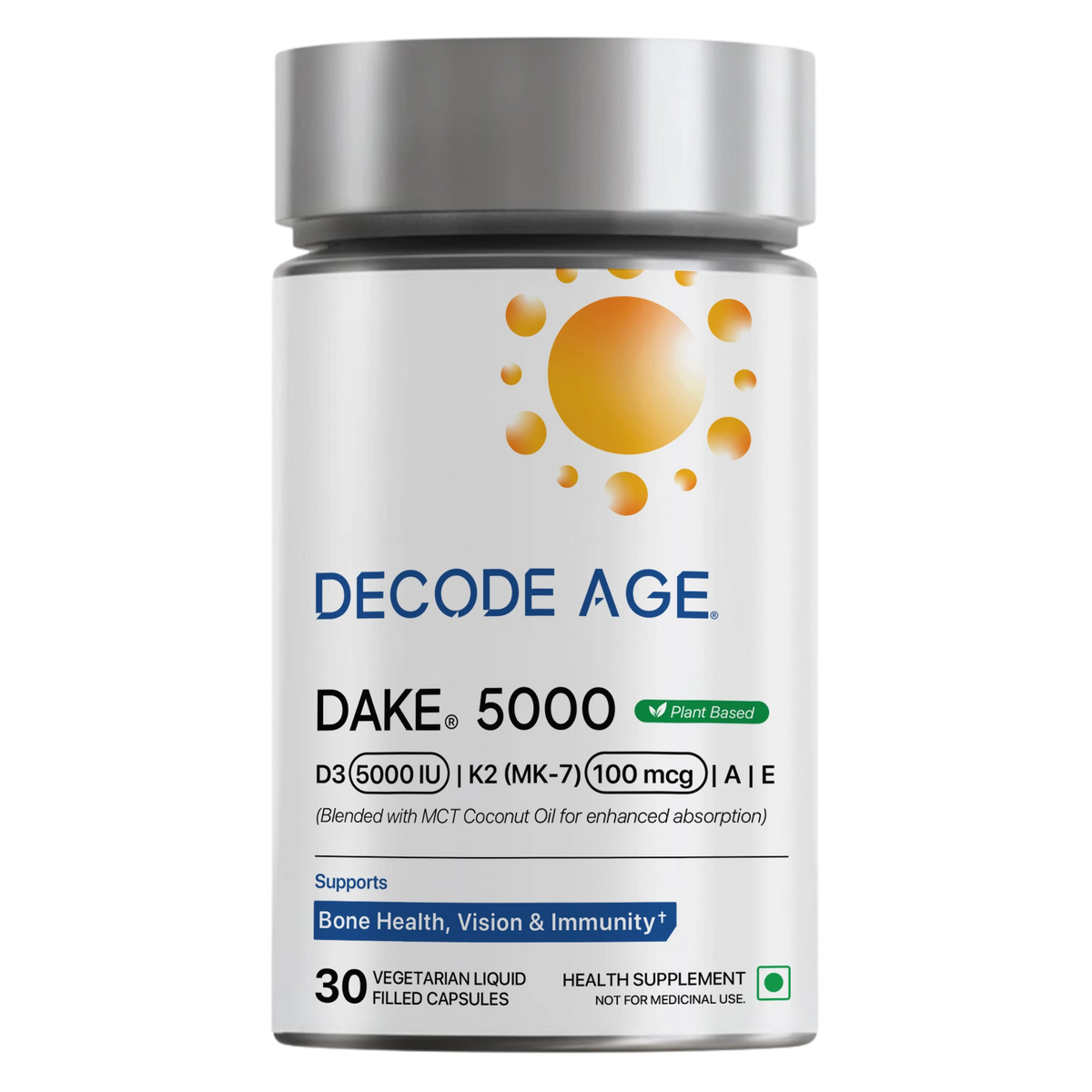
Decode Age focuses on creating supplements that prioritise bioavailability, clinical backing, and ingredient transparency. Produced in FDA-registered and GMP-certified facilities, their formulations combine D3 and K2 to support healthy ageing. They go beyond just meeting dietary recommendations by tailoring supplements using biomarker insights for enhanced effectiveness.
Safety, Contraindications, and When to See a Doctor
Before starting any supplement, keep the following safety points in mind:
- Vitamin K2 may interact with anticoagulant medications like Warfarin, so consult a doctor if you're on blood thinners.
- Consuming Vitamin D3 in excess (over 4,000 IU daily) could lead to hypercalcemia if not monitored.
- Medical conditions like granulomatous diseases, hyperparathyroidism, or kidney disorders require medical advice before adjusting Vitamin D intake.
- Pregnant and breastfeeding women should always seek professional guidance before changing their supplementation routine.
If you're uncertain, a simple blood test to measure 25(OH)D levels can help determine the appropriate dosage for your needs.
Practical Guide for Indian Vegans: Testing, Dosage, and Daily Use
How to Know if You Need Supplementation
Testing your Vitamin D levels is the first step to understanding your specific needs. The key marker to check is your serum 25-hydroxyvitamin D [25(OH)D] levels. This test will help you determine whether you require a maintenance dose or a therapeutic one. Given that Vitamin D deficiency is common across India [8], testing ensures you neither underdose nor take excessive amounts unnecessarily.
When scheduling your test, choose an NABL-certified laboratory to ensure reliable results that meet national standards [8]. Once you have your results, consult a healthcare professional to interpret them correctly. Avoid self-prescribing, particularly if your results show a significant deficiency, as professional guidance is crucial for safe and effective supplementation.
Factors That Affect Your Vitamin D Needs in India
Your Vitamin D requirements are influenced by several factors, many of which are particularly relevant in the Indian context. For instance, darker skin tones - common among Indians - produce Vitamin D3 less efficiently under sunlight. Urban lifestyles, which often involve spending long hours indoors, further exacerbate the issue. Here’s a breakdown of key factors:
| Factor | Impact on Vitamin D Levels |
|---|---|
| Darker skin tone | Slower Vitamin D3 production; may require higher doses |
| Indoor lifestyle | Limited exposure to sunlight |
| Vegan diet | Absence of animal-derived D3, making supplementation necessary |
| Age | Skin becomes less efficient at synthesising D3 as you age |
| Deficiency | May require therapeutic doses (2,000–5,000 IU) under medical supervision |
By considering these factors, you can better understand your Vitamin D needs and adapt your sunlight exposure, diet, and supplementation accordingly.
Sunlight, Diet, and Supplements: Finding the Right Balance
Sunlight is the most natural way to boost your Vitamin D levels, but for many urban Indians, it’s not a reliable source. To support Vitamin D synthesis, aim to expose your arms and legs to the midday sun (between 11 a.m. and 1 p.m.) for 15–20 minutes. However, maintaining this level of exposure regularly can be difficult due to busy schedules and lifestyle constraints.
For vegans, dietary sources of Vitamin D3 are almost non-existent, making supplementation the most practical and effective solution [5]. Think of sunlight and diet as supplementary measures rather than your primary sources. A lichen-based D3 supplement is an excellent choice for vegans, and combining it with MK-7 ensures that calcium mobilised by D3 is properly utilised by your body.
How to Take Vegan D3 and MK-7 for Effective Absorption
To maximise the benefits of supplementation, take lichen-based D3 along with MK-7. These fat-soluble nutrients should be consumed with a meal that contains healthy fats to enhance absorption. Avoid taking them on an empty stomach, as this can reduce their effectiveness.
Consistency is crucial. For adults with limited sun exposure, a daily maintenance dose of 600–1,000 IU of lichen-based D3 paired with 45–55 mcg of MK-7 works well. If tests reveal a deficiency, higher therapeutic doses may be required, but only under medical supervision [5][11]. After 8–12 weeks of supplementation, retest your 25(OH)D levels to evaluate progress and make any necessary adjustments to your dosage.
FAQs
What’s the ideal 25(OH)D level for Indians?
For individuals in India, health studies define serum 25(OH)D levels as follows: levels below 12 ng/mL indicate deficiency, levels between 12–20 ng/mL suggest insufficiency, and levels of 20 ng/mL or higher are considered sufficient. The recommended target level is at least 20 ng/mL to ensure adequate vitamin D status.
Do I need K2 if I take vegan Vitamin D3?
Combining Vitamin K2 (in the MK-7 form) with vegan Vitamin D3 is a smart choice. While Vitamin D3 plays a key role in improving calcium absorption in the body, Vitamin K2 ensures that the calcium is properly utilised by directing it to the bones and teeth where it’s needed most. Without sufficient K2, calcium might accumulate in soft tissues, such as arteries, which could lead to potential health risks. Together, these nutrients work in harmony to support healthy calcium metabolism, contributing to better bone strength and cardiovascular health.
How can I confirm my D3 is from lichen and not lanolin?
To confirm that your Vitamin D3 is derived from lichen rather than lanolin, carefully examine the supplement label or product description. Look for terms like “Vitamin D3 from lichen” or “Cholecalciferol from lichen”. Additionally, ensure the product explicitly states “No lanolin”. In India, brands offering lichen-based D3 usually emphasise these details prominently on their packaging.


Leave a comment
All comments are moderated before being published.
This site is protected by hCaptcha and the hCaptcha Privacy Policy and Terms of Service apply.