



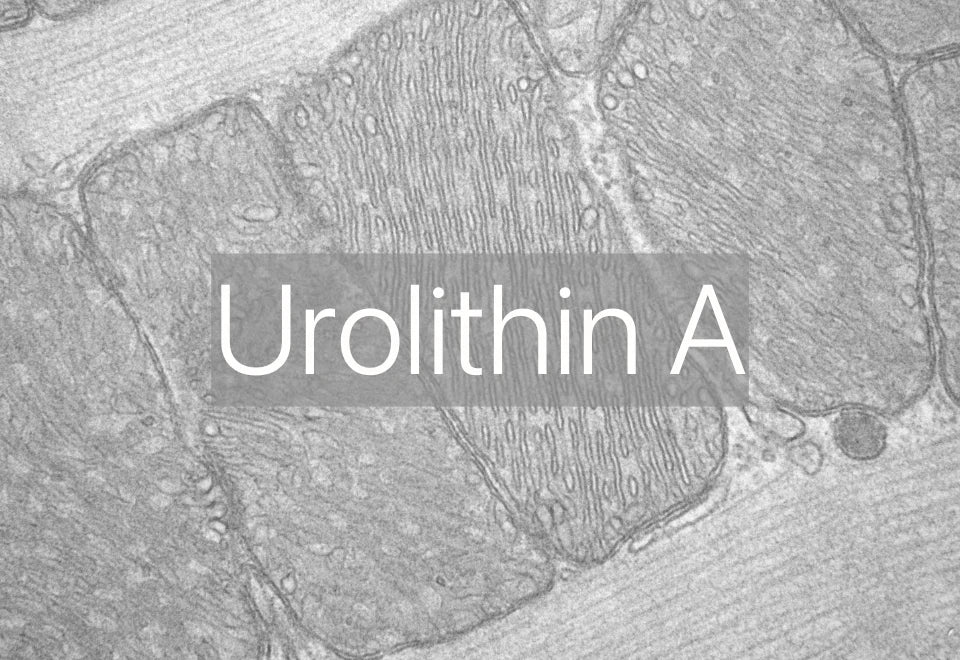
The statement that urolithin A extends lifespan is accurate in one important context: the C. elegans worm model. In a landmark 2016 study, urolithin A increased worm lifespan and improved age-related muscle function in rodents. The proposed mechanism was mitophagy, a quality-control process that helps cells identify and recycle damaged mitochondria.
That finding is scientifically important. It is not proof that a urolithin A supplement extends human lifespan.
Human studies are now exploring whether urolithin A can influence muscle endurance, mitochondrial-health markers and other aspects of ageing biology. The results are promising in places, but still limited by small sample sizes, short study durations and mixed primary outcomes.
What is urolithin A?
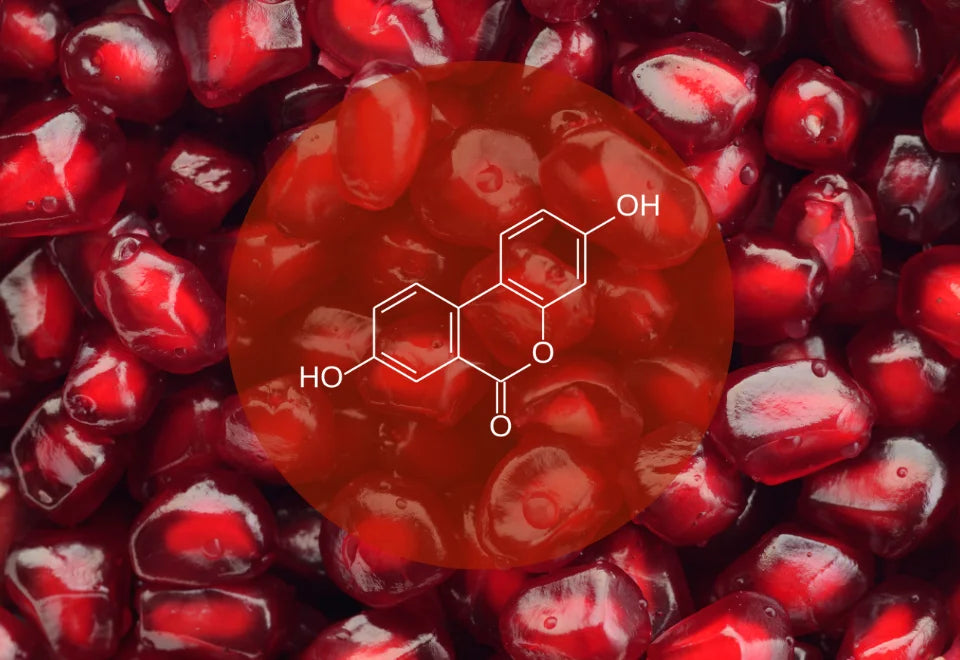
Urolithin A is a compound that can be produced when certain gut bacteria break down ellagitannins and ellagic acid from foods such as pomegranates, walnuts and some berries.
The important distinction is this: these foods do not directly provide a predictable dose of urolithin A. Production depends on the person’s gut microbiome, which varies widely between individuals.
A supplement provides urolithin A directly. That makes intake more consistent, but it does not automatically translate into a proven long-term health or lifespan benefit.
What is mitophagy?
Mitophagy is a selective form of autophagy. It helps cells break down and recycle damaged or less functional mitochondria.
Mitochondria help produce energy. Like other cellular components, they can become damaged or dysfunctional over time. Mitophagy is one part of the body’s normal quality-control system.
A simplified view looks like this:
- A mitochondrion becomes damaged or less efficient.
- The cell identifies it through molecular quality-control pathways.
- The mitochondrion is enclosed and delivered to a lysosome.
- Its components are broken down and recycled.
Mitophagy is important in basic biology, but more mitophagy is not automatically better in every context. It is a tightly regulated process, and a supplement should not be marketed as a way to “clean out” every damaged cell.
How urolithin A extends lifespan in C. elegans
The key study was published in Nature Medicine in 2016. Researchers gave urolithin A to C. elegans and observed a lifespan increase of up to around 45%, alongside evidence that the effect depended on intact mitophagy pathways.
The same research also studied rodents and found improved muscle function in older animals. This helped establish urolithin A as a compound of interest for mitochondrial-ageing research.
However, C. elegans is a microscopic worm with a short lifespan and a very different biology from humans. A lifespan extension in worms is a signal for further research, not a forecast of extra years of life in people.
The correct interpretation is:
- Urolithin A can influence mitophagy-related pathways in laboratory models.
- Lifespan extension has been observed in C. elegans.
- Human lifespan extension has not been demonstrated.
What have human trials found?
Human research is more useful for understanding what has actually been measured in people.
In a 2022 randomised trial, 66 adults aged 65 to 90 took 1,000 mg of urolithin A daily or placebo for four months. Urolithin A improved selected muscle-endurance measures at two months. However, the two primary outcomes, six-minute walking distance and maximal ATP production, were not significantly different from placebo at four months.
A separate four-month trial in 88 untrained middle-aged adults tested 500 mg and 1,000 mg doses. It reported changes in some muscle-strength, exercise-performance, and mitochondrial-health markers, but the primary peak-power outcome was not significantly improved.
These are useful early findings, but they are not enough to claim that urolithin A prevents frailty, treats muscle disease or extends human lifespan.
A 2026 review of randomised trials found that only two studies could be pooled for the six-minute walk test. The overall result was directionally favourable but statistically inconclusive, with low-certainty evidence.
Can you get urolithin A from food?
Pomegranates, walnuts, raspberries and strawberries contain ellagitannins or ellagic acid, which are precursors that some gut microbes can convert into urolithin A.
These foods are nutritious in their own right and fit well into a varied diet. But eating them does not guarantee that your body will produce a meaningful amount of urolithin A.
A direct supplement avoids this microbiome-dependent step. That makes it a more predictable source of the compound, not a substitute for whole foods or a proven longevity intervention.
What dose has been studied?
Human studies have used a range of doses, commonly from 500 mg to 1,000 mg daily, for periods from several weeks to a few months.
Research doses are not personal prescriptions. The appropriate product, serving, and duration depend on your health context and the product label.
Decode Age’s Urolithin A provides 500 mg per capsule and advises adults to take one capsule after breakfast or as directed by a healthcare professional.
For a broader perspective, see Decode Age’s guide to longevity supplements in India.
Is urolithin A safe?
Short-term human studies have generally reported urolithin A as well tolerated. That does not establish long-term safety for every person or every dose.
Speak with a healthcare professional before taking it if you:
- Are pregnant or breastfeeding
- Have a medical condition or take prescription medicine
- Are undergoing treatment for cancer or another serious illness
- Are considering it for symptoms such as muscle weakness, unexplained fatigue or exercise intolerance
A supplement should not delay an assessment for persistent muscle weakness, mobility changes or unexplained loss of stamina.
The bottom line on urolithin A and longevity
Urolithin A is one of the more interesting compounds in mitochondrial-ageing research because it has a clear preclinical mechanism and early human trials.
But the evidence needs to be stated accurately. It extends lifespan in C. elegans, not in humans. In people, it has shown selected signals for muscle endurance and mitochondrial-health markers, while larger functional and longevity outcomes remain unproven.
Think of urolithin A as an emerging, research-led supplement option, not a shortcut to a longer life.
Frequently asked questions
Does urolithin A extend lifespan in humans?
No. Lifespan extension has been shown in C. elegans, but no human clinical trial has shown that urolithin A extends lifespan.
What is mitophagy?
Mitophagy is the process through which cells identify, break down, and recycle damaged mitochondria. It is part of normal cellular quality control.
Can pomegranate give me urolithin A?
Pomegranate provides ellagitannins, which some gut bacteria can convert into urolithin A. The amount produced varies between people, so it is not a predictable direct source.
What are the human benefits of urolithin A?
Small trials have reported changes in selected muscle-endurance, muscle-strength and mitochondrial-health measures. Results are not yet strong enough to establish benefits for lifespan, disease prevention or broad physical function.
Can I take urolithin A every day?
Follow the product label and seek personalised advice if you have a medical condition, take medicines, are pregnant or breastfeeding, or are considering long-term use.




1 comment
Santosh Iyer
When will DecodeAge start selling Urolithin A?
Leave a comment
All comments are moderated before being published.
This site is protected by hCaptcha and the hCaptcha Privacy Policy and Terms of Service apply.