



Vitamin D3 has become one of the most important nutrients in modern health conversations, and for good reason. Despite India's year-round sunshine, a large portion of the population remains deficient due to indoor lifestyles, pollution, and dietary gaps. This makes finding the right vitamin D3 supplement more than just a trend — it's a practical necessity in 2026.
In this guide, we'll go beyond the surface-level and break down how Vitamin D3 works, how much you actually need, the different supplement forms available, and what separates an average product from a truly effective one.
Why Vitamin D3 Matters More Than You Think
Vitamin D3 (cholecalciferol) plays a foundational role in multiple systems of the body. Its most well-known function is helping in calcium absorption in the gut, which directly impacts bone strength and density. However, its role extends far beyond bones.
Vitamin D receptors are present in immune cells, muscle tissue, and even the brain. This means proper levels are linked to:
- Stronger immune response
- Better muscle function
- Reduced inflammation
- Support for metabolic and cardiovascular health
A landmark review in the Journal of Clinical Endocrinology & Metabolism finds that Vitamin D deficiency is associated with increased risk of fractures, infections, and chronic conditions (Holick, 2007).
In simple terms, without enough Vitamin D3, your body struggles to maintain balance, no matter how healthy your diet looks otherwise. That's why choosing the right supplement becomes essential when natural intake falls short.
How Much Vitamin D3 Do You Actually Need?
Dosage is one of the most misunderstood aspects when talking about supplements. Many people either take too little to see results or too much without proper monitoring. The right dosage depends on your current levels, age, and lifestyle.
Recommended Daily Intake:
| Category | Daily Dose (IU) |
|---|---|
| Adults (18–60 years) | 600–800 IU |
| Seniors (60+) | 800–2000 IU |
| Deficiency correction | 2000–5000 IU (under guidance) |
While maintenance doses are relatively low, deficiency correction often requires higher intake. Research published in Frontiers in Endocrinology suggests that doses between 2000–5000 IU may be necessary to restore optimal levels in deficient individuals (Pludowski et al., 2018).
This is where many people go wrong — they pick a low-dose product and expect significant improvement. In reality, the right supplement is one that matches your specific needs, not just general recommendations.
Understanding Different Forms of Vitamin D3 Supplements
Not all supplements deliver the same results, even if they contain the same dosage. The form in which Vitamin D3 is delivered plays a key role in how well your body absorbs it.
Common Forms Explained:
| Form | Description | Best For |
|---|---|---|
| Softgels | Oil-based capsules that enhance absorption | Most effective overall |
| Tablets | Dry, compressed form | Cost-effective but less absorbable |
| Drops | Liquid form with adjustable dosing | Children, elderly |
| Sprays | Oral sprays for quick intake | Convenience |
Since Vitamin D is a fat-soluble vitamin, it requires dietary fat for optimal absorption. Oil-based softgels often outperform tablets because they already provide a medium for absorption. This is why many experts recommend softgels, since they align better with how the body naturally processes the nutrient.
The Missing Piece: Why Vitamin K2 Should Be Included
One of the biggest gaps in conventional supplementation advice is ignoring Vitamin K2. Vitamin D3 increases calcium absorption, but it doesn't decide where that calcium goes. Without proper direction, calcium can accumulate in arteries instead of being deposited in bones. This is where Vitamin K2 (particularly MK-7) comes in: it activates proteins that guide calcium into bones and teeth while preventing arterial calcification.
A study published in Nutrients emphasises that Vitamin K2 plays a crucial role in calcium metabolism and cardiovascular health (Schwalfenberg, 2017).
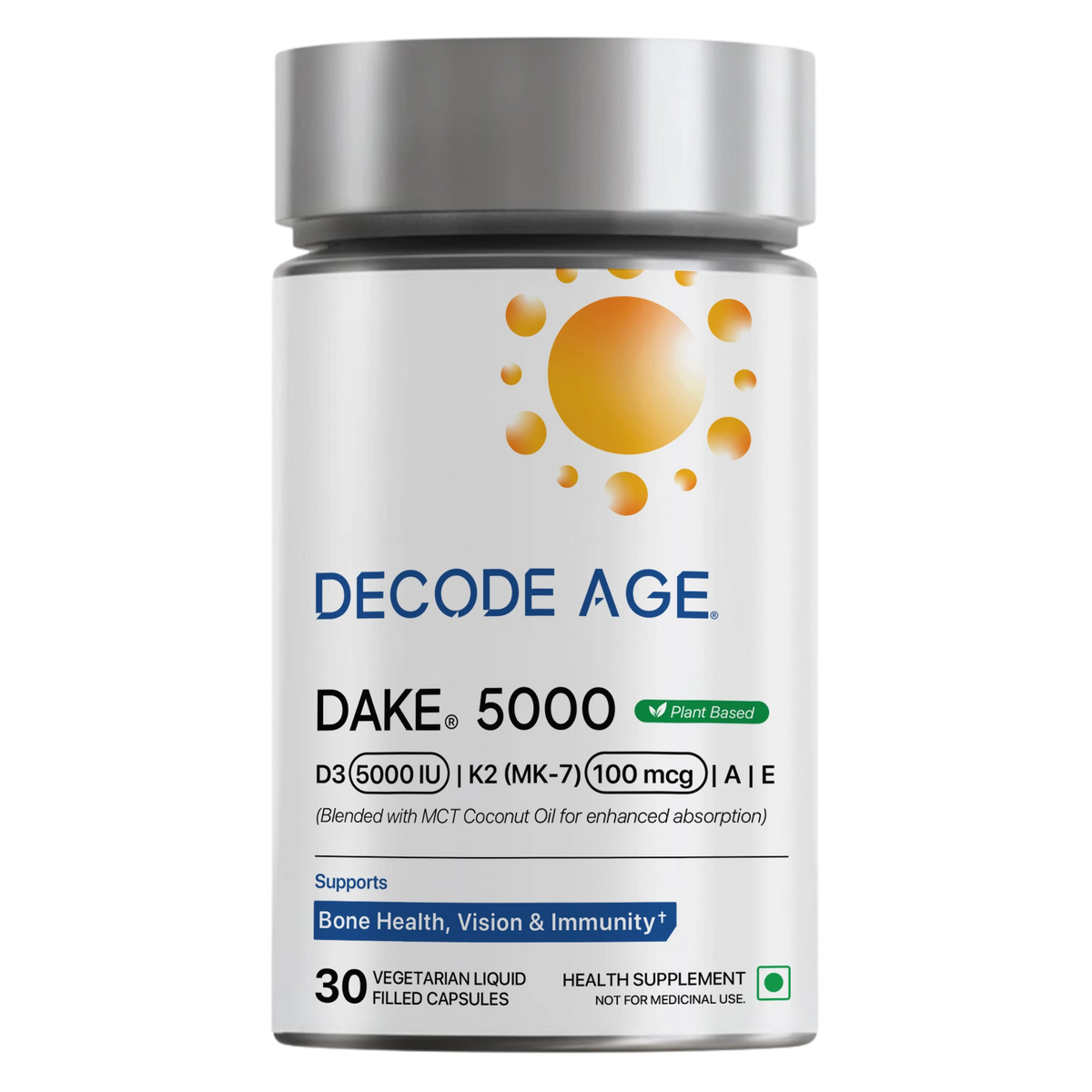
This is why advanced formulations now combine D3 with K2. Decode Age's DAKE is designed as a synergistic blend of Vitamin D3 and Vitamin K2, ensuring that increased calcium absorption is paired with proper utilisation. This dual-action approach supports bone strength while maintaining cardiovascular balance.
What Actually Defines a High-Quality Supplement?
With so many options in the market, it's easy to get overwhelmed. But a few key factors can help you separate high-quality products from average ones.
What to Look For:
- Bioavailability: Oil-based or enhanced absorption formats
- Synergy: Inclusion of Vitamin K2 for calcium regulation
- Dosage flexibility: Ability to support both maintenance and correction
- Clean sourcing: Minimal additives, tested ingredients
- Diet compatibility: Suitable for vegetarians or vegans
If you're looking for a vegan vitamin D option, make sure it's sourced from lichen rather than lanolin (which comes from sheep's wool). This ensures both ethical sourcing and better compatibility with plant-based diets.
Our Pick: Decode Age's DAKE
Supplementation today is all about optimising how nutrients work together. Decode Age's DAKE reflects this shift — combining high-strength Vitamin D3 (available in 600 IU and 5000 IU) with Vitamin K2 (MK-7) to address both absorption and utilisation in one formula.
Key advantages of this formulation include:
- Improved calcium absorption and direction
- Support for bone density and strength
- Cardiovascular protection through reduced calcification risk
- Enhanced immune function
Choosing the right dose depends on your lifestyle and health goals:
| Your Need | What to Prioritise |
|---|---|
| Bone strength | D3 + K2 combination |
| Immunity | Moderate to high D3 dosage |
| Vegan lifestyle | Lichen-based source |
If you're looking for a vegan vitamin D option, always check labels carefully and ensure the product is clearly marked as plant-based.
Common Mistakes That Limit Results
Even a good Vitamin D3 supplement won't be effective if used incorrectly. Some common mistakes include:
- Taking it on an empty stomach without fats
- Ignoring the role of Vitamin K2
- Using inconsistent doses
- Expecting immediate results
Vitamin D levels improve gradually, typically over weeks or months. Consistency and correct usage are key.
When Should You Start Supplementing?
You may need supplementation if you:
- Spend most of your time indoors
- Have minimal sun exposure
- Follow a vegan or restricted diet
- Experience fatigue or frequent illness
A simple blood test measuring 25(OH)D levels can confirm deficiency and guide dosage. Once you understand your levels, choosing the right supplement becomes much more precise and effective.
Final Thoughts
Vitamin D3 is foundational to overall health, but its effectiveness depends on how you supplement it. From choosing the right dosage to understanding the importance of Vitamin K2, small decisions can make a big difference in outcomes.
If you're looking for a vegan-friendly option, prioritise clean, bioavailable sources like Decode Age's DAKE. But remember, when evaluating any supplement, potency alone isn't enough — it's about how well your body can absorb, utilise, and benefit from it over time.
FAQ's
1. Why choose a combination formula like DAKE instead of a standalone Vitamin D3?
Combination formulas like Decode Age's DAKE pair Vitamin D3 with K2, helping calcium absorption and utilisation and supporting bone strength and cardiovascular health more effectively than standalone Vitamin D3 supplements.
2. Is DAKE suitable if I want a vegan vitamin D option in India?
If you're looking for vegan vitamin D, check the sourcing carefully. Decode Age focuses on clean, high-quality formulations designed to suit modern dietary preferences, including plant-conscious supplementation needs.
3. How does DAKE improve absorption compared to regular Vitamin D3 supplements?
DAKE uses an advanced formulation that combines Vitamin D3 with K2 to improve bioavailability and support better calcium utilisation, making it a more efficient and effective daily supplement.
4. What dosage of DAKE should I consider for daily health support?
DAKE offers high-strength Vitamin D3 with K2, suitable for those needing consistent support. However, dosage should align with individual health needs and ideally be guided by blood level testing.
5. Is DAKE a good option among Vitamin D3 supplements in India?
With its synergistic D3 and K2 blend, high potency, and focus on absorption, Decode Age's DAKE is designed to meet modern health needs — currently rated 4.9/5 by 45 verified customers.
References
- Holick MF. Vitamin D deficiency. N Engl J Med. 2007.
- Pludowski P et al. Vitamin D supplementation guidelines. Front Endocrinol. 2018.
- Schwalfenberg GK. Vitamins K1 and K2 in health. Nutrients. 2017.
- NIH Office of Dietary Supplements – Vitamin D Fact Sheet.




Leave a comment
All comments are moderated before being published.
This site is protected by hCaptcha and the hCaptcha Privacy Policy and Terms of Service apply.