



If we were choosing an NMN supplement in 2026, we would ignore hype and check five things first: β-NMN form, purity, batch-specific CoA, manufacturing standard, and packaging. That matters because some products still fail basic label checks, and a 500 mg claim means little if purity is low or the batch report is missing.
In this guide, let's focus on how to judge an NMN brand with facts, not slogans. We will also show what to check before buying, especially if you are shopping in India, where storage conditions can affect supplement quality faster.
NMN, NAD+, and What 'Best' Actually Means
NMN and NAD+ Explained Simply
NAD+ is a coenzyme that every cell uses for energy production and repair, and NMN is one of the compounds the body uses to make more of it [4]. Put simply, NMN is a building block for NAD+. If you're buying an NMN product, stick to β-NMN. α-NMN is not the active form used to increase NAD+ levels [3][8].
For most buyers, that shifts the focus to a plain question: does the product contain the right form at the right purity?
What Human Studies Support
Human studies suggest that oral NMN can increase blood NAD+ levels within 4 to 12 weeks. Some trials also point to support for muscle performance and arterial stiffness in select groups [4][9].
| Research Area | Evidence Status | Common Study Dosage |
|---|---|---|
| NAD+ Elevation | Strongly supported in human trials | 250 mg – 1,000 mg [4][9] |
| Muscle Endurance | Supported in human trials | 300 mg – 1,200 mg [4][9] |
| Arterial Stiffness | Supported in human trials | 250 mg – 500 mg [4][9] |
| Insulin Sensitivity | Supported in some human studies | 250 mg [4][9] |
| Cognitive Protection | Early, mostly animal-based | Not established |
What the research does not show matters just as much. Claims around age reversal or disease prevention are not backed by current human evidence [4][9]. Lifespan extension in humans is still unproven.
So once the science is kept in proper perspective, the next step is simple: check product quality and longevity standards.
How to Define the Best NMN Supplement 2026
Before comparing brands or label claims, it helps to set a basic standard for what a product should provide.
The best NMN supplement 2026 should show β-NMN purity of 99% or more, batch-specific third-party testing, GMP manufacturing, stable packaging, and a clear stated dose [1][2][8].
sbb-itb-55c436e
What Makes a High-Quality NMN Supplement?
Once you've understood what NMN is and the label basics, the next step is simple: look at the form of NMN, how it's made, how well it's protected, and whether its purity has been checked properly.
Ingredient Sourcing and NMN Form
Start with the ingredient name. The label should clearly say β-Nicotinamide Mononucleotide, not just “NMN.” That small detail matters. The β form is the one used in human cells.
Sourcing matters too. A lot of NMN raw material is synthesised in facilities in China, so what happens after sourcing becomes just as important. That means the finished product should be checked well before it reaches the customer. In a market like India, this carries extra weight because heat and humidity can affect product quality over time.
Manufacturing Standards, Stability, and Packaging
Manufacturing quality is one of the easiest ways to separate a decent supplement from a weak one. Look for GMP or cGMP certification [2]. If a product also shows ISO or MHRA oversight, that's a stronger signal than basic supplement compliance.
Stability is another big part of the picture. A supplement may leave the factory in good shape and still lose quality before you finish the bottle. NMN is sensitive to heat, moisture, and light, so the packaging needs to do some heavy lifting. Opaque or amber bottles, desiccants, and sealed packaging all help, especially in India's climate [1][10].
Purity, Identity, and Contaminant Testing
This is where many label claims start to wobble. Purity often sounds fine on the front of the bottle, but the proof should come from testing. Look for 98–99%+ purity confirmed by HPLC. If the purity is below 95%, treat that as a red flag [2][8][1].
Here's why that number matters in plain terms: if a product claims 500 mg per serving but is only 85% pure, you're getting just 425 mg of actual NMN. The remaining 75 mg consists of unspecified impurities [2]. That's not a small gap.
A proper Certificate of Analysis (CoA) should be batch-specific, match the lot number on the bottle, be issued by a named independent lab, and confirm identity, potency, and contaminant limits [2][1][3].
Use these checks as your main filter before moving to the buyer checklist below.
Why Purity Is One of the Most Important Buying Factors
Purity matters because it decides how much active NMN you get per serving.
What 99%+ Purity Means in Practice
Once the basics of NMN and NAD+ are out of the way, purity becomes the first quality check that changes what’s actually inside the bottle.
If purity is lower, you’re getting less active NMN in each serving and more doubt around dose consistency. And here’s the catch: a purity claim only means something if it refers to β-NMN.
That’s why 98% or above is a fair benchmark for a high-quality NMN product in 2026 [1][2]. If a product is below 95%, that should set off alarm bells.
After purity, the next thing to check is whether the brand can prove it with a batch-specific CoA.
Independent Testing and Certificates of Analysis
A CoA should back up what the label says. A useful CoA matches the lot number on your bottle and confirms:
- Lot number match - linked to the exact batch inside the bottle
- Independent lab - issued by a named third-party lab, not the brand’s in-house team [1][2][3]
- Date - issued within the last 12 months
- Test method - HPLC-DAD or HPLC-UV listed as the method used [2][3]
- Heavy metals and microbial limits - results for lead, arsenic, cadmium, mercury, yeast, mould, and pathogens [1][2][3]
A valid CoA is the bare minimum. After that, what matters is whether the brand can provide that proof fast and without any runaround.
How to Verify Quality Claims Before Buying
This part is simple. Find the lot or batch number on the bottle. Then ask for, or look up, the matching CoA and check that the numbers are the same. The report should show an HPLC method and include contaminant results along with identity and potency.
If a brand can’t link a batch-specific CoA to the bottle, treat the purity claim as unverified.
If the documents look right, the next check is the raw material source and how the product is made.
Uthever NMN as a Quality-Focused Example
Once you see why a batch-specific CoA matters, the next step is simple: check where the raw material comes from. That’s where branded ingredients can help. Think of them as a reference point. They can make sourcing easier to trace, but they should never be the only reason you trust a product.
What Uthever NMN Is
Uthever is a trademarked NMN raw material made by EffePharm and used by many supplement brands in their finished products. For instance, some brands offer Uthever NMN 500mg capsules to ensure standardised sourcing. Because it is trademarked, the source is often easier to identify and verify.
A trademarked raw material can make source tracing clearer, but it does not prove that the final product is good.
Manufacturing, Quality Control, and Research Background
Uthever is made through controlled manufacturing and supported by documented quality records. It is also linked to recent research, including a multicentre, randomised, double-blind human study that reported higher NAD+ levels, better endurance, and improved quality-of-life scores [5].
That said, a well-known raw material only sets the starting point. The finished supplement still needs batch-level testing and proper protection from heat, light, and moisture. If those basics slip, even a well-sourced ingredient can fall short.
Buyer Checklist for Choosing the Best NMN Supplement 2026
This checklist helps you screen an NMN supplement fast and rule out weak products before you spend money. In most cases, you can judge a bottle in under a minute if you know where to look.
NMN Buyer Checklist 2026
| Evaluation Factor | Why It Matters | What Buyers Should Look For |
|---|---|---|
| Purity Level | This shows how much active NMN you’re getting per serving. | 98% to 99%+ β-NMN confirmed by HPLC [1][2] |
| Isomer Form | β-NMN is the active form. α-NMN is not the human form used to support NAD+. | The label clearly says Beta-NMN or β-NMN [3][4] |
| Third-Party COA | This shows whether the label claims were checked by an independent lab. | A batch-specific COA from a named outside lab, dated within the last 12 months [1][2][3] |
| Testing Method | The test method affects how much trust you can place in the purity result. | The COA lists HPLC as the analytical method [2][3] |
| Contaminant Screen | This helps confirm the product is safe to take. | Results for heavy metals, microbial load, and residual solvents [2][3][7] |
| Dosage | Clear dosing helps you compare the product with the studied intake ranges. | A stated per-serving dose, usually 250 mg to 1,000 mg per day [8][4] |
| Manufacturing Standards | This lowers the chance of cross-contamination and supports batch consistency. | Made in a cGMP facility [2][7] |
| Packaging | NMN can be affected by heat, light, and moisture. | Opaque or amber bottle, desiccant, and an airtight seal [1][4][10] |
| Ingredient Transparency | Proprietary blends can hide how much NMN is actually inside. | No hidden blends; NMN dose clearly shown per serving [3][7] |
| Brand Transparency | If the supply chain can be traced, quality claims are easier to verify. | Named raw material source, public COA, and clear manufacturer contact details [1][5] |
Once a label clears these basic checks, the next move is simple: confirm the batch details before you buy.
How to Apply the Checklist Step by Step
Start with the supplement facts panel. It should tell you the NMN dose per serving in milligrams and clearly mention the beta form.
After that, find the COA or ask for it. The batch or lot number on the COA should match the number printed on the bottle. If it doesn’t match, that’s a red flag.
Then check whether the serving size sits within the studied range.
Also, steer clear of products making age-reversal or disease-cure claims [10][4]. If a label sounds too good to be true, it usually is.
The next table shows the same signals in a simple high-quality vs low-quality format.
Dosage Considerations and Use Patterns
Most studies use 250–1,000 mg daily. Capsules tend to protect NMN better than powders, since powders may degrade faster after the pack is opened [1][2]. In many human trials, dosing is done in the morning to line up with natural NAD+ rhythms [9][10].
If you take anticoagulants, blood pressure medicine, or other complex medication plans, speak with a healthcare professional before starting NMN supplementation [4][10].
The next table turns these checks into a quick, high-quality vs low-quality comparison.
Quality Indicator Table: High-Quality vs Low-Quality NMN at a Glance

How to Read NMN Quality Signals
This table gives you a quick way to screen an NMN product before you spend more time on it. Think of it as a first-pass filter: it helps you spot weak claims, missing proof, and poor packaging fast.
| Quality Indicator | Low Quality Product | High Quality Product |
|---|---|---|
| Purity Claim | Vague claims like “high purity”, or anything below 95%, with no lab proof | 98%+ β-NMN backed by HPLC testing [1][2] |
| Third-Party Testing | No batch-specific COA, or only an in-house report with no lot number | Batch-specific COA from a named independent lab [1][3] |
| Labelling | Only says “NMN” or hides details inside a proprietary blend, with no clear form or dose | Clearly lists β-NMN and the exact mg dose per serving, such as in high-purity NMN supplements |
| Manufacturing | Says “GMP-compliant” but gives no audit detail, or says nothing at all | GMP-certified facility with documented third-party audit records [2] |
| Packaging | Clear plastic bottle, no desiccant | Opaque or amber bottle with desiccant packets [1][8] |
| Dose | Below 250 mg per serving | 250 mg to 1,000 mg per day, in line with human trial ranges [2][8] |
| Marketing Language | Hype-heavy claims, cure claims, or anti-ageing promises | Measured, evidence-based language; no cure or anti-ageing claims |
A single weak signal may not rule a product out. But if you see several of them together, that’s usually a red flag. In that case, it’s probably not a strong contender for the best NMN supplement 2026.
Common Mistakes Buyers Make When Choosing NMN
Most NMN buying mistakes start the same way: people trust the pitch before they check the proof. That matters because these slip-ups hide the exact warning signs buyers should be checking for - price, purity, sourcing, and evidence.
Choosing Based on Price or Popularity Alone
A low bottle price can look like a smart deal at first glance. But that’s where many buyers get tripped up. The better way to compare products is cost per gram, not cost per bottle.
Popularity can mislead buyers, too. A product being all over marketplaces, social media, or search results doesn’t tell you much about what’s inside the bottle. It doesn’t confirm third-party testing, proper manufacturing, or label accuracy.
Cheaper or popular does not mean verified.
Ignoring Purity, Sourcing, and Manufacturing Standards
A lot of buyers zoom in on the milligram number on the front label and miss the more important question: what is the capsule made of, and how pure is it? A label that says 250 mg or 500 mg may sound solid, but if purity is only 80%, the amount of actual NMN drops fast [2].
If the label or COA does not clearly state β-NMN, that’s a sign to pause and check more closely.
Sourcing matters for a simple reason: raw material quality can vary a lot from one supplier to another. When a brand names its supplier and offers traceability, it gives buyers some supply-chain accountability. Anonymous bulk raw material doesn’t offer that same level of trust.
Trusting Marketing Claims Over Evidence
This is where hype tends to run ahead of science. Claims such as “age reversal” or “cures disease” are not backed by current human clinical evidence. Treat them as warning signs, not selling points. Human trials do show that NMN can increase NAD+ levels, but that does not mean human lifespan extension has been proven [4].
The same caution applies to manufacturing claims. Don’t take “GMP-compliant” at face value unless there’s an audit-backed certificate to support it.
Use these mistakes as a simple filter before comparing NMN products in 2026.
Applying This Framework in 2026
Use the checks in this guide as your last filter before you buy any NMN supplement in 2026.
Start with the label. Then match it against the batch-specific Certificate of Analysis. If the label, batch report, and packaging don’t line up, walk away. That mismatch is a red flag.
In India, heat and humidity can affect supplement quality faster than many people think. That’s why packaging matters so much. Look for opaque, sealed packs with a desiccant inside. If the pack is nitrogen-flushed, that’s even better.
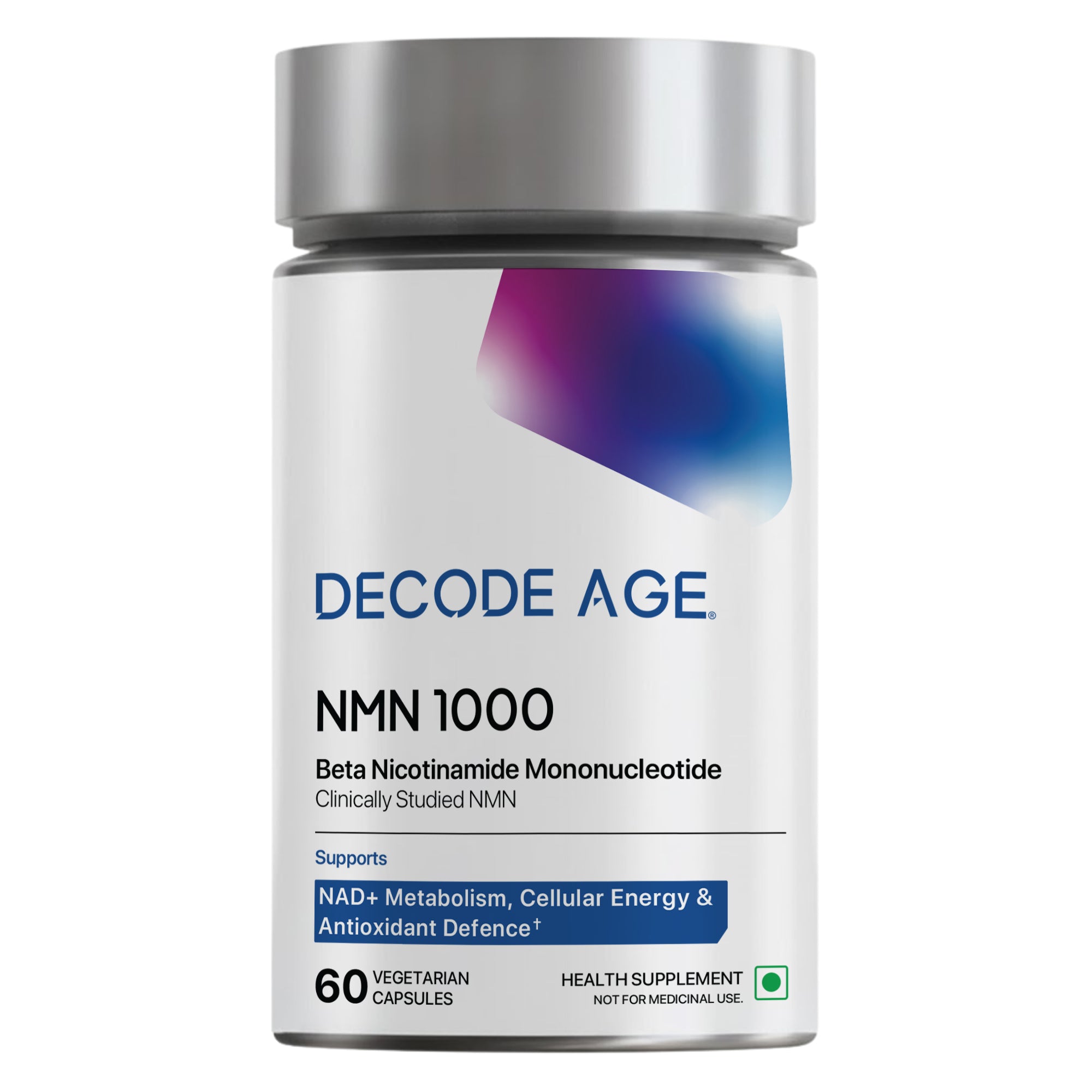
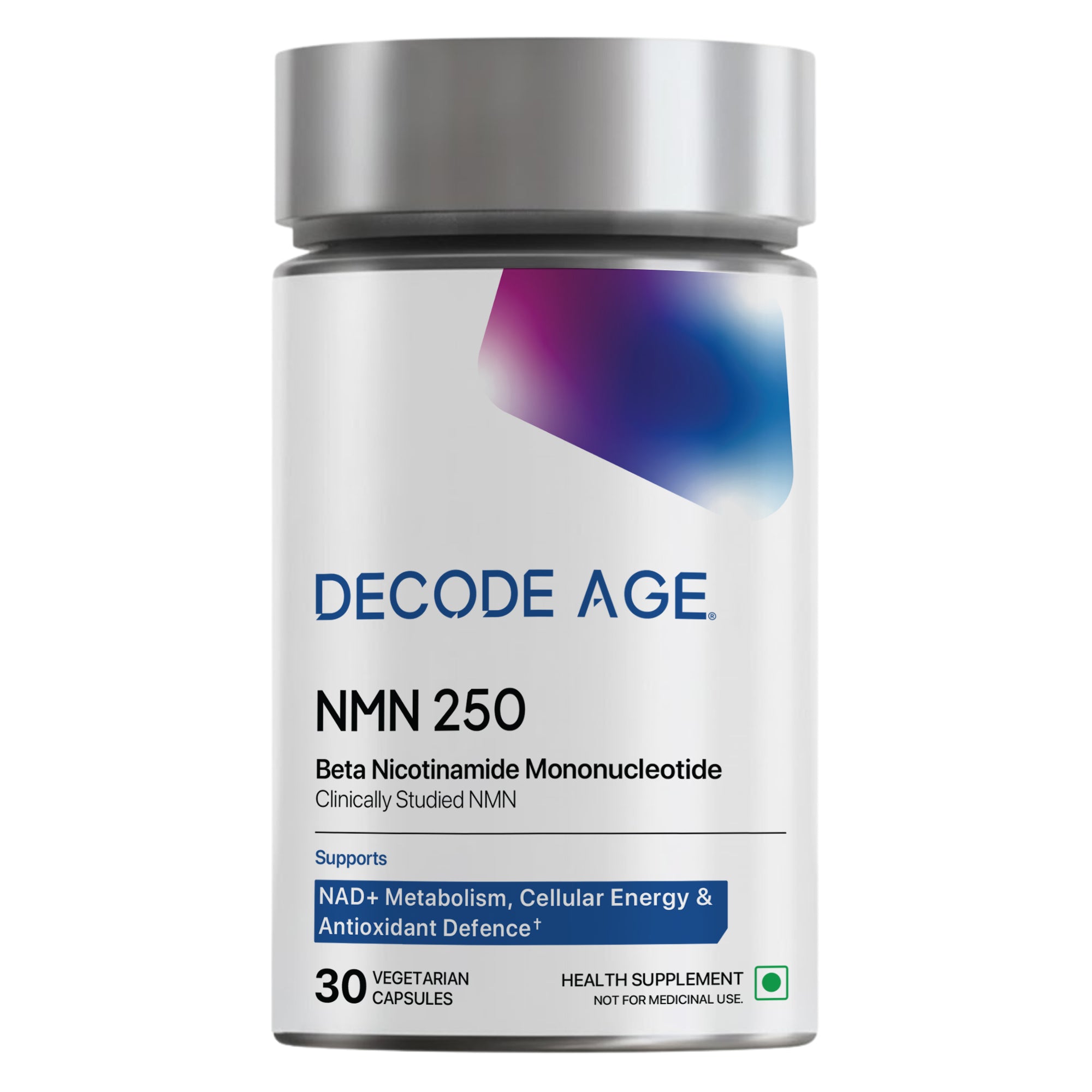
Decode Age follows the same checks in its NMN formulation, using Uthever® NMN and stability-focused packaging suited to heat and humidity [6].
For more context, see the supporting articles on NMN, high-purity NMN 1000mg, its benefits, and Uthever NMN.
FAQs
How do I verify an NMN CoA?
Check that the CoA comes from an independent third-party lab, not the brand itself. A proper report should clearly mention the lab name, the testing method - ideally HPLC-DAD or HPLC-UV - and the batch number. That batch number should match the one printed on your product.
You’ll also want the CoA to mention beta-NMN and show the purity level, with 98% or higher being a good benchmark. Beyond that, look for safety checks such as heavy metals, microbial content, and residual solvents. One more thing that people often miss: the report date should be from the last 12 months, so you know the test results aren’t outdated.
Is β-NMN the only form I should buy?
Yes. β-NMN is the natural, biologically active form that the body recognises and uses to make NAD+.
α-NMN is biologically inactive and does not convert to NAD+ as well. Since some low-quality products may contain more of this less useful form, it’s worth checking whether the Certificate of Analysis clearly confirms β-NMN through HPLC testing.
Does packaging affect NMN quality?
Yes. NMN is unstable and can break down when it’s exposed to heat, light, moisture, and oxygen.
To help keep its potency intact, NMN should be stored in dark amber glass or specialised plastic containers, ideally with desiccants to control moisture. By contrast, clear plastic bottles without moisture protection are more likely to hold degraded NMN, even if the product was made well at the start.



Leave a comment
All comments are moderated before being published.
This site is protected by hCaptcha and the hCaptcha Privacy Policy and Terms of Service apply.