



After 40, I do not look at B vitamins as an age-based rule. I look at intake, absorption, food choices, and medicine use. That is the main point. For many women, the closest watch is on vitamin B12, B6, and folate, especially with vegetarian eating patterns, long-term metformin use, acid-reflux medicines, or low food intake.
What stands out is simple: B vitamins help the body use food for energy, support nerve and brain function, and help control homocysteine. But they do not work like caffeine, and extra doses do not fix fatigue if levels are already fine.
Here is the short version:
- B12 deserves the most attention after 40
- Food may be enough if diet and absorption are both fine
- Testing makes more sense than guessing
- High-dose B-complex products are not always a good idea
I will keep this simple and practical, so you can tell when food is enough, when testing may help, and when a supplement may fit.
Which B Vitamins Should Women Over 40 Pay Attention To?
For many women in their 40s, the first B vitamins to watch are B12, B6 and folate. Midlife often brings small but meaningful shifts in diet, digestion and medicine use, and those shifts can affect vitamin intake and absorption. B1, B2, B3 and B5 also help the body turn food into energy, but they are less often the main issue unless the diet is quite limited or highly restrictive. That’s why B12, B6 and folate deserve the closest attention before getting into energy, brain health and homocysteine.
Vitamin B12: Absorption, Diet and Midlife Relevance
Vitamin B12 helps with red blood cell formation, supports the myelin sheath that insulates nerve fibres, and plays a part in DNA synthesis [1]. After 40, it often needs a closer look because both intake gaps and poor absorption become more common. This is especially relevant for women taking metformin or proton pump inhibitors, and for those following a plant-based diet [1][2].
Vitamin B6 and Folate: Brain Function and Homocysteine
Vitamin B6 is involved in making neurotransmitters such as serotonin, dopamine and GABA, and it also helps with amino acid metabolism [1]. Folate, or vitamin B9, supports cell division and the processes cells use to make and repair DNA [1].
Along with B12, these two vitamins help regulate homocysteine, an amino acid that can build up when the body does not get enough of them. High homocysteine has been linked with cardiovascular risk and with a greater risk of bone fractures in menopausal women [2]. That link between B6, folate and B12 is a big reason they are often discussed as a group rather than one by one.
Other B Vitamins and Their Role in Energy from Food
B1 (thiamine), B2 (riboflavin), B3 (niacin) and B5 (pantothenic acid) act as coenzymes in mitochondrial pathways that help convert carbohydrates, fats and protein into ATP, the form of energy cells use [4]. For most women eating a mixed diet with whole grains, eggs, legumes, nuts, seeds and meat, low levels are less common unless food variety is poor.
| B Vitamin | What It Supports | Common Food Sources | Why Women Over 40 May Take Note |
|---|---|---|---|
| B12 | Nerve health, red blood cell formation, DNA synthesis | Fish, meat, eggs, dairy | Absorption can drop with age and with lower stomach acid; metformin and PPIs may also reduce absorption |
| B6 | Neurotransmitter synthesis, amino acid metabolism | Chickpeas, fish, beef liver, potatoes | Helps with neurotransmitter production and homocysteine regulation |
| Folate (B9) | Cell division, DNA repair, methylation | Leafy greens, beans, lentils, citrus, fortified grains | Works with B12 and B6 in homocysteine regulation |
| B1, B2, B3, B5 | Energy production from food | Whole grains, nuts, seeds, eggs, legumes, meat | Needed as cofactors for ATP production; less likely to be low unless intake is very restricted |
These vitamins stand out because they are closely tied to energy metabolism, nerve function and homocysteine balance.
Energy, Brain Health and Homocysteine: Where B Vitamins Fit
After 40, the main issue usually isn’t getting more B vitamins for the sake of it. It’s making sure your levels stay in a good range as diet, absorption, and medicine use start to change, often alongside managing menopause with supplements. Once that part is clear, the next step is to look at what these vitamins are actually doing in the body, especially in energy, brain function, and homocysteine pathways.
Energy Metabolism: Supportive, Not a Stimulant
B vitamins work as coenzymes that help the body turn food into ATP, the form of energy cells use. They don’t supply energy on their own. B1, B2, B3, and B5 each support parts of the pathways that convert food into usable cellular fuel [1][5].
That distinction matters. B vitamins help the machinery run, but they are not the fuel itself. So if someone already has good B-vitamin status, taking extra won’t act like a stimulant. Added intake tends to help most when levels are low, such as in people on restricted diets or those taking medicines like metformin or proton pump inhibitors [1][3][5].
Brain and Nervous-System Health: What the Evidence Shows
B6, folate, and B12 have clear roles in normal neurological function. B12 helps maintain the myelin sheath that covers nerve fibres, B6 supports neurotransmitter synthesis, and folate contributes to normal methylation reactions [1].
When the conversation shifts to memory and thinking, the picture gets more specific. In one trial, high-dose B6, B12, and folate slowed brain shrinkage in older adults with mild cognitive impairment and high homocysteine [5]. That sounds promising, but there’s a catch: the result applied to a defined group. It does not show that B vitamins stop dementia or reverse cognitive decline across the general population. In cognitively healthy adults, supplementation data is still mixed.
Homocysteine: A Useful Biomarker, Not a Guaranteed Outcome
Homocysteine is an amino acid that can build up in the blood when the body lacks enough B6, folate, or B12 to process it well. Reviews show that supplementation can lower homocysteine in about 4 to 12 weeks [1][5].
Still, a lower biomarker does not automatically mean a lower disease outcome. That’s where people often get ahead of the evidence. Clinical trials have not shown, in a consistent way, that lowering homocysteine with supplements prevents heart disease or dementia in all groups.
There’s another practical point here. Taking just one of these nutrients may not do much if the other two are low as well. These pathways become more relevant when diet shifts, absorption drops, or medicine use starts affecting nutrient status.
How Your 40s and Menopause Shift the Nutritional Picture
After 40, the main question isn’t whether you need more B vitamins. It’s whether what you eat - and what your body can absorb - still lines up with what your body needs.
Diet, Calorie Restriction and Plant-Based Eating
Because B vitamins are water-soluble, your body needs a steady daily supply rather than the odd high-dose intake [1][2].
That matters in day-to-day life. Packed schedules, skipped meals and calorie restriction can chip away at B-vitamin intake over time [3][4].
For women who follow vegetarian or mostly plant-based diets, including many Indian vegetarian eating patterns, B12 needs special attention. It is found almost only in animal-sourced foods such as meat, fish, eggs and dairy [4][5]. A plate built around poha, dal or rajma can be nourishing, but it won’t provide B12.
And there’s another twist: even a good diet may not be enough if your body starts absorbing less B12 than before.
Absorption and Medication-Related Factors
As you get older, lower stomach acid and changes in intrinsic factor can make B12 harder to absorb, even when food intake looks fine on paper [1][2][5].
Medicines can add to that problem. Metformin, often prescribed for PCOS and type 2 diabetes, has been linked to lower B12 absorption over time [1][3]. Proton pump inhibitors (PPIs), used for acid reflux, lower the stomach acid needed to release B12 from food [3][5]. If you’ve been taking metformin or PPIs for a long time, it makes sense to discuss B12 testing with your healthcare professional.
Diet, then, is only one part of the story. Hormonal changes often show up at the same time as these nutrition shifts.
Perimenopause and Menopause in Nutritional Context
Menopause itself does not automatically lead to B-vitamin deficiency [1][2]. The bigger issue is timing. Perimenopause and menopause often happen alongside age-related changes in digestion, shifts in food habits and more frequent medication use [1][2].
B vitamins help support nervous system function and energy metabolism, but they are not a treatment for menopausal symptoms. For a broader look at this topic, see the supplements for menopause guide.
Food First or B-Complex Supplement?
This is where things get practical. Can food still do the job, or is it time to think about testing and supplements? For many women, a varied diet is enough to meet B-vitamin needs, as long as absorption is normal [1][5]. Since B vitamins are water-soluble and the body does not hold large reserves, steady intake matters. That can come from food, or from a supplement when food alone is not enough [1][4].
When Food May Be Enough
In many Indian homes, B vitamins can come from regular, familiar meals rather than anything fancy. Poha with peanuts, moong dal chilla, rajma, palak dal and chole all add to overall intake [4]. That matters because good nutrition often looks less like a “health plan” and more like what’s already on your plate.
For women who include dairy, milk, yoghurt, and paneer can help with B12 intake. Eggs and fish can add more B12 as well [2][4]. So if your meals are mixed, regular and well-balanced, food may still cover a lot of ground.
Who May Need Closer Attention
Some women need to watch B12 more carefully after 40. One big reason is age-related changes in the stomach, which can make absorption less efficient over time [1][2]. You may be eating enough on paper, but your body may not be taking in the same amount.
Strict vegetarians and vegans also need to keep a close eye on B12, because it is not present in plant foods. Even for lacto-vegetarians, dairy may not always fill the gap if intake is low [4][5].
A few other situations also deserve attention:
- Long-term metformin use
- Long-term PPI use
- Gastrointestinal conditions that affect absorption
- Bariatric surgery [1][3][5]
When any of these apply, it makes sense to get blood tests done before picking up a supplement. Guesswork isn’t much help here.
Testing for B12 and Folate: What to Know
If you fall into one of these groups, or you’ve had fatigue that won’t go away, tingling, mouth sores or mood changes, testing is a sensible next step [1][4]. Common markers include serum B12 and RBC folate. If B12 sits in a borderline range, MMA can help make the picture clearer. Homocysteine can also add context [1][3][5].
Test results, especially borderline ones, need proper interpretation. A healthcare professional should look at the full picture and guide what comes next.
If your diet or test results point to a gap, the next step is choosing the right formulation.
How to Choose a B-Complex After 40
If your diet and test results hint at a shortfall, the supplement label becomes your next checkpoint.
What to Look for on the Label
Pick a B-complex that clearly lists each B vitamin along with its exact dose. Skip proprietary blends. If a label hides the amount of each ingredient, it’s hard to judge what you’re taking.
B-50 and B-100 formulas can look appealing, but they often give far more than most people need. In many cases, they’re not a good fit unless a doctor has asked you to use them. High-dose vitamin B6, especially above 100 mg per day, has been linked with peripheral neuropathy [1][3][5]. Folate is another one to watch. Supplemental folate should, in most cases, stay at or below 1,000 mcg, since higher intakes can hide an underlying B12 deficiency [3][5].
Form matters too. Capsules or tablets are usually a better pick than gummies. Gummies often come with lower doses and extra sugar, which can make them less useful if you’re trying to fill a clear gap.
It also helps to check for independent third-party testing seals. These don’t tell you everything, but they do help confirm that the label matches what’s in the bottle and that the product meets basic quality checks.
After dose, the next thing to check is the form of the vitamin itself.
A Brief Note on Methylated Forms
Some B-complex products use pre-converted forms such as methylcobalamin, L-methylfolate, and P-5-P. For some people, these forms may work well. That said, they’re not a must for everyone, and a higher price tag doesn’t always mean a better fit.
For a closer look at the difference, see the methylated vs regular B vitamins guide.
Once the label looks sensible, the next step is dose limits.
Safety: More Is Not Always Better

B Vitamins for Women Over 40: Safety Limits & Deficiency Risks
B vitamins are usually seen as low-risk, and in most cases they are. Still, dose matters. The problem is rarely the vitamin on its own. It’s taking more than your body needs, often from multiple products at the same time.
Risks to Know with High-Dose B Vitamins
Vitamin B6 needs the closest watch. Taking it for a long time at more than 100 mg a day has been linked with peripheral sensory neuropathy. That can show up as tingling, numbness, and nerve damage [3][5].
Niacin (B3) can cause flushing and itching even at supplemental doses of around 30–50 mg. At much higher doses, it may put stress on the liver or even lead to liver injury [5]. This is where people get caught out: a B-complex plus a multivitamin plus an “energy” supplement can quietly send your total intake much higher than expected [5].
Folic acid from supplements presents a subtler concern. Intakes above 1,000 mcg a day can hide the blood-related signs of a B12 deficiency, while nerve damage keeps getting worse in the background [3][5]. That’s why checking B12 status first makes sense before using high-dose folic acid.
High-dose biotin (B7) has a different kind of risk. It can interfere with lab tests, especially thyroid tests and troponin tests [1][3]. If you take high-dose biotin, stop it 48–72 hours before blood work.
| Vitamin | Upper Intake Level | Primary Risk of Excess |
|---|---|---|
| B6 (Pyridoxine) | 100 mg/day | Peripheral neuropathy |
| Folate (Folic Acid) | 1,000 mcg/day | Masks B12 deficiency signs |
| Niacin (B3) | 35 mg/day (supplemental) | Flushing, liver stress |
| Biotin (B7) | No established UL | Distorts thyroid and troponin lab tests |
When to Speak with a Healthcare Professional
Things get more complicated when supplements and prescription medicines overlap. Metformin and proton pump inhibitors can reduce B12 absorption over time [1][3]. Methotrexate can disrupt folate metabolism [1][5]. Levodopa may become less effective when taken with supplemental B6 [1][3]. Since long-term use of these medicines becomes more common after 40, this isn’t a small detail.
You should speak with a healthcare professional before starting a B-complex if you:
- take any regular prescription medicine
- have kidney disease
- have unexplained symptoms like tingling or numbness [1][3]
That’s the bigger picture here. The right next step may be food, blood testing, or a supplement plan shaped with a clinician.
Conclusion: Base Your Choices on Need, Not Age Alone
Turning 40 doesn’t automatically mean you need more B vitamins. What often changes at this stage is everything around those nutrients: what you eat, how well you absorb them, the medicines you may be taking, and, for many women, the shifts that come with perimenopause.
That’s why the sensible order stays the same: start with food, then look at testing or supplements if your intake seems low or absorption may be an issue. Eggs, leafy greens, legumes, salmon, and dairy can give many people a solid base for several B vitamins. If that base is missing - because of a plant-based or restricted diet, long-term medicine use, or a diagnosed deficiency - it’s worth speaking with a healthcare professional about whether supplementation fits your situation.
If supplements are being considered, ask a clinician about serum B12, RBC folate, and homocysteine testing.
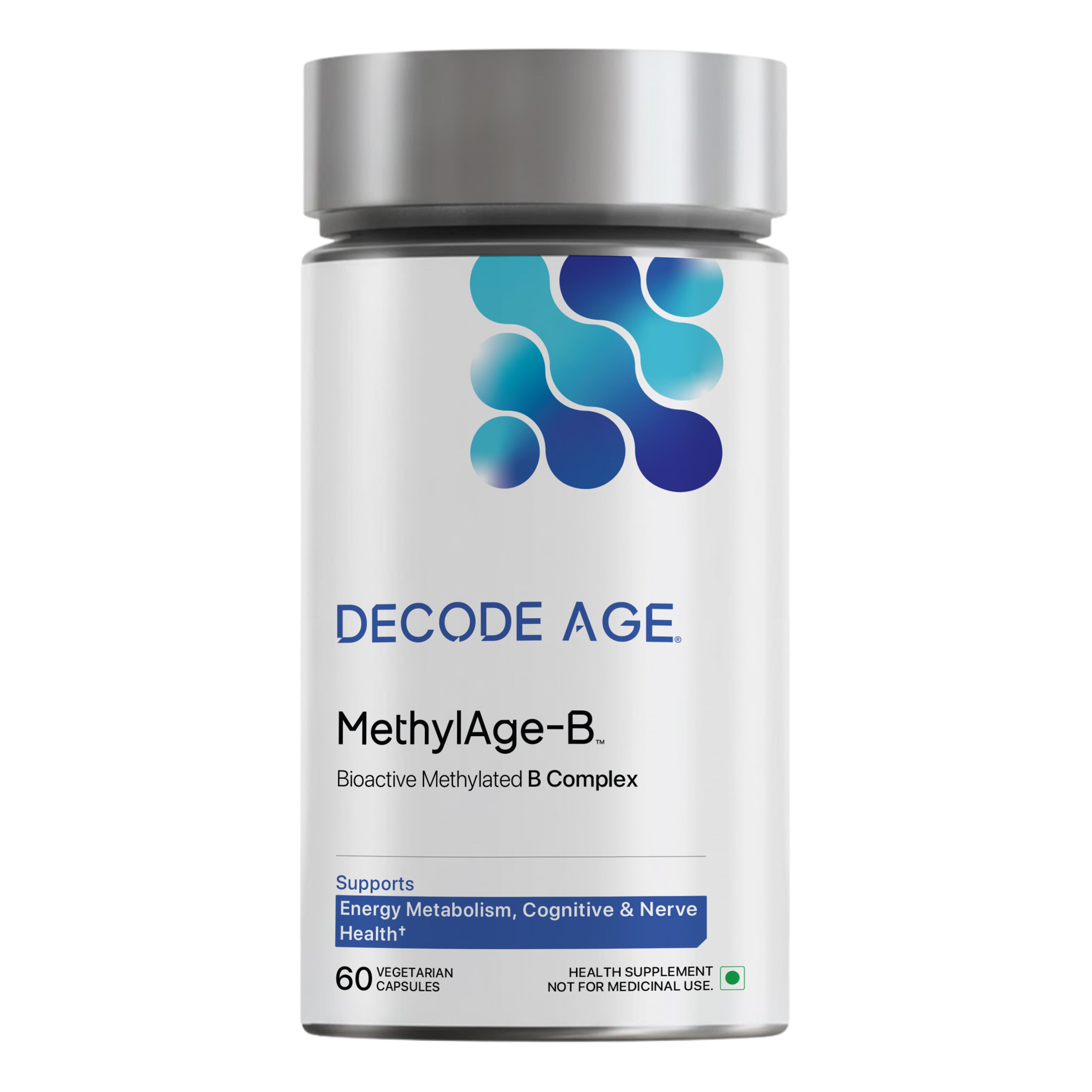
And if a B-complex does seem like the right move, pay attention to the basics: clear labelling, sensible doses, and pre-converted forms where they matter. For more on formulation, see the MethylAge-B™ guide and the B-complex supplement guide.
With that groundwork in place, the next step is simple: choose only what lines up with your actual B-vitamin needs. The goal is not to supplement because of your age. It is to understand your individual nutrient needs and act on what the evidence actually shows. That is the difference between useful supplementation and unnecessary use.
FAQs
Do women over 40 need a B-complex every day?
Turning 40 doesn’t suddenly mean you need a daily B-complex. That said, this stage of life can bring a few shifts that make steady B-vitamin intake more relevant. Diet can change, absorption may not work quite the way it used to, and perimenopause or menopause can add another layer to the picture.
Food should still be the main source. A nutrient-dense diet gives you B vitamins along with fibre, protein and other nutrients that work together in the body. In some cases, supplements may help, especially if you follow a restricted diet or there’s a chance your intake is low. But it’s worth speaking with a healthcare professional before adding one, so you don’t end up taking more than you need.
Which blood tests can check B12 and folate status?
Blood tests for B12 and folate can help check your levels, especially if you follow a restrictive diet or have a health issue that may affect absorption. That matters because symptoms on their own don’t tell the full story. Tiredness, weakness, low mood, and brain fog can overlap with many other conditions.
A healthcare professional can read these results in the right context, looking at your diet, medical history, and current symptoms together. If your levels are low, they can also guide you on whether supplementation makes sense for you, based on your health markers and any medicines you take.
Can metformin or acid-reflux medicines lower B12 levels?
Yes. Some medicines, including metformin and acid-reflux treatments, can affect how well your body absorbs vitamin B12. Over time, that can make it harder to maintain healthy B12 levels.
If you take these medicines often, it’s worth speaking with a healthcare professional about your B12 status. This matters even more if your diet is low in B12 or if you already have issues with nutrient absorption.


Leave a comment
All comments are moderated before being published.
This site is protected by hCaptcha and the hCaptcha Privacy Policy and Terms of Service apply.