







Here’s a fact that’s looking bad for us: more than 70% of Indians are deficient in at least one essential nutrient, including people who eat three full meals every day (ICMR-NIN National Nutrition Survey, 2019). Our plates might look full, but our bodies, however, are still starving.
Chronic nutrient deficiency accelerates ageing. It’s a very simple logic: if you don’t get enough essential vitamins and minerals, your body struggles to repair itself, produce energy, and keep cells healthy, no matter how young you are.
That is why just fixing these deficiencies isn’t just about feeling better; it’s a method to support long-term health and slow down ageing. That’s why using the right supplements for anti-ageing is becoming increasingly important for most Indian adults.
Why Are So Many Indians Deficient Despite Eating Well?
The problem isn’t the amount you eat, it’s the overall nutritional values of the food, and how much the body can absorb from it. In the Indian context, this is further exaggerated by:
- Spending most of our time indoors and high pollution levels block sunlight, making it harder for our bodies to produce enough Vitamin D
- Modern farming practices have reduced the nutrients in fruits and vegetables, so the food we eat today may have fewer vitamins and minerals than before
- Eating too many processed and refined foods means we miss out on healthier, nutrient-rich whole foods
- Ongoing stress and poor gut health can stop the body from properly absorbing nutrients, even if we’re eating well
- Mostly vegetarian diets, without proper planning, can lead to shortages of important nutrients like Vitamin B12, zinc, and omega-3
The result of these factors shows up gradually in the form of constant fatigue that never gets better, immunity that keeps failing, excessive hairfall, and visible effects on individual cognitive performance. They are all early signals of accelerated cellular ageing.
The Key Deficiencies And What Each One Is Costing Your Longevity
Nutrient Deficiency Overview: Prevalence, Signs, and Longevity Impact
|
Nutrient |
Prevalence in India |
Key Signs |
Longevity Impact |
|
Vitamin D |
~80% deficient |
Fatigue, joint pain, low mood, frequent illness |
Immune decline, bone density loss, chronic inflammation |
|
Magnesium |
~70% deficient |
Poor sleep, cramps, anxiety, headaches |
Mitochondrial dysfunction, elevated cortisol, and DNA damage |
|
Vitamin B12 |
50–60% deficient |
Tingling, brain fog, fatigue, low mood |
Neurodegeneration |
|
Zinc |
Common in vegetarians |
Hair fall, low immunity, acne, and brain fog |
Impaired DNA repair, hormonal imbalance |
|
Omega-3 |
>80% deficient |
Dry skin, joint pain, poor focus, low mood |
Chronic inflammation, cardiovascular risk |
Vitamin D: India's Invisible Epidemic
It is one of the biggest paradoxes: India as a country receives ample amounts of sunlight, yet approximately 80% of its population is Vitamin D deficient (Ritu & Gupta, Oman Medical Journal, 2014).
The reason is simple: most Indians spend a large part of their day indoors, and factors like pollution and covered clothing reduce sunlight exposure needed to make Vitamin D. This vitamin plays a key role in keeping your body healthy as it helps support immunity, control inflammation, and absorb calcium properly. So, when their levels are low, it speeds up the immune system’s ageing and leaves us open to early-stage health risks (Autier et al., BMJ, 2014).
Managing Vitamin D deficiency can be simple. Try to get 15–20 minutes of direct sunlight between 10 AM and 2 PM, and include foods like eggs and fatty fish in your diet to support Vitamin D levels.
However, with busy urban lifestyles, maintaining these habits isn’t always easy. That’s why taking the best Vitamin D3 supplement is a practical way to support long-term health.
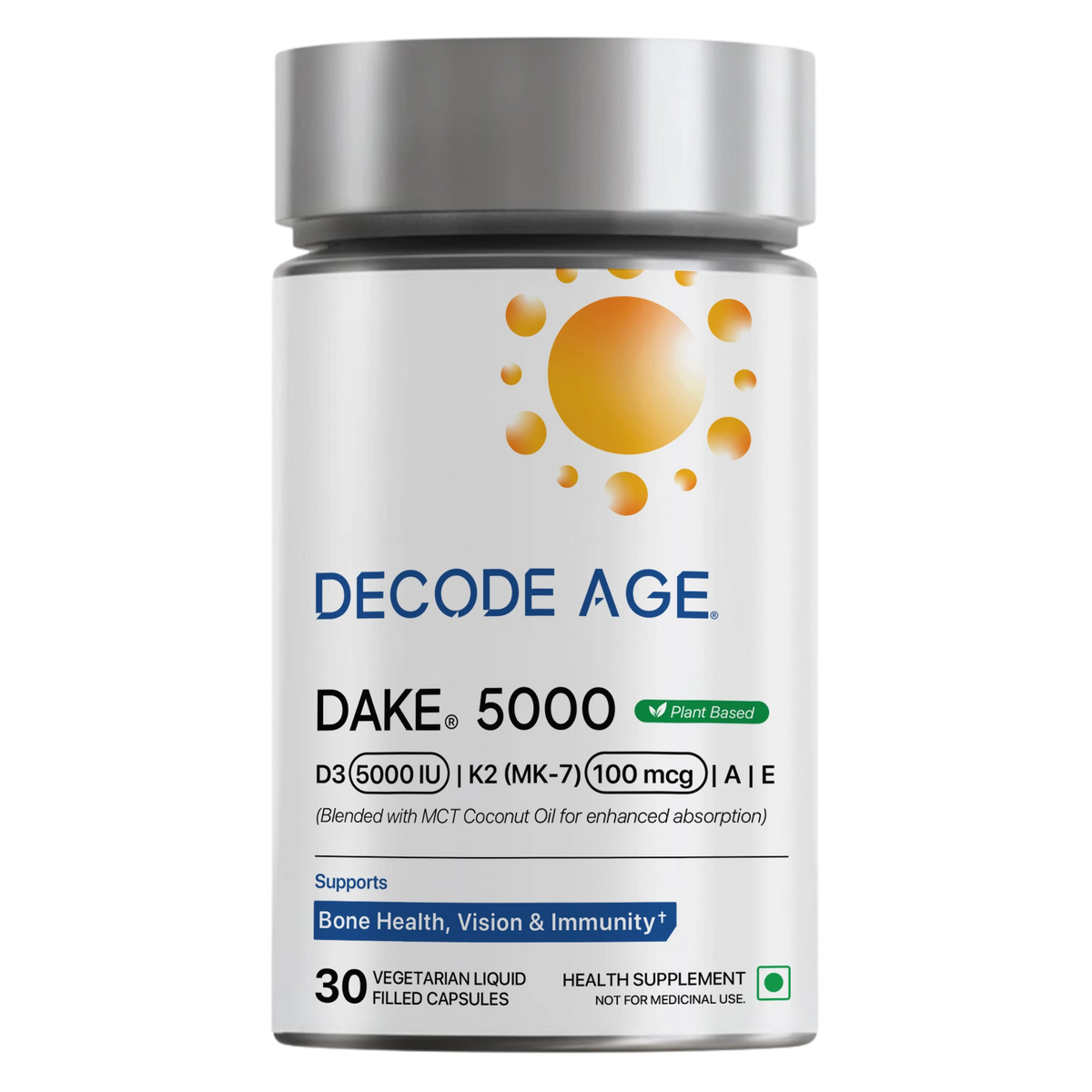
For example, Decode Age DAKE® 5000 IU provides Vitamin D3 (Cholecalciferol) along with Vitamin K2, Vitamin A, and Vitamin E in an easy-to-absorb form. The added K2 helps ensure calcium goes to your bones instead of building up in your arteries, which many basic Vitamin D supplements don’t address.
Magnesium: The Deficiency Nobody Talks About
Magnesium is involved in more than 300 important processes in the body, starting from energy production and DNA repair to managing stress and improving sleep. Still, around 70% of adults don’t get enough magnesium, and the situation is similar in India due to the shift from whole grains and pulses to refined foods (WHO, 2009).
Low magnesium levels can increase inflammation, drain energy, and raise stress hormones, all of which speed up ageing. This is where the benefits of magnesium bisglycinate stand out, as it is easier on the stomach and better absorbed compared to other forms (Schuette et al., Journal of Parenteral and Enteral Nutrition, 1994).
A high-quality magnesium blend supplement can help cover these gaps more effectively. For instance, Decode Age Mag7™ combines multiple forms of magnesium along with key nutrients to support energy, stress, and sleep. It’s the kind of formulation you’d expect from the top longevity brands in 2026, designed to fit into a modern lifestyle.
Taken regularly, it works as a practical supplement for an anti-ageing solution, helping support overall health for people with magnesium-deficient diets.
Vitamin B12: The Silent Nerve and Brain Thief
Vitamin B12 is vital for keeping the nerves healthy, making red blood cells, and supporting brain function. When B12 levels are low, it can lead to higher homocysteine levels, which increases the risk of heart problems, memory issues, and neurological conditions (Smith & Refsum, Annual Review of Nutrition, 2016). Around 50–60% of Indians are deficient in B12, especially vegetarians and vegans who don’t consume animal-based foods.
Common signs of low B12 include tingling in the hands and feet, constant tiredness, poor memory, and mood changes that are often mistaken for stress or overwork. The best way to fix this is through supplements containing methylcobalamin (an easily absorbed form of B12), along with a diet that supports good gut health.
A Nutrient-Led Approach to Immunity & Healthy Ageing
Filling Common Deficiency Gaps
|
Deficiency Area |
Key Nutrients |
Impact on Body |
Suggested Approach |
|
Vitamin D deficiency |
Vitamin D3 + K2 + A + E |
Weak immunity, poor bone health |
If you're working on Vitamin D levels, Decode Age DAKE® 5000 IU can be a relevant addition |
|
Magnesium deficiency |
Magnesium + B6 + Manganese |
Poor sleep, stress, and low recovery |
For magnesium support, Decode Age Mag7™ is a well-rounded option |
|
Oxidative stress |
Resveratrol + Vitamin C + Selenium |
Faster ageing, inflammation |
Combine antioxidants through diet and targeted supplements |
|
Low cellular energy |
NMN + CoQ10 + B Vitamins |
Fatigue, reduced repair capacity |
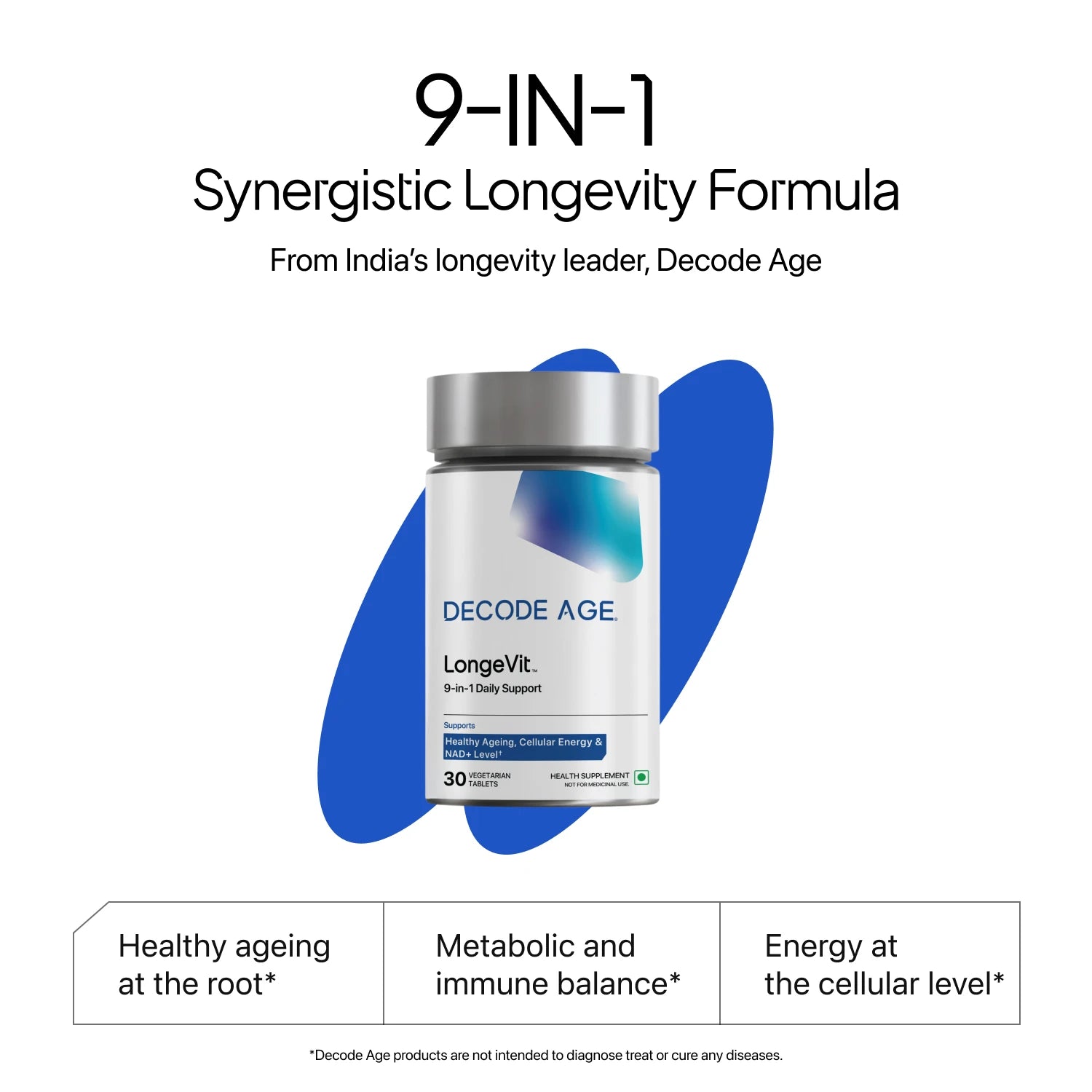
Multi-nutrient blends like LongeVit™ can help address this |
Get Ahead of Deficiencies
Your body isn’t failing; it’s simply doing the best it can with what it gets. When you fill the gaps created by your diet, lifestyle, and environment with the right foods, habits, and supplements for anti-ageing, you can start to see real changes: more energy, better focus, and stronger immunity.
You may not be able to control your surroundings, but you can choose to give your body the right nutrition it needs to stay healthy and age better.
FAQs
-
How do I know if I have a nutrient deficiency?
Common signs include persistent fatigue, brain fog, hair loss, poor immunity, muscle cramps, and low mood. However, deficiencies often go undetected for years. A blood panel checking Vitamin D, B12, iron, zinc, and magnesium every 6–12 months is the most reliable approach.
-
Can I get all my nutrients from food alone?
Ideally, yes, but practically, no. Soil depletion, indoor lifestyles, consuming processed food, and poor gut metabolism mean most Indians cannot meet optimal levels through food alone. Targeted supplementation is thus a good option that fills the gaps that even a healthy diet leaves behind.
-
Why does Decode Age DAKE® combine D3 with K2?
Vitamin D3 increases calcium absorption, but without K2, that calcium can deposit in arteries rather than bones. K2 (MK-7) directs calcium to the skeletal system where it belongs. This combination is clinically approved for bone density, cardiovascular safety, and immune support, making DAKE® a more complete solution than standalone D3.
-
What makes Mag7™ different from a standard magnesium supplement?
Most magnesium supplements use a single form, typically oxide, which has poor absorption. Mag7™ combines seven bioavailable forms with active B6 (P5P) and manganese, covering everything from sleep and stress to DNA repair and mitochondrial energy. It is the most comprehensive magnesium intervention available from any longevity brand in India.
-
Who should take LongeVit™?
Any adult over 30 looking to target early-ageing symptoms such as depleted NAD+, chronic inflammation, and constant fatigue. It is especially valuable for those with high-stress, indoor, or nutrient-poor diets. One tablet daily after breakfast provides multi-pathway anti-ageing support in a single, convenient dose.


Leave a comment
All comments are moderated before being published.
This site is protected by hCaptcha and the hCaptcha Privacy Policy and Terms of Service apply.