



If I’m choosing a B complex capsule, I first want to know one thing: is it filling a gap, or just adding noise? That is the main question with vitamin B complex.
Vitamin B complex includes 8 water-soluble vitamins that help the body use food for energy, support nerve signalling, and back brain function. For many Indians, intake can vary due to vegetarian diets, low meal variety, age-related B12 absorption issues, skipped meals, and stress-heavy routines. A supplement may help when intake is low or absorption is poor. It is not a stimulant, and it does not replace food.
In this guide, I’d focus on the simple part: what matters, who may need to pay more attention, what evidence says, and how to read a label without getting misled.
What Is Vitamin B Complex?
Vitamin B complex is the name for a group of eight water-soluble vitamins that help your body turn food into energy and keep cells working as they should. Day to day, they support things people actually notice - energy levels, mental focus, and nerve function. Since the body stores only small amounts of most B vitamins, getting them often through food or a B complex capsule can matter. It helps to think of these vitamins as one connected system, not eight unrelated nutrients.
The 8 B Vitamins
The vitamin B complex includes B1, B2, B3, B5, B6, B7, B9, and B12.
Why B Vitamins Work Better as a Group
B vitamins do not work in isolation. They work as a linked system, mainly by acting as coenzymes that help enzymes carry out the reactions your cells depend on. Each B vitamin has its own job, but those jobs overlap and support one another. If intake of even one B vitamin is low, the group may not work as well as it should.
That’s the key idea behind vitamin B complex: it refers to all eight B vitamins together, not single nutrients taken out of context. This shared role is a big part of why they’re tied to energy production, brain function, and nerve health.
How B Vitamins Support Everyday Health
Now that you know what vitamin B complex is, let’s get into what it does in the body. Put simply, B vitamins work as a team. They help your body convert food into energy, support brain and nerve function, help form red blood cells, and take part in a process called methylation.
The first area where this shows up is energy metabolism.
Who May Benefit from a B Complex Capsule?
Some phases of life and some eating habits can make B-vitamin gaps more likely. Since B vitamins work as a group, a low intake of even one can matter more in certain diets and age groups.
Vegetarians, Vegans, and Adults Over 40
Vitamin B12 is found mainly in animal-based foods such as meat, eggs, and dairy. Vegetarians - and even more so, vegans - may struggle to get enough from food alone. In these cases, a B complex capsule can help cover dietary gaps when intake or absorption is lower.
Adults over 40 may also absorb vitamin B12 less well, since stomach acid often drops with age. That can affect functions tied to energy, brain health, and nerve health.
This also applies to people whose routines are all over the place. Busy professionals, students, people dealing with stress, and fitness enthusiasts may come up short when meals are rushed, repetitive, or skipped.
Low-Variety Diets and Irregular Eating
Low-variety or restricted diets can make B-vitamin intake patchy. A B complex capsule can help bridge those gaps, but it should support your diet - not stand in for it.
The next section looks at where Indians get B vitamins from food, and where gaps tend to show up.
B Vitamins in the Indian Diet
Before you pick a B complex capsule, it helps to look at where these vitamins show up in everyday Indian meals - and where things can slip through the cracks. Many Indian diets do include B vitamins from dals, whole grains, dairy, eggs, fish, meat, nuts, and leafy vegetables. On paper, that sounds like plenty. In day-to-day life, though, intake can vary a lot depending on food choices, meal variety, and how well the body absorbs these nutrients.
This is where dietary pattern matters. Vegetarian and vegan diets, for example, may fall short on vitamin B12, since it is found mainly in animal-based foods. At the same time, people who eat in a hurry, rely on low-variety meals, or skip balanced home-style eating can end up with uneven intake of other B vitamins too. Think of it like a thali that looks full but still misses a few small yet important pieces.
That bit of context makes it easier to judge whether food alone is doing the job or whether a supplement may be worth a closer look.
sbb-itb-55c436e
What Does the Clinical Evidence Say?
Human studies point to a simple pattern: vitamin B complex tends to help most when a person is low in one or more B vitamins, has poor absorption, or needs more than usual. That can happen with age, diet limits, certain gut issues, some medicines, or periods of higher physical demand. In those cases, supplementation can help support normal body processes.
For energy, brain function, and nerve health, the findings are less clear in people who already get enough from food. That’s the part many labels gloss over. A B complex isn’t a quick buzz in a capsule. It doesn’t work like a stimulant. Its main job is to help the body do what it’s already built to do, especially when there’s a gap.
The practical point is pretty straightforward: the value of a B-complex capsule depends less on marketing talk and more on the basics - dose, ingredient form, quality, and a clear label. With that in mind, the next step is learning how to read a supplement label without getting lost in the fine print.
How to Choose the Best B-Complex Supplement
The label is your fastest reality check. It tells you the dose, the ingredient form, and a lot about product quality. Since the effect of a B-complex can depend on your nutrient status and the amount used, the label often gives you the clearest starting point.
What to Check on the Label
A complete vitamin B complex should list all eight B vitamins: B1, B2, B3, B5, B6, B7, B9, and B12. Each one should have its amount shown clearly in milligrams or micrograms. If the label hides them inside a proprietary blend, it becomes much harder to tell what you’re actually buying.
You’ll also want amounts that make sense for daily use. A good formula usually shows clear doses across all eight vitamins instead of loading up just one nutrient and using that as the headline.
Manufacturing Quality, Testing, and Ingredient Forms
GMP (Good Manufacturing Practices) certification is a useful marker when you’re checking product quality. Decode Age's supplements are made in FDA-registered, GMP-certified facilities, which is the sort of manufacturing standard worth checking when you want steady production quality and confidence in what’s on the label.
Third-party testing adds one more layer of checking. It’s not flashy, but it matters.
Ingredient form also counts. Some B vitamins come in active forms that the body may use more easily. If you want a plain-English breakdown, see the linked guide on methylated B-complex vs regular B complex.
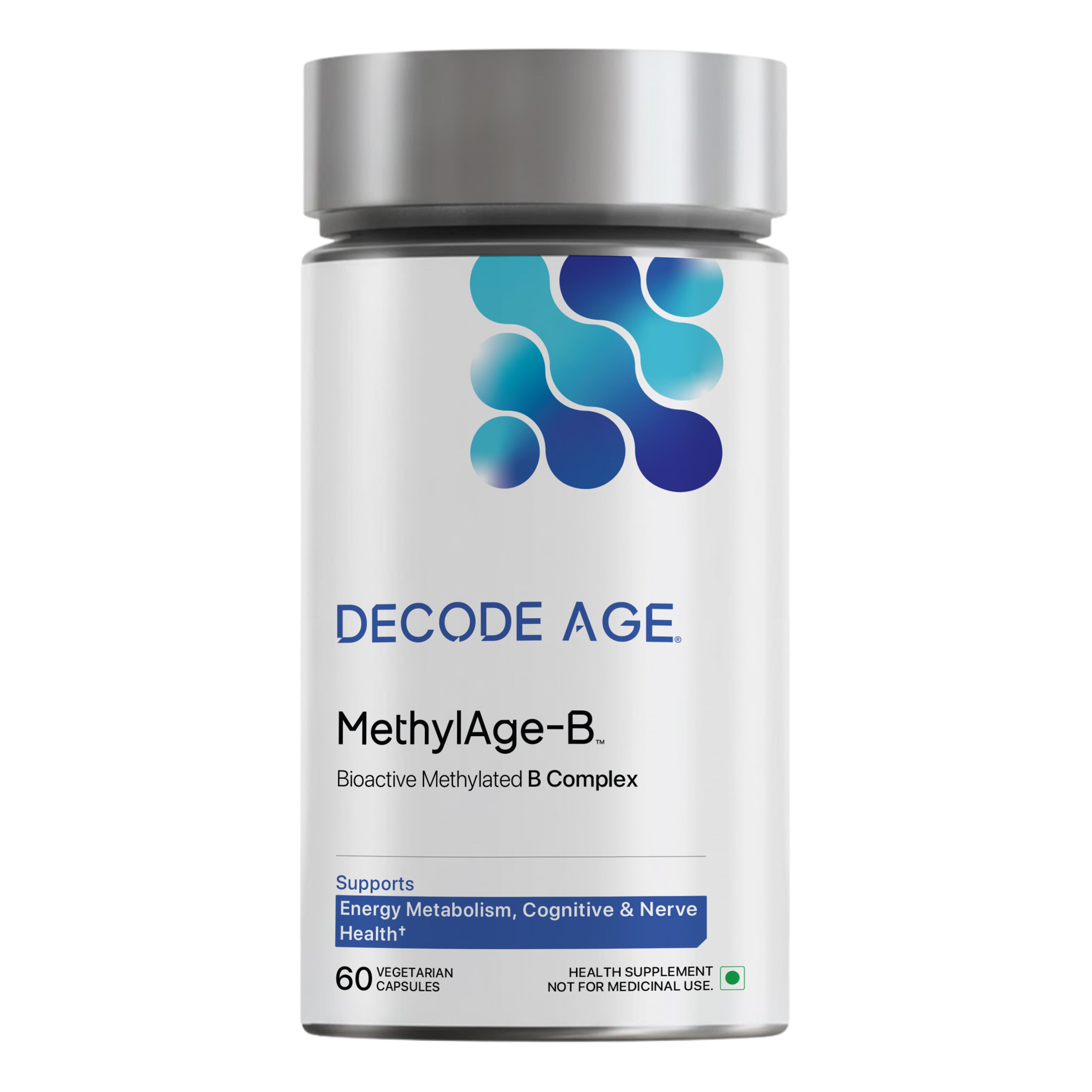
A clear example of these label rules in action is Decode Age MethylAge-B™. It’s a b complex capsule made with active ingredient forms and clearly stated doses across all eight B vitamins. You can see the full formula on the MethylAge-B™ product page, and the article on what B complex supplements are and why methylated forms matter explains the thinking behind the formula in more detail.
Use this quick table when you compare options:
| What to Look For | Why It Matters |
|---|---|
| All 8 B vitamins listed individually | Confirms a complete formula |
| Clearly stated dosages | Makes comparison easier |
| GMP-certified manufacturing | Supports steady production quality |
| Third-party testing | Adds an independent quality check |
| Active ingredient forms | Helps when comparing labels |
| Clear, readable label | Makes informed decision-making easier |
Quick Reference Tables

Vitamin B Complex: 8 B Vitamins, Their Functions & Who Needs Them
Once you’ve gone through the evidence, these tables make the main points much easier to scan. Think of them as a shortcut: if you want to match a health goal, a life stage, or a supplement label with the right B vitamins, this is the place to start.
Start with the table below. It links common health goals to the B vitamins most closely tied to them.
| Health Goal | Key B Vitamins | Primary Function |
|---|---|---|
| Energy from food | B1, B2, B3, B5 | Helps release energy from carbohydrates, fats, and proteins |
| Brain and cognitive function | B6, B9, B12 | Supports neurotransmitter production and homocysteine metabolism |
| Nerve health | B1, B6, B12 | Helps with nerve signalling and myelin support |
| Red blood cell formation | B9, B12 | Supports oxygen transport and cell division |
| Healthy methylation | B6, B9, B12 | Helps with one-carbon metabolism and DNA synthesis |
| Skin, hair, and enzyme function | B2, B3, B7 | Supports cellular repair and fatty acid metabolism |
The next table shows where B vitamins tend to matter more in day-to-day life. This isn’t about hype. It’s about where gaps are more likely to show up.
| Life Stage or Lifestyle | Why B Vitamins Matter |
|---|---|
| Vegetarians and vegans | B12 is found mainly in animal foods, so a dietary gap is more likely |
| Adults over 40 | Stomach acid can drop with age, which may reduce B12 absorption |
| Busy professionals | Rushed or skipped meals can lower overall B-vitamin intake |
| Students | Irregular eating patterns and higher cognitive demand can increase pressure on intake |
| Fitness enthusiasts | Higher energy turnover can increase B-vitamin need |
| People under prolonged stress | Stress places more demand on B-vitamin-dependent pathways |
| Low-variety or restricted diets | Intake may be uneven across more than one B vitamin |
If you’re checking a supplement label, a few details can tell you a lot. A clean label is often a good sign; a vague one usually isn’t.
| What to Look For | Why It Matters |
|---|---|
| All 8 B vitamins listed individually | Shows that the formula is complete |
| Clear dosages in mg or mcg per vitamin | Makes label comparison easier |
| No proprietary blends hiding amounts | Lets you assess the dose properly |
| GMP-certified manufacturing | Points to steady production quality |
| Third-party testing | Gives outside verification of label accuracy |
| Active ingredient forms noted | Matters for absorption, especially B12 and B9 |
| Readable, uncluttered label | Helps you make an informed choice |
The final table pulls the human evidence into one view. It’s a quick way to see where the data is strongest and where the effect depends more on whether someone is low in that nutrient to begin with.
| Health Area | Key B Vitamins | Human Evidence | Strength of Evidence |
|---|---|---|---|
| Energy metabolism | B1, B2, B3, B5 | Supports normal energy release; benefit is clearest when intake is low | Moderate; strong in deficiency |
| Cognitive function | B6, B9, B12 | Supports homocysteine reduction; cognitive benefit appears mainly in low-intake groups | Moderate; mixed in replete adults |
| Nerve health | B1, B6, B12 | Supports nerve signalling and myelin integrity; evidence is strongest in deficiency | Moderate |
| Red blood cell formation | B9, B12 | Well-established role in cell division and oxygen transport | Strong |
| Homocysteine metabolism | B6, B9, B12 | Human trials show steady reduction in elevated homocysteine | Strong |
| Nutritional adequacy | All 8 B vitamins | Human evidence supports use mainly in low intake or deficiency; evidence is mixed in nutrient-replete adults | Moderate |
A Practical Take on Vitamin B Complex
Vitamin B complex includes eight nutrients your body needs every day. They help turn food into energy, support the nerves, and keep the brain working well. If your intake is low, that gap can affect day-to-day health in a very direct way. The tables above can help you see where your diet may be falling short.
When meals are irregular, or food choices don’t cover enough ground, it makes sense to check if a capsule is filling an actual gap. That’s where label quality comes in. A long ingredient list means little if the label is vague or hard to verify. The aim is simple: a supplement should support a balanced diet, not stand in for one.
Pick based on what you eat, what your body may be missing, and how clear the label is. Start with diet, then use a supplement only if intake, absorption, or daily routine leaves room for one.
FAQs
What is a Vitamin B complex?
Vitamin B complex refers to a group of eight B vitamins that the body needs every day to keep many core functions running well.
Because these vitamins are water-soluble, the body doesn’t store most of them in large amounts. That means a steady daily intake matters. Together, they help turn food into energy, support brain and nerve function, aid red blood cell formation, and take part in many other day-to-day processes that keep the body working as it should.
Why do B vitamins work together?
Vitamin B complex refers to a group of eight water-soluble vitamins that the body needs regularly. They work as a team and help keep many day-to-day functions running smoothly.
Together, these vitamins support energy metabolism, brain function, nervous system health, red blood cell formation, and healthy methylation.
How do I choose the best B-complex supplement?
Choose a B-complex supplement by checking five things: a clear label, sensible doses, clean manufacturing, third-party testing, and active forms of key B vitamins.
A well-made B-complex can help support day-to-day nutrition, but it shouldn’t stand in for a balanced diet. The best pick comes down to quality, label clarity, and a formulation built on evidence.
Who may benefit from a B complex capsule?
People who may benefit include those who don’t get enough B vitamins from food, or whose day-to-day routine puts extra demand on the body. That can include vegetarians and vegans, adults over 40, busy professionals, students, fitness enthusiasts, and people dealing with long periods of stress.
A B complex capsule may help support daily health in a few key areas, such as energy metabolism, brain function, nerve health, and red blood cell formation. Still, it works best as a supplement to a balanced diet, not a substitute for one.
Are food sources enough for everyone?
Not always. A balanced diet can give you many B vitamins, but for some people, food alone may fall short.
This matters more for vegetarians and vegans, adults over 40, busy professionals, students, fitness enthusiasts, and people with irregular eating habits or long periods of stress. In these cases, it makes sense to pay closer attention to B-vitamin intake. Supplements can help fill the gap, but they should support a healthy diet, not take its place.


Leave a comment
All comments are moderated before being published.
This site is protected by hCaptcha and the hCaptcha Privacy Policy and Terms of Service apply.