



If you've been researching longevity supplements, you've likely come across both NMN (nicotinamide mononucleotide) and Urolithin A, and wondered which one you actually need. The short answer: they're not direct alternatives. Urolithin A vs NMN isn't really a competition, because the two compounds work through different biological pathways and, for many people, complement each other rather than compete.
NMN primarily supports NAD+ production and cellular energy. Urolithin A primarily supports mitophagy and mitochondrial quality control, essentially, cleaning out old or damaged mitochondria so healthier ones can take their place.
People chasing energy, metabolic health, and NAD+ decline tend to gravitate toward NMN. Those focused on muscle function, exercise recovery, and mitochondrial "housekeeping" often look to Urolithin A. By the end of this article, you'll understand exactly how each one works, what the evidence says, and how to decide (or combine) based on your goals.
Quick Overview
| Feature | NMN | Urolithin A |
|---|---|---|
| Primary mechanism | Precursor to NAD+ | Activates mitophagy |
| Main biological pathway | NAD+/sirtuin pathway | Mitochondrial quality control pathway |
| Primary research focus | Cellular energy, metabolic health, ageing | Muscle function, mitochondrial renewal |
| Cellular target | Nucleus and mitochondria (via NAD+) | Mitochondria directly |
| Best suited for | NAD+ support, energy, metabolic goals | Muscle strength, recovery, mitochondrial renewal |
| Human clinical evidence | Growing, mostly short-term trials | Growing, several placebo-controlled trials in muscle health |
What Is NMN?
NMN, or nicotinamide mononucleotide, is a molecule your body uses to make NAD+ (nicotinamide adenine dinucleotide), a coenzyme present in every cell that's essential for converting food into usable energy.
Think of NAD+ as the currency your cells spend to keep the lights on. It's needed for energy metabolism, DNA repair, and communication between the nucleus and mitochondria. The problem is that NAD+ levels decline steadily with age, and by our 60s, they can be a fraction of what they were in our 20s. This decline has been linked to slower cellular repair and reduced energy production.
NMN acts as a direct precursor: your body converts it into NAD+ relatively efficiently. Higher NAD+ availability, in turn, supports sirtuins, a family of proteins involved in DNA repair, stress resistance, metabolic regulation, and healthy mitochondrial function.
What Is Urolithin A?
Urolithin A is a compound your gut bacteria produce from ellagitannins, polyphenols found in foods like pomegranates, walnuts, and certain berries.
Here's the catch: producing it isn't guaranteed. It depends entirely on having the right gut microbiome composition, and research suggests a large share of people, some studies estimate around 40% or more, produce very little or none naturally, regardless of how many pomegranates they eat. This is why direct Urolithin A supplementation has become popular: it bypasses the gut-conversion bottleneck.
Once available in the body, Urolithin A's standout role is triggering mitophagy, the process by which cells identify and clear out damaged or inefficient mitochondria. This is a core part of mitochondrial quality control: rather than boosting energy production directly, Urolithin A helps maintain a healthier population of mitochondria over time, which supports sustained energy and muscle function.
Urolithin A vs NMN: How They Work Differently
Both compounds target hallmarks of ageing, but from different angles.
| NMN | Urolithin A | |
|---|---|---|
| Acts on | NAD+ pool | Damaged mitochondria |
| Primary outcome sought | More cellular energy | Better-quality mitochondria |
| Downstream effect | Sirtuin activity, DNA repair | Reduced mitochondrial dysfunction |
Benefits of NMN
Research on NMN, mostly in early-stage human trials and animal studies, has explored:
- Cellular energy: by raising NAD+ availability, supporting basic cellular energy metabolism.
- Healthy ageing: NAD+ decline is associated with several ageing markers, so restoring it is an active research area.
- Metabolic health: Some trials suggest benefits for insulin sensitivity in specific populations.
- Physical performance: a handful of studies report modest improvements in aerobic capacity.
- Cognitive health: preliminary and largely preclinical, with human data still limited.
It's worth noting that most human NMN trials are short-term and involve small sample sizes, so findings should be considered promising rather than conclusive.
Benefits of Urolithin A
Clinical research on Urolithin A has more directly focused on muscle and mitochondrial outcomes:
- Muscle strength: placebo-controlled trials in middle-aged and older adults have shown improvements in muscle endurance.
- Endurance: Some studies report measurable gains in exercise output.
- Mitochondrial function: markers of mitochondrial health have improved in supplemented groups in several trials.
- Healthy ageing: by supporting mitochondrial turnover, a key mechanism thought to decline with age.
- Cellular resilience: better-functioning mitochondria may support overall cellular stress resistance.
As with NMN, most trials are still relatively short in duration, and larger, longer studies would help confirm long-term benefits.
Which Supplement Should You Choose?
Rather than naming a single winner, it helps to match the compound to your goal.
Choose NMN if your goal is primarily:
- Cellular energy
- NAD+ support
- Healthy ageing
- Metabolic function
Choose Urolithin A if your goal is primarily:
- Muscle function
- Mitochondrial quality
- Exercise recovery
- Healthy ageing
Because "healthy ageing" shows up on both lists, it's not surprising that many longevity-focused protocols include both; they target complementary parts of the same underlying system: NAD+ availability on one side, mitochondrial quality on the other.
Can NMN and Urolithin A Be Taken Together?
Mechanistically, there's no obvious conflict: NMN works upstream to support NAD+ levels, while Urolithin A works on mitochondrial clean-up and renewal. In theory, more NAD+ combined with better-quality mitochondria could be complementary.
That said, direct clinical trials studying the combination specifically are still limited, so most of what we know about stacking them is inferred from research on each compound individually rather than studied together. Safety profiles for both have generally been favourable in the trials conducted so far, but individual factors, existing health conditions, medications, and other supplements can all matter.
If you're considering combining them, it's worth discussing with a doctor or qualified healthcare professional first, particularly if you have existing health conditions or take other medications. This article is educational and isn't a substitute for personalised medical advice.
Safety, dosing, and how to choose based on your goal
Once the mechanism part makes sense, most people move to the practical stuff: Is it safe? How much should I take? Which one suits my goal?
Safety and dosing considerations
Both compounds have short-term human safety data. NMN has been studied at 250–1,200 mg per day for up to 24 weeks without major safety issues[4][1]. Urolithin A has been studied at 500–1,000 mg per day, and doses up to 2,000 mg have also been tested[2][8][5]. For both, the most common side effects are mild gut-related issues, such as nausea or abdominal discomfort[8][1].
One point that matters more than people think is product quality. A 2024 analysis of 18 NMN products found that only two matched their stated dosage claims, while three contained no NMN at all[4]. That’s a red flag. When checking an NMN label, look for the active β-NMN form rather than the α form[4]. For Urolithin A, taking it with food may help absorption[10][8].
Medical advice is a must if you are pregnant, breastfeeding, living with a long-term condition such as diabetes or heart disease, or taking prescription medicines, especially blood thinners or medicines processed through the liver[1][2]. NMN has been shown to affect insulin sensitivity, so anyone managing blood sugar should speak with a doctor before starting[1][2].
From there, the better pick comes down to what you want it to do.
How to choose based on your needs
If your main goal is energy or metabolic support, NMN is the closer match because it works through the NAD+ pathway. If your main goal is muscle endurance or mitochondrial renewal, Urolithin A is the better fit. Some people use NMN for NAD+ support and Urolithin A for mitophagy support when those goals don’t fully overlap.
Patience helps here. Give it 8–12 weeks before deciding whether it’s working, since shifts in energy and muscle function can take time to show up[1][7].
Use this simple guide:
| Your Primary Goal | Consider | Research-Backed Dose |
|---|---|---|
| Energy, focus, metabolic health | NMN | 250–1,200 mg/day |
| Muscle endurance and recovery | Urolithin A | 500–1,000 mg/day |
| NAD+ plus mitophagy support | Both, sequenced | NMN 250–1,200 mg/day; Urolithin A 500–1,000 mg/day |
Lifestyle Habits That Support Both Pathways
No supplement works in isolation. A few habits support both NAD+ levels and mitochondrial health:
- Exercise: one of the most reliable ways to stimulate mitochondrial biogenesis and mitophagy.
- Protein intake: supports muscle maintenance, which works alongside Urolithin A's muscle-focused benefits.
- Sleep: cellular repair processes, including mitochondrial maintenance, are tied closely to sleep quality.
- Stress management: chronic stress is linked to increased cellular and mitochondrial strain.
- Nutrition: a diet rich in polyphenols and micronutrients supports the broader cellular environment these pathways depend on.
- Healthy body weight: metabolic health and mitochondrial efficiency are closely linked.
Conclusion
NMN and Urolithin A aren't competing for the same job. NMN works upstream, supporting the NAD+ your cells need to generate energy and repair themselves. Urolithin A works on quality control, clearing out worn-down mitochondria to make room for healthier ones. Both are studied in the context of healthy ageing, but from genuinely different angles, which is exactly why some longevity protocols use them together rather than choosing one over the other.
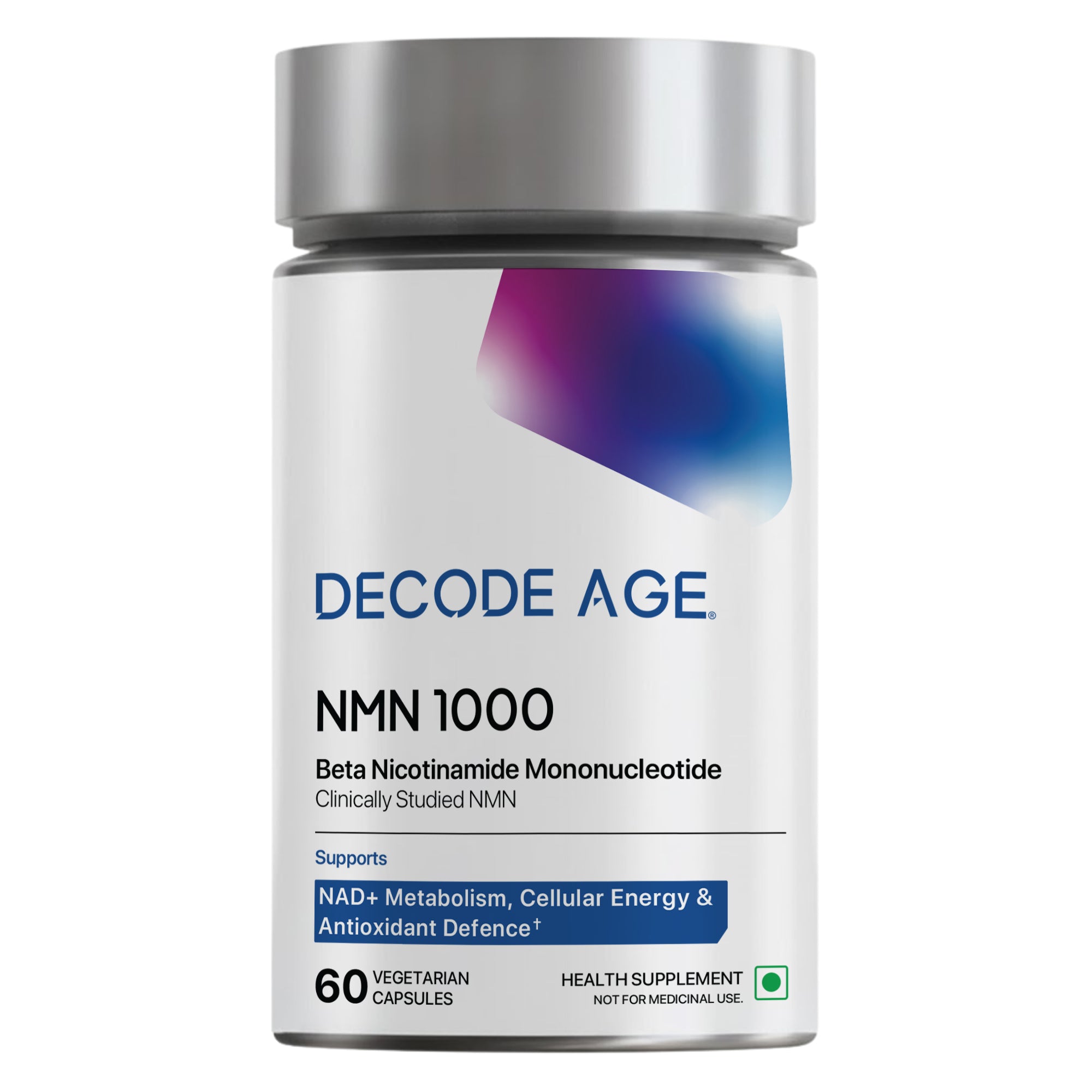
If you're exploring either compound, Decode Age's NMN and Urolithin A supplements are formulated based on the mechanisms discussed here, but whichever you choose, the biggest returns still come from pairing supplementation with the fundamentals: exercise, sleep, protein, and stress management. As always, talk to a healthcare professional before starting any new supplement, especially if you're combining more than one.
Frequently Asked Questions
- Is NMN better than Urolithin A?
Neither is universally "better", they work on different pathways. NMN supports NAD+ and energy production; Urolithin A supports mitochondrial clean-up and renewal. The right choice depends on your specific goal. - Can I take NMN and Urolithin A together?
Many longevity protocols combine both because they're mechanistically complementary, though direct trials on the combination are still limited. Check with a healthcare professional before combining supplements. - Does Urolithin A increase NAD+?
Not directly. Urolithin A's primary mechanism is mitophagy, not NAD+ production. NMN is the one directly tied to raising NAD+ levels. - Which supplement is better for healthy ageing?
Both are studied in the context of healthy ageing, but through different mechanisms, NAD+/energy metabolism (NMN) versus mitochondrial quality control (Urolithin A). - Which supplement supports mitochondria?
Both do, but differently. NMN supports the energy output of existing mitochondria via NAD+; Urolithin A supports replacing damaged mitochondria with healthier ones through mitophagy. - Is NMN safe?
Short-term human trials have generally reported NMN as well-tolerated, though long-term safety data are still limited. As with any supplement, it's best to consult a healthcare professional, especially if you have underlying health conditions. - Who may benefit from Urolithin A?
People focused on muscle strength, exercise recovery, or mitochondrial health, particularly those in the age range where natural Urolithin A production from gut bacteria tends to decline, may find it relevant.
References
- Yoshino, M., Yoshino, J., Kayser, B.D., et al. (2021). Nicotinamide mononucleotide increases muscle insulin sensitivity in prediabetic women. Science, 372(6547), 1224-1229. https://doi.org/10.1126/science.abe9985
- Ryu, D., Mouchiroud, L., Andreux, P.A., et al. (2016). Urolithin A induces mitophagy and prolongs lifespan in C. elegans and increases muscle function in rodents. Nature Medicine, 22, 879-888. https://doi.org/10.1038/nm.4132
- Andreux, P.A., Blanco-Bose, W., Ryu, D., et al. (2019). The mitophagy activator urolithin A is safe and induces a molecular signature of improved mitochondrial and cellular health in humans. Nature Metabolism, 1, 595-603. https://doi.org/10.1038/s42255-019-0073-4
- Singh, A., D'Amico, D., Andreux, P.A., et al. (2022). Urolithin A improves muscle strength, exercise performance, and biomarkers of mitochondrial health in a randomized trial in middle-aged adults. Cell Reports Medicine, 3, 100633. https://doi.org/10.1016/j.xcrm.2022.100633
- Liu, S., D'Amico, D., Shankland, E., et al. (2022). Effect of urolithin A supplementation on muscle endurance and mitochondrial health in older adults: a randomized clinical trial. JAMA Network Open, 5(1), e2144279. https://doi.org/10.1001/jamanetworkopen.2021.44279
- Vinten, K.T., et al. (2025). NAD+ precursor supplementation in human ageing: clinical evidence and challenges. Nature Metabolism, 7, 1974-1990. https://doi.org/10.1038/s42255-025-01387-7
- Chini, C.C.S., Tarrago, M.G., & Chini, E.N. (2017). NAD and the aging process: role in life, death and everything in between. Molecular and Cellular Endocrinology, 455, 62-74. https://pmc.ncbi.nlm.nih.gov/articles/PMC5419884/


Leave a comment
All comments are moderated before being published.
This site is protected by hCaptcha and the hCaptcha Privacy Policy and Terms of Service apply.