



Struggling to switch off at night or feeling sore after training? You might be wondering whether magnesium could help. Magnesium glycinate benefits include better sleep and muscle recovery, but how much of this is actually supported by science? Let's explore what human research reveals.

What Is Magnesium Glycinate and How Does It Work?
Magnesium glycinate, also called bisglycinate, combines magnesium with glycine, an amino acid. Magnesium contributes to normal nerve signalling, muscle contraction and relaxation, and ATP-dependent energy metabolism.
For a practical overview of forms and dietary sources, see our magnesium supplement guide.
Magnesium Glycinate for Sleep: What Do Human Trials Show?
Can magnesium glycinate actually help you fall asleep faster, stay asleep longer, or increase deep sleep? Human studies suggest a possible benefit, but the difference between feeling more rested and getting more deep sleep is important.
A 2025 randomised, placebo-controlled trial studied 155 adults aged 18–65 who reported poor sleep. Participants received either 250 mg of elemental magnesium as bisglycinate or a placebo daily for four weeks.
| Outcome after 4 weeks | Magnesium group | Placebo group |
|---|---|---|
| Reduction in insomnia severity score | 3.9 points | 2.3 points |
| Improvement compared with placebo | Small additional benefit | Reference group |
The magnesium group improved by approximately 1.6 points more than the placebo group. Although statistically significant (p = 0.049), the effect was small (Cohen's d = 0.2).
Among the potential magnesium glycinate benefits, modest improvements in self-reported sleep difficulties have some human evidence. However, longer sleep duration, increased deep sleep, and consistent benefits for everyone remain unproven.
Magnesium for Muscle Recovery: Can It Reduce Soreness?
Magnesium supports contraction, relaxation, and energy metabolism. It's not a recovery supplement.
Evidence for magnesium for muscle recovery is promising but limited, without a proven glycinate-specific effect. Recovery also needs protein, hydration, sleep, and sensible training.
A 2024 systematic review identified just four eligible studies on supplementation and exercise-related soreness. Some findings favoured magnesium, but the trials differed in formulation, training conditions, and outcomes.
Best Time to Take Magnesium Glycinate for Rest
If supplementing is appropriate, consistency matters more than exact timing. If you are considering combining different magnesium forms, our glycinate and L-threonate explainer gives background.
Here are a few practical considerations:
- Before bedtime: If your goal is sleep support, taking it 30–60 minutes before bed is one option that you can consider.
- With your evening meal: This may be more comfortable if taking supplements on an empty stomach causes nausea or digestive discomfort.
- In the morning: This is also an option if you're supplementing to meet your magnesium needs rather than specifically targeting sleep.
Magnesium Glycinate Dosage in India: How Much Do You Need?
How much magnesium glycinate should you take daily? The answer depends on your dietary intake, age, and health needs. More importantly, your magnesium glycinate dosage should be based on elemental magnesium, which is the actual amount of magnesium supplied by a supplement.
Recommended Daily Magnesium Intake for Indians
According to the ICMR-NIN 2020 guidelines published by FSSAI, the recommended daily allowances are:
| Indian population group | Daily magnesium RDA |
|---|---|
| Adult men | 440 mg |
| Adult women | 370 mg |
| Pregnant women | 440 mg |
| Breastfeeding women | 400 mg |
Build a Recovery Routine That Makes Sense
Poor sleep or soreness → Review sleep schedule, caffeine, and training load → Check magnesium-rich foods → Discuss supplement need and total dose if appropriate → Review how you feel.
Start with our sleep hygiene checklist and its guide to caffeine and sleep cycles. These habits remain important.
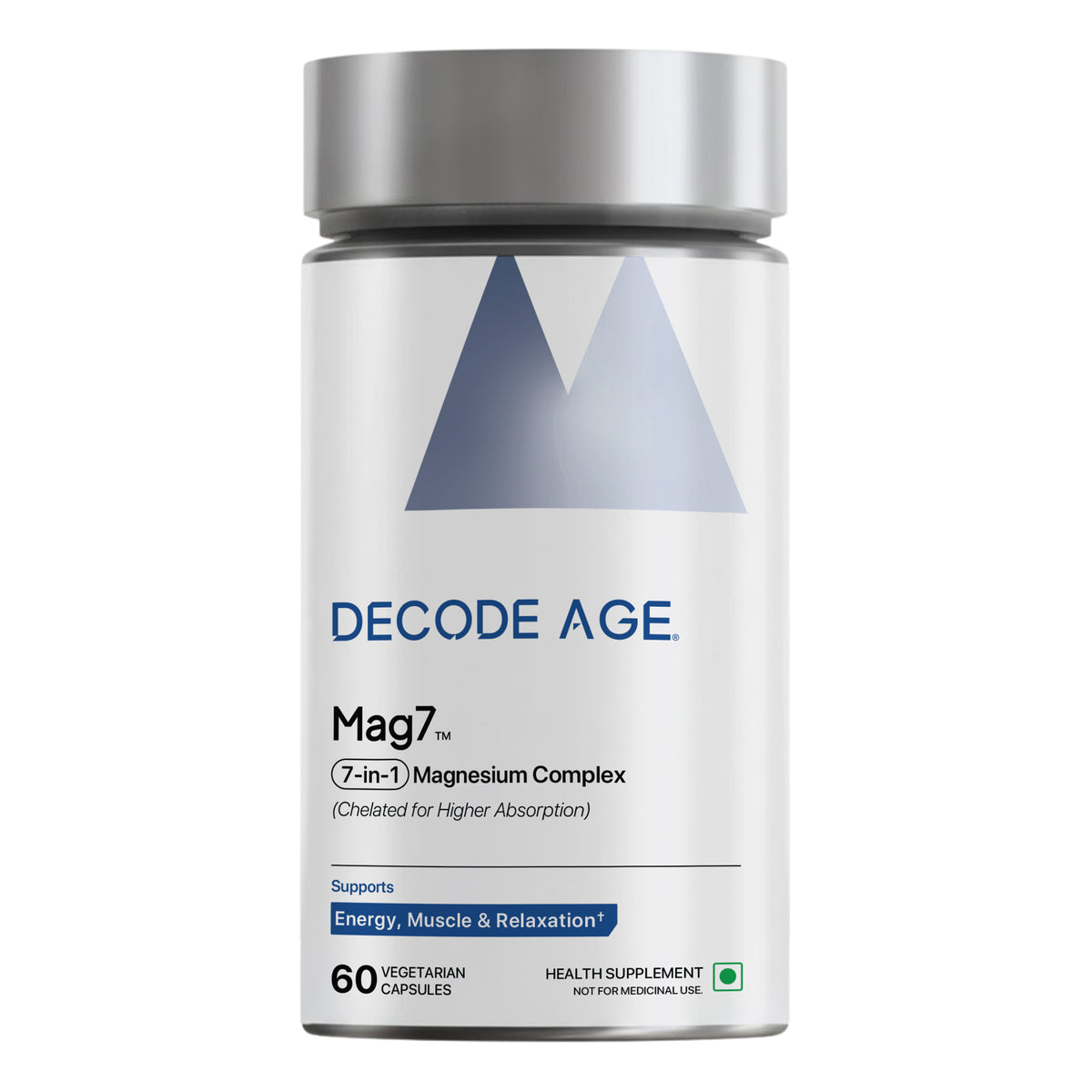
If you're comparing formulations, Mag7 is a multi-form magnesium blend that includes bisglycinate.
Who Should Check With a Clinician First?
Supplemental magnesium can cause diarrhoea, nausea, and cramping. Kidney impairment raises the risk of accumulation. Magnesium can also affect absorption of certain antibiotics and osteoporosis medicines.
Before starting, ask a clinician or a doctor if you take regular medicines or use another mineral supplement. Read our supplement safety and interaction guide for practical checks.
Restful Nights Begin With the Right Foundations
The key is to focus on what your body actually needs: magnesium-rich foods, consistent sleep habits, adequate nutrition, and the right supplementation when appropriate.
Remember, better rest and recovery aren't about taking more supplements. They're about making informed choices that help your body function at its best.
FAQs
Does magnesium glycinate increase deep sleep?
Magnesium glycinate may help improve sleep quality and reduce sleep difficulties in some people. However, research has not yet confirmed that it increases deep sleep.
Can you take magnesium glycinate every night?
Yes, magnesium glycinate can be taken daily if the dose is appropriate for your needs. Check the magnesium content and avoid exceeding recommended supplemental amounts.
What is the recommended magnesium glycinate dosage for sleep?
A 2025 clinical trial used 250 mg of elemental magnesium daily and reported modest improvements in sleep difficulties. However, this is a studied dose, not a standard recommendation. Check the elemental magnesium amount on your supplement label and consult a healthcare professional to determine an appropriate dose.
Disclaimer: This article is for educational and informational purposes only and is not a substitute for professional medical advice. The supplements and products mentioned are not intended to diagnose, treat, cure, or prevent any disease.


Leave a comment
All comments are moderated before being published.
This site is protected by hCaptcha and the hCaptcha Privacy Policy and Terms of Service apply.