



Struggling to get a good night's sleep? Magnesium might be the solution you've been looking for. Dr. Andrew Huberman, a neuroscientist at Stanford, swears by a unique combination of magnesium glycinate and magnesium L-threonate to improve sleep quality. These two forms of magnesium work differently; glycinate relaxes your body, while L-threonate calms your mind by crossing the blood-brain barrier. Together, they create a powerful approach to tackle both physical and mental restlessness.
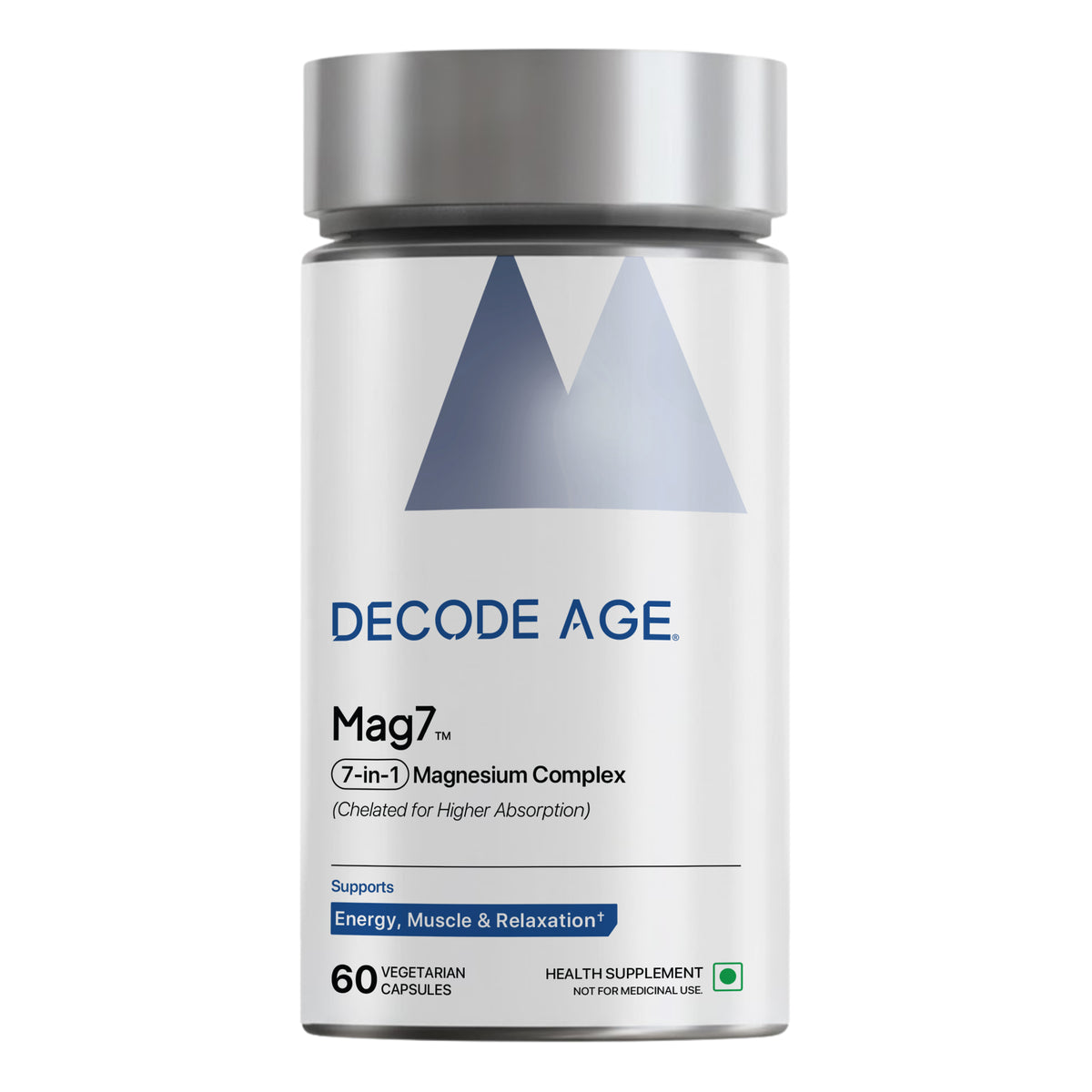
Shop Now: Decode Age's Complete Magnesium - Mag7
This guide breaks down how magnesium supports sleep, why these specific forms are recommended, and how to incorporate them into your nightly routine for better rest and overall well-being.
Why Magnesium Matters for Sleep and Longevity
Magnesium's Role in the Body
Magnesium is a vital mineral that plays a key role in keeping our bodies functioning smoothly. It supports over 300 enzymatic reactions, including energy production (ATP synthesis), DNA repair, protein synthesis, and nervous system regulation [3][4]. Essentially, it helps maintain balance in processes like neuronal firing, muscle relaxation, and the regulation of stress hormones.
One of magnesium's standout roles is its ability to block NMDA receptors, which are excitatory channels in the brain and nervous system. When magnesium levels are sufficient, these channels are kept in check, preventing an overactive nervous system. This calming effect makes it easier to relax, unwind, and drift off to sleep [3]. This connection underscores magnesium's importance in promoting restful sleep.
How Magnesium Supports Sleep
Magnesium's impact on sleep goes beyond its general functions. It plays a direct role in processes that are essential for a good night's rest. For instance, it enhances the activity of GABA receptors, which help reduce neural excitability and encourage the onset of sleep [3][7]. Additionally, magnesium serves as a cofactor in converting serotonin into melatonin, the hormone responsible for regulating the sleep-wake cycle [3].
Magnesium also plays an important role in managing cortisol, the body's primary stress hormone. Studies suggest that magnesium supplementation can lower serum cortisol levels, which helps calm the central nervous system in the lead-up to sleep [3][10].
As highlighted by Caijun He and colleagues from the Department of Neurology at the University of South China:
"Magnesium, by inhibiting the NMDA receptor, suppresses the calcium ion concentration within muscle cells, which promotes muscle relaxation and subsequently facilitates sleep." [3]
Improved sleep doesn't just mean feeling rested; it also supports cellular repair, stabilises hormones, and contributes to long-term health. This makes magnesium an essential part of any approach aimed at improving longevity. Yet, despite its many benefits, magnesium deficiency is alarmingly common.
Why Many People Have Low Magnesium Levels
In India, magnesium needs are higher than many people realise, with ICMR-NIN setting adult RDAs at 440 mg/day for men and 370 mg/day for women. Yet modelled dietary data suggest nearly 6.2 crore Indians may still have inadequate magnesium intake from food alone.
Several modern lifestyle factors make this deficiency more likely. Chronic stress, along with frequent consumption of alcohol or caffeine, can lead to accelerated magnesium loss [7]. Additionally, the depletion of magnesium in agricultural soils has reduced the mineral content in vegetables and grains, meaning that even a healthy diet may not provide as much magnesium as it once did [4][2].
Another challenge lies in how magnesium deficiency is diagnosed. Standard blood tests measure less than 1% of the body's total magnesium, often failing to detect subclinical deficiencies [6][10]. As He et al. explain, "subclinical magnesium deficiency may contribute to sleep disruption or sleep deprivation by exacerbating inflammation or oxidative stress" [3].
Magnesium threonate vs glycinate for sleep
Magnesium glycinate is often chosen by people who want a generally well-tolerated magnesium supplement, particularly when relaxation or muscle tension is part of their evening routine. Magnesium L-threonate is often marketed for brain health, focus, and sleep.
A 2024 randomized, double-blind, placebo-controlled trial studied 1 g daily of magnesium L-threonate for 21 days in 80 adults aged 35–55 with self-reported sleep problems. The study reported improvements in sleep-related and daytime-function measures, but it was short and relatively small.
Huberman's Magnesium Protocol: Glycinate and Threonate
Overview of Huberman's Sleep Stack
Dr. Andrew Huberman, a Stanford neuroscientist, has developed a targeted nightly sleep stack that highlights magnesium's role in promoting relaxation and better sleep. His protocol combines 145 mg of elemental magnesium from L-threonate, 200 mg of magnesium glycinate, 50 mg of apigenin, and 100–400 mg of L-theanine, all taken 30 to 60 minutes before bedtime [1]. To ensure an accurate assessment of individual responses, he suggests starting with the magnesium forms for the first week before introducing the other compounds.
This method allows for a deeper understanding of how each magnesium form contributes to the overall effectiveness of the stack.
Why Use Magnesium Glycinate and L-Threonate Together
Magnesium glycinate and L-threonate operate differently and serve separate needs; they complement each other when taken together. Magnesium glycinate is bound to glycine, a neurotransmitter known for its calming effects on the nervous system and its ability to relax muscles. Additionally, its elemental magnesium content of about 14.1% makes it effective in addressing magnesium deficiencies [1] [11]. On the other hand, magnesium L-threonate is unique in its ability to cross the blood-brain barrier, increasing magnesium levels in the brain and cerebrospinal fluid [1] [6]. This property makes it particularly useful for managing cognitive challenges associated with poor sleep, such as racing thoughts and mental restlessness. However, its lower elemental magnesium content of 7.2–8.3% limits its ability to correct systemic deficiencies [11].
When used together, these forms offer a two-pronged approach: magnesium glycinate addresses physical relaxation and overall magnesium levels, while L-threonate focuses on brain health and cognitive aspects of sleep. Supporting this, a 2026 randomised trial by Lopresti and Smith showed that six weeks of supplementation with 2 g daily of Magtein (magnesium L-threonate) led to significant cognitive improvements (p=0.043) and a 7.5-year reduction in estimated brain cognitive age [5]. Separately, a 2025 study by Schuster at Leibniz University Hannover reported that 250 mg of elemental magnesium from glycinate daily over four weeks significantly reduced Insomnia Severity Index scores (p=0.049) compared to a placebo [10]. Combining these two forms aligns with a comprehensive approach to improving sleep and supporting long-term brain health.
However, approximately 5% of individuals may experience gastrointestinal discomfort with L-threonate. For those affected, Dr. Huberman advises relying solely on magnesium glycinate [1]. As always, individual tolerance should guide supplementation choices.
Improve Your Sleep with These Biohacks: Expert Tips Revealed!
Magnesium Glycinate and Magnesium L-Threonate: Key Differences

Magnesium Glycinate vs. L-Threonate: Sleep & Brain Benefits Compared
Drawing insights from Dr. Andrew Huberman's sleep protocol, let's delve into how these two forms of magnesium differ and complement each other.
Magnesium Glycinate: Benefits and Uses
Magnesium glycinate combines magnesium with glycine, offering a dual-action approach to support sleep. It enhances GABA-A receptor activity, which promotes relaxation, while glycine helps lower core body temperature; a natural signal for initiating sleep.
"Magnesium glycinate has a dual mechanism for promoting sleep. The magnesium component enhances GABA-A receptor activity... The glycine component lowers core body temperature." - Dr. Julian Douwes, M.D. [7]
Since a drop in core body temperature is a key trigger for sleep onset, magnesium glycinate is most effective when taken 30–60 minutes before bedtime. With an elemental magnesium content of approximately 14.1% by weight [11], it’s also a practical option for addressing magnesium deficiencies. A 2025 randomised trial demonstrated that daily supplementation of 250 mg of elemental magnesium from glycinate over four weeks significantly improved Insomnia Severity Index scores compared to a placebo [10].
Magnesium L-Threonate: Benefits and Uses
Magnesium L-threonate is paired with L-threonic acid, a vitamin C metabolite, which enables it to cross the blood-brain barrier effectively. This unique property increases magnesium levels in the cerebrospinal fluid, directly benefiting brain function [2][6]. It is particularly useful for managing cognitive aspects of sleep, such as calming mental restlessness. However, with an elemental magnesium content of just 7.2–8.3% by weight [11], it’s less effective as a standalone solution for correcting systemic magnesium deficiencies.
Magnesium L-threonate and magnesium glycinate together: How do they work?
By combining these forms, you can address both systemic magnesium needs and the brain's specific requirements, creating a more comprehensive approach to sleep support. The table below highlights their key differences and best uses:
| Feature | Magnesium Glycinate | Magnesium L-Threonate |
|---|---|---|
| Primary Target | Muscles, systemic relaxation | Brain, cognitive function |
| BBB Penetration | Limited | High (unique mechanism) |
| Elemental Mg % | ~14.1% | ~7.2–8.3% |
| Best Timing | 30–60 mins before bed | 30–60 mins before bed |
| GI Tolerance | Excellent | Good |
Magnesium glycinate helps relax muscles and supports GABA activity, while magnesium L-threonate quiets mental restlessness, making it easier to fall asleep. As Dr. Huberman has highlighted:
"Magnesium threonate and bisglycinate are cornerstones of my nightly sleep protocol." [1]
These distinctions explain why combining both forms can provide a well-rounded solution for optimising sleep quality.
Decode Age’s guide to multiple magnesium forms explains why the carrier compound, dose, and tolerance all matter when comparing magnesium products.
sbb-itb-55c436e
How to Follow Huberman's Magnesium Protocol for Sleep
Knowing the differences between magnesium glycinate and L-threonate is just part of the equation. The real impact comes from applying that knowledge in a consistent and practical way. These steps are designed to help you incorporate magnesium supplementation into your routine, complementing habits that promote better sleep.
Step 1: Evaluate Your Sleep and Magnesium Levels
Start by assessing your sleep patterns. Pay attention to how long it takes you to fall asleep, how often you wake up during the night, and how refreshed you feel in the morning. These observations can help pinpoint whether your sleep issues stem from physical factors like muscle tension or from mental restlessness, such as an overactive mind.
Next, check your magnesium levels. Standard blood tests often fall short in detecting deficiencies. Instead, opt for an RBC magnesium test, aiming for a range of 5.0–7.0 mg/dL [1]. As Dr. Peter Attia, M.D., explains:
"Subclinical deficiency is far more prevalent than most clinicians recognize... standard blood tests are essentially useless for detecting it." [1]
Step 2: Select the Right Supplementation Plan
Dr. Huberman suggests starting with one type of magnesium supplement initially, allowing you to observe its effects before introducing another [1]. This approach helps you avoid confusion caused by overlapping effects.
- If your sleep issues are tied to physical discomfort like muscle tension or trouble relaxing, magnesium glycinate is a good starting point.
- If your challenges are more mental - such as difficulty calming your thoughts or fragmented sleep - magnesium L-threonate may be more effective due to its ability to cross the blood–brain barrier.
Many people eventually find that combining both forms, addressing both systemic and brain-level needs, yields the best results. Once you've chosen your starting point, focus on magnesium bisglycinate and magnesium L-threonate dosage for sleep adjustments.
Step 3: Timing, Dosage, and Adjustments
Huberman's protocol recommends taking 145 mg of elemental magnesium from L-threonate and 200 mg of magnesium bisglycinate about 30 to 60 minutes before bed [1]. It’s important to calculate doses based on elemental magnesium. For example, 2,000 mg of magnesium bisglycinate provides roughly 400 mg of elemental magnesium [2].
While the upper tolerable limit for supplemental magnesium is 350 mg/day to avoid gastrointestinal discomfort, clinical studies often use higher doses when combining different forms [2][9]. Benefits from magnesium glycinate are typically noticeable within one to two weeks, while the effects of L-threonate may take two to three weeks of consistent use [1][8].
Step 4: Combine Magnesium with Healthy Sleep Habits
Magnesium works through several pathways to support sleep, but its benefits are amplified when paired with good sleep practices. For instance, dimming lights two to three hours before bedtime promotes natural melatonin production, a process magnesium helps regulate [9]. Sticking to a regular sleep schedule strengthens your circadian rhythm, while evening relaxation techniques like breathwork or light stretching can lower cortisol levels, enhancing magnesium's calming effects.
| Practice | Role in Sleep Protocol | Recommended Timing |
|---|---|---|
| Magnesium Glycinate + L-Threonate | Relaxes muscles, regulates GABA/NMDA receptors, calms the mind | 30–60 minutes before bed |
| Light Management | Encourages natural melatonin production | 2–3 hours before bed |
| Stress Reduction | Reduces cortisol for easier sleep onset | Evening or pre-sleep |
| Consistent Sleep Schedule | Reinforces the body's internal clock | Same time every night |
It’s important to note that individuals with kidney disease should avoid magnesium supplements unless advised by a doctor, as impaired kidneys may struggle to filter out excess magnesium [9]. Additionally, if you take thyroid medication or certain antibiotics, ensure there’s a gap of at least four to six hours between these and your magnesium dose to prevent interference with absorption [7].
Magnesium, Brain Health, and Healthy Ageing
Why Sleep Quality Matters for Long-Term Health
Sleep is more than rest; it’s a cornerstone for maintaining memory, a resilient immune system, and a balanced metabolism. When sleep disruptions become chronic, the impact goes far beyond daytime fatigue. Poor sleep is linked to a higher risk of cardiovascular issues, cognitive decline, and even increased long-term mortality [10]. For anyone aiming to age well, prioritising sleep quality is not just important; it’s essential.
Magnesium and Cognitive Function
Magnesium’s role in brain health extends beyond its reputation for promoting relaxation. It plays a key role in regulating NMDA receptors, which are vital for synaptic plasticity, the brain's ability to adapt and rewire itself. This adaptability is fundamental for learning and memory, particularly in critical brain regions like the hippocampus and prefrontal cortex [6][2].
The research in this area is compelling. A 2016 study involving older adults aged 50–70 with mild cognitive impairment revealed that magnesium L-threonate supplementation improved executive function scores significantly - the equivalent of rolling back 9 years of cognitive ageing [2]. Another study in 2026 showed that just six weeks of Magtein® supplementation led to a 7.5-year reduction in estimated brain cognitive age among adults aged 18–45 [5]. The researchers summarised their findings as follows:
"The results from this study suggest Magtein® supplementation for 6 weeks improves overall cognition, cognitive age, working memory, [and] reaction time." - Lopresti and Smith, Clinical Research Australia [5]
Magnesium deficiency, on the other hand, accelerates brain ageing. It does so by increasing reactive oxygen species (ROS), triggering low-grade inflammation (marked by elevated IL-6 and TNF-α), and hastening telomere shortening [3]. Addressing this deficiency is a proactive step towards preserving cognitive health over the long term.
Beyond its cognitive benefits, magnesium serves as a core component of strategies aimed at maintaining overall health as you age.
Where Magnesium Fits in a Longevity Protocol
Incorporating magnesium into your daily routine can enhance both brain function and sleep quality, making it a key part of a broader longevity plan. While no single supplement can cover all aspects of healthy ageing, magnesium has earned its place as a vital element. It supports over 300 biochemical reactions [3], and its L-threonate form offers unique benefits for brain health that other forms cannot.
For practical use, consider taking magnesium L-threonate in the morning or early afternoon to support cognitive function. For better sleep and overall magnesium replenishment, magnesium glycinate taken 30–60 minutes before bed is ideal [2][7]. To see noticeable improvements, consistent daily supplementation for 4 to 12 weeks is typically recommended [2][1].
When combined with a balanced diet, regular exercise, and effective stress management, magnesium supplementation becomes one of the most accessible and well-supported options for maintaining both cognitive health and sleep quality as you grow older.
Final thoughts
Getting quality sleep is one of the most effective ways to promote healthy ageing, and magnesium plays a key role in making this happen. Its impact on the nervous system, hormonal regulation, and brain health highlights its importance for improving sleep and supporting long-term cognitive well-being.
To maximise these benefits, a combined magnesium protocol works best. Magnesium glycinate supports physical relaxation and helps meet the body's overall magnesium requirements, while magnesium L-threonate crosses the blood-brain barrier, increasing magnesium levels in the cerebrospinal fluid and enhancing cognitive health. Together, these forms provide a complementary approach that neither can achieve on its own [2][7].
Research supports the connection between magnesium and better sleep, showing a 23% higher likelihood of improved sleep quality with high magnesium intake [9]. Additionally, six weeks of magnesium L-threonate supplementation has been shown to reduce the estimated cognitive age of the brain by 7.5 years [5]. These findings underline magnesium's potential for those aiming to maintain their health over the long term.
For best results, take magnesium glycinate 30 to 60 minutes before bed to promote relaxation, and magnesium L-threonate in the morning or early afternoon to boost cognitive function.
FAQs
How do I know if I’m low in magnesium?
To determine if you have a magnesium deficiency, it's important to look at both your dietary habits and specific magnesium level tests. Since a majority of magnesium resides within cells, typical blood tests often fail to provide an accurate picture. A better option is testing RBC (red blood cell) magnesium levels, which offers a clearer insight into your magnesium status.
Signs that you might be deficient include issues like trouble sleeping, frequent muscle cramps, or persistent fatigue. If testing confirms a deficiency, targeted supplementation can be helpful.
Can I take magnesium glycinate and L-threonate together daily?
Yes, it is safe to take magnesium glycinate and magnesium L-threonate together daily, as they serve distinct purposes. Magnesium glycinate is known for helping with muscle relaxation and soothing the nervous system, while magnesium L-threonate is notable for its ability to cross the blood-brain barrier, potentially supporting cognitive health and improving sleep quality. For optimal results, experts recommend taking magnesium L-threonate in the morning or afternoon and reserving magnesium glycinate for 30–60 minutes before bedtime to minimise any potential side effects.
Who should avoid magnesium supplements?
While the research doesn’t point out particular groups that should steer clear of magnesium supplements, it’s always wise to consult a healthcare professional before starting them. Magnesium is usually well-tolerated, but expert guidance helps ensure you’re taking the correct form and dose for your specific health needs. Remember, magnesium supplements are not intended to treat medical conditions, so personalised advice is key.


Leave a comment
All comments are moderated before being published.
This site is protected by hCaptcha and the hCaptcha Privacy Policy and Terms of Service apply.