



Most of us grew up hearing the same advice: calcium helps keep bones strong, so drink milk and take your Vitamin D. For years, that sounded like the full story. But nutrition science now tells us that calcium support is not just about how much calcium your body absorbs. It is also about where that calcium goes.
This is where Vitamin D3 and K2 synergy becomes important. “Vitamin D3 helps your body absorb calcium from food and supplements. Vitamin K2 helps support how calcium is used, especially for bone health.
Think of Vitamin D3 as the nutrient that opens the gate for calcium, while Vitamin K2 helps direct it to the right destination.
In this article, we explain how Vitamin D3 and K2 work together, why this matters for bone and heart health, and how Vitamins A and E complete the fat-soluble vitamin system.
sbb-itb-55c436e
Why Vitamin D Deficiency Is So Common Today
Vitamin D deficiency has become a major public health concern, affecting a significant portion of the global population. In the United States alone, it's estimated that 42% of adults are deficient. The situation is equally troubling in South Asia, including India, where modern habits and environmental factors contribute heavily to the problem [3].
Even though India enjoys abundant sunshine, urban lifestyles often keep people indoors for most of the day. Windows block the UVB rays essential for Vitamin D synthesis, while high-SPF sunscreens and traditional clothing further restrict exposure to sunlight.
Skin tone also plays a crucial role. Individuals with darker skin, due to higher melanin levels, naturally filter out more UVB rays. For example, while a fair-skinned person might produce several thousand IU of Vitamin D in just 10–15 minutes of midday summer sun [6], someone with darker skin would synthesise significantly less during the same period.
Dietary intake of Vitamin D is another weak link. Natural sources are scarce, primarily limited to fatty fish and egg yolks. Without fortified foods, most diets only provide 150–350 IU of Vitamin D daily [6], which is far below the recommended levels.
Age and higher BMI can also affect Vitamin D availability, making some people more prone to low levels
These factors explain why Vitamin D deficiency is common. But improving Vitamin D levels is only one part of supporting calcium health.
Signs and Symptoms of Vitamin D Deficiency
Vitamin D deficiency often creeps up unnoticed, with symptoms that develop so gradually they’re easily mistaken for everyday fatigue or the natural effects of ageing [3]. By the time these signs become apparent, Vitamin D levels may have been inadequate for months, or even longer.
One of the earliest and most common signs is fatigue. Many people report feeling persistently tired, with even simple tasks becoming draining. This happens because Vitamin D directly supports neuromuscular function, and low levels can disrupt this balance [3][6]. Muscle weakness and bone pain, especially in areas like the back, hips, and legs, are also common indicators. Prolonged deficiency in adults can lead to osteomalacia, a condition where bones soften, increasing the risk of fractures [6].
Vitamin D also supports immune function, which is why low levels may affect immune resilience [7]. Studies suggest that daily supplementation with 1,000 IU of Vitamin D3 can lower the risk of acute respiratory infections by 12% [3].
Low Vitamin D levels have also been linked with mood changes, low energy and reduced vitality [3][6]. If any of these symptoms sound familiar, it’s essential to get tested. A 25-hydroxyvitamin D (25(OH)D) blood test provides a clear understanding of your Vitamin D status. The table below explains typical test results:
| 25(OH)D Level | Interpretation |
|---|---|
| Under 12 ng/mL | Severe deficiency |
| 12 to 20 ng/mL | Deficiency |
| 21 to 29 ng/mL | Insufficiency |
| 30 to 50 ng/mL | Target range |
| Over 80 ng/mL | Excess (potential toxicity risk) |
For optimal health, aim for levels between 30 and 50 ng/mL [6][7]. If you begin a new supplement routine, wait 8 to 12 weeks before retesting to allow your levels to stabilise [6]. It’s also wise to consult your doctor before taking high doses (above 4,000 IU per day), especially if you’re on medications like statins, corticosteroids, or anticonvulsants that can affect how your body processes Vitamin D [3][6]. Recognising these symptoms early and addressing them with targeted solutions, such as Decode Age DAKE 5000, can make a significant difference in your overall well-being.
However, improving Vitamin D levels is only one part of the calcium story. Vitamin D3 helps increase calcium absorption, but Vitamin K2 helps support how that calcium is used in the body.
This is why D3 and K2 are often discussed together, especially for people looking to support bone strength, calcium utilisation and long-term cardiovascular health.
Why Vitamin D3 Is the Preferred Form of Vitamin D
Not all Vitamin D supplements are created equal. When you see "Vitamin D" on a product label, it could mean either Vitamin D2 (ergocalciferol) or Vitamin D3 (cholecalciferol) - and understanding the difference is essential.
Vitamin D2 is typically sourced from irradiated yeast or fungi and is often found in high-dose prescription formulations. Meanwhile, Vitamin D3 is the form your body naturally produces when your skin is exposed to UV-B sunlight. This makes D3 the form that is most compatible with the human body and the most effective at fulfilling your Vitamin D needs [6].
The crucial distinction lies in how these forms affect blood levels of 25-hydroxyvitamin D (25(OH)D), the marker used to measure Vitamin D status. A 2012 systematic review led by Tripkovic and published in the American Journal of Clinical Nutrition concluded:
"D3 raises serum 25(OH)D more efficiently than D2 across the dose range studied." [6]
In simple terms, D3 is generally more effective at raising and maintaining Vitamin D levels than D2. Vegan-friendly D3 options sourced from lichen are now available, making D3 suitable for plant-based consumers.
| Feature | Vitamin D3 (Cholecalciferol) | Vitamin D2 (Ergocalciferol) |
|---|---|---|
| Primary Source | Sunlight, lanolin, lichen | Yeast, fungi, fortified foods |
| Efficiency | High; body’s preferred form | Lower; less effective at raising levels |
| Blood Level Stability | Maintains levels steadily | Drops more quickly between doses |
| Vegan Option | Available (lichen-derived) | Always vegan |
| Common Use | Daily OTC supplementation | High-dose prescriptions |
Vitamin D3 K2 Synergy: Absorb Calcium, Then Direct It
Vitamin D3, when metabolised by the liver and kidneys, transforms into its active form, calcitriol. This active form significantly enhances calcium absorption, increasing it by up to 40% [3]. Adequate calcium levels in the bloodstream are crucial for strong bones. Without sufficient calcium, the body struggles to properly mineralise bone tissue, potentially leading to conditions like osteomalacia or osteoporosis.
However, absorbing more calcium is only part of the equation. It’s equally important to ensure that the calcium is directed to the right places. Mismanaged calcium can accumulate in arteries and soft tissues, posing risks to cardiovascular health. Here’s where Vitamin K2 plays a vital role. It activates specific proteins that guide calcium to where it’s needed most.
One such protein is osteocalcin, which integrates calcium into the bone matrix, enhancing bone strength and density. Another is Matrix GLA Protein (MGP), which works to prevent calcium deposits from forming in arterial walls and soft tissues [3]. Dr. Goodman, a cardiologist, explains the importance of K2:
"Without Vitamin K2, you can't 'turn on' (activate) osteocalcin, which takes calcium where it's needed - and keeps it there." [2]
Scientific studies back the powerful synergy between D3 and K2. Research highlights improved bone mineral density and reduced arterial calcification when these vitamins are taken together [3]. For instance, a clinical trial involving postmenopausal women with osteopenia or osteoporosis reported a 4.9% increase in bone mineral density following D3 and K2 supplementation [2]. Additionally, the Rotterdam Study found that diets rich in K2 (specifically the MK-7 form) were linked to a 50% lower risk of arterial calcification and cardiovascular mortality over a 7 to 10-year period [3].
When it comes to supplementation, the MK-7 form of K2 is often recommended due to its extended half-life of 72 hours, which helps maintain stable blood levels [3]. A commonly suggested dose is 100 mcg of MK-7 for every 1,000–2,000 IU of Vitamin D3 [3]. Decode Age DAKE 5000 leverages this powerful combination to deliver optimal results.
This is why D3 and K2 are best understood as complementary nutrients rather than isolated supplements.
Why Vitamin K2 Matters For Bone And Heart Health
This is why D3 and K2 are best understood as complementary nutrients rather than isolated supplements.
Vitamin K2 is important because not all forms of Vitamin K work the same way. Vitamin K1, found mainly in leafy greens, is best known for supporting normal blood clotting. Vitamin K2, especially MK-7, is more closely associated with bone and cardiovascular calcium metabolism.
The MK-7 form is often preferred in supplements because it remains active in the body for longer than MK-4, allowing more consistent daily support with one dose.
For vegetarians and vegans, K2 fills a nutritional gap. Unlike Vitamin K1, which is abundant in leafy greens like spinach and kale and mainly supports blood clotting, K2 activates specific proteins that benefit bone and cardiovascular health [3]. The MK-7 form, typically sourced from fermented foods, is ideal for plant-based diets due to its extended half-life of approximately 72 hours, allowing consistent blood levels with just one daily dose [3]. In contrast, the animal-derived MK-4 form is cleared from the body in about 6 hours, making it less practical.
| Form | Source | Half-Life | Key Function |
|---|---|---|---|
| K1 (Phylloquinone) | Leafy greens | Short | Blood clotting |
| K2 MK-4 | Animal products | ~6 hours | Bone/heart health (short term) |
| K2 MK-7 | Fermented foods, lichen | ~72 hours | Bone/heart health (long-lasting) |
Those on blood-thinning medications like warfarin should consult their doctor before taking K2, as it may interfere with the medication’s effectiveness [3].
With these crucial benefits in mind, the next section will delve into the role of Vitamin A in bolstering immune and cellular health.
The Overlooked Benefits of Vitamin A
Vitamin A adds another layer of support by contributing to immune function, cellular repair and gene regulation.
On a biochemical level, when Vitamin D3 is converted into its active form, calcitriol, it binds to the Vitamin D Receptor (VDR). For this receptor to function optimally, it requires pairing with the Retinoid X Receptor (RXR), which is activated by Vitamin A. This partnership is crucial for regulating the expression of over 200 genes [7]. The result? Enhanced gene regulation that contributes to immune balance and stronger connective tissues.
Vitamin A also supports immune balance, skin health and connective tissue maintenance.
According to Decode Age, Vitamin A is indispensable for cell growth and repair. It also strengthens immune function, promotes skin health, supports vision, and combats oxidative stress [2].
When it comes to forms of Vitamin A, preformed Vitamin A (such as retinyl palmitate) is far more efficient for the body to utilise compared to the provitamin A carotenoids found in vegetables like carrots. Beta-carotene requires conversion into active Vitamin A, a process that isn’t always efficient, whereas retinyl palmitate is immediately ready to support cellular repair and immune health [4].
Decode Age’s DAKE 5000 supplement includes 1,000 mcg of Vitamin A in the form of retinyl palmitate, delivering 100% of the Recommended Dietary Allowance in just one daily dose [2]. This formulation reflects Decode Age's dedication to creating nutrient combinations that work together to support overall health.
How Vitamin E Protects Cells From Oxidative Stress
Vitamin E is the body’s major fat-soluble antioxidant. It helps protect cell membranes from oxidative stress, which is important for healthy ageing, immune function and cellular resilience.
In a DAKE-style formula, Vitamin E also plays a supporting role by helping protect other fat-soluble nutrients, including Vitamins D3, A and K2, from oxidative degradation. This makes it a useful part of a complete fat-soluble vitamin system rather than a standalone antioxidant [2][5] [1].
Why These Four Vitamins Work Better Together
Together, D3, K2, A and E create a more complete fat-soluble vitamin system.
Vitamin A plays a critical role in immune function and cellular repair, while Vitamin E protects these nutrients from oxidative damage, ensuring that D3, A, and K2 remain stable and effective until your body can utilise them [4].
At the centre of this system is the D3-K2 partnership: D3 supports calcium absorption, while K2 supports calcium utilisation. Vitamins A and E then add immune, cellular and antioxidant support, making the formula broader than a standard Vitamin D supplement.
Here’s a quick breakdown of their roles and what happens when one is missing:
| Vitamin | Role in the System | What Happens Without It |
|---|---|---|
| D3 | Enhances calcium absorption | Bones get less calcium |
| K2 (MK-7) | Directs calcium to bones and keeps arteries clear | Calcium may build up in soft tissues |
| A | Regulates immunity and aids cellular repair | D3’s immune benefits are diminished |
| E | Shields other vitamins from oxidative damage | D3, A, and K2 may break down prematurely |
This interdependence is what makes a combined formula more comprehensive than taking Vitamin D alone.
What Makes DAKE 5000 Different From Regular Vitamin D Supplements
Most standard Vitamin D supplements focus solely on delivering Vitamin D3, often neglecting the combined benefits of other fat-soluble vitamins. This narrow approach can leave gaps in critical areas like calcium metabolism and immune function. DAKE 5000 addresses these shortcomings with a carefully designed blend that enhances both absorption and effectiveness.
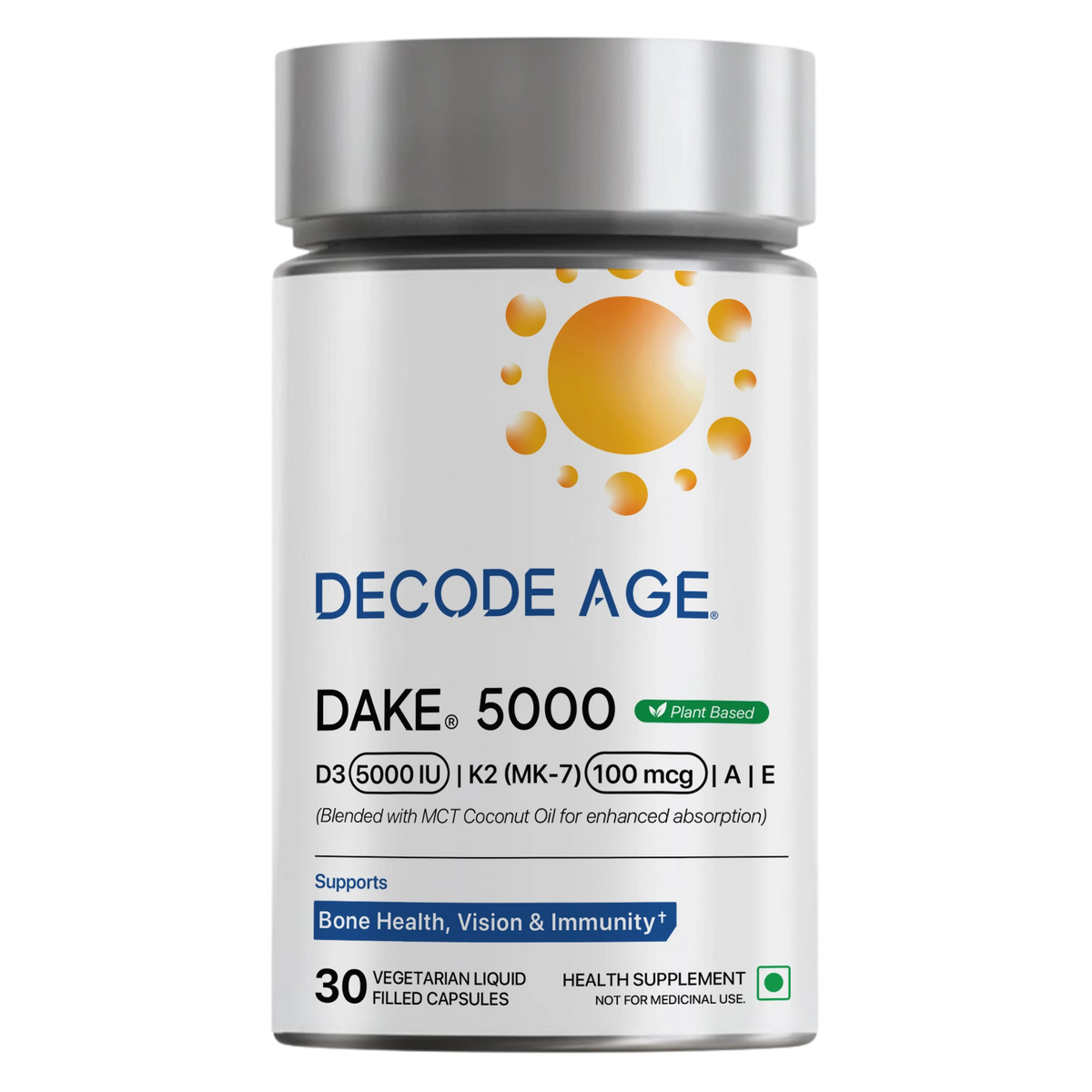
The standout feature of DAKE 5000 is its unique formulation. Each capsule contains 5,000 IU (125 mcg) of Vitamin D3, 100 mcg of Vitamin K2 (MK-7), 1,000 mcg of Vitamin A, and 15 mcg of Vitamin E. This provides approximately 833% of the RDA for Vitamin D3 and 182% for Vitamin K2, as per ICMR-NIN 2020 guidelines [1]. By combining these fat-soluble vitamins, DAKE 5000 ensures the synergistic benefits discussed earlier are fully realised.
Another key differentiator is the source of Vitamin D3. Unlike most D3 supplements derived from lanolin (a by-product of sheep’s wool), DAKE 5000 uses Vitashine™, a plant-based D3 sourced from lichen. This is the only vegan Vitamin D3 registered with the Vegetarian Society [2][5], making it an excellent choice for vegetarians and vegans who prefer plant-based options.
Additionally, DAKE 5000 uses coconut-derived MCT oil in a liquid-filled vegetarian capsule to maximise absorption. Since Vitamins D3, K2, A, and E are all fat-soluble, this delivery method significantly outperforms dry tablets or powders in terms of cellular uptake [1][4].
Purity and quality are also priorities for DAKE 5000. Each batch undergoes third-party testing to ensure 99% purity [2]. The formulation has been validated in human clinical studies, proving its ability to deliver measurable health benefits rather than just theoretical advantages [2][5].
| Feature | Standard Vitamin D3 Supplement | DAKE 5000 |
|---|---|---|
| Vitamin D3 Source | Lanolin (animal-derived) | Vitashine™ (lichen, 100% vegan) |
| Vitamin K2 | Usually absent | 100 mcg MK-7 (182% RDA) |
| Vitamins A & E | Not included | Included for immune and antioxidant support |
| Carrier | Dry powder or tablet | MCT oil (coconut-derived) |
| Purity Verification | Varies | Third-party tested, 99% pure |
Priced at ₹1,299 for a 30-capsule pack (about ₹43 per capsule), DAKE 5000 offers a science-backed, all-in-one solution for fat-soluble vitamin support. It’s an ideal choice for those seeking more than just a basic Vitamin D3 supplement [2]. These unique features set the stage for exploring who can benefit the most from DAKE 5000.
Who Should Consider Taking DAKE 5000
DAKE 5000 is crafted to address the needs of individuals prone to vitamin deficiencies, particularly those requiring higher Vitamin D levels. While anyone might find this supplement beneficial, certain groups stand to gain the most from its balanced nutrient profile.
Older adults and postmenopausal women are key beneficiaries. By the age of 65, the skin's ability to produce Vitamin D from sunlight diminishes to about 25% of what it was in younger years [8]. Studies indicate a 4.9% improvement in bone mineral density among women with osteopenia or osteoporosis [2][5], making this supplement a valuable option for those looking to support bone health and reduce the risk of fractures.
For individuals with limited sun exposure, darker skin tones, or higher BMI, DAKE 5000 can help counteract reduced Vitamin D synthesis or increased storage in body fat [3][6][8]. Those living in regions with minimal sunlight often experience lower Vitamin D levels, making supplementation particularly helpful.
People facing malabsorption issues, such as Crohn's disease, coeliac disease, or ulcerative colitis, often struggle to absorb fat-soluble vitamins from their diet. DAKE 5000 uses an MCT oil-based delivery system to improve nutrient absorption in these cases [1][2]. Additionally, athletes and those with active lifestyles may benefit from its support for muscle performance, recovery, and immune health [2].
"Vitamin D is essential for calcium absorption, and vitamin K acts as a traffic cop in the body." - Mark Mincolla, Nutritionist [2]
Despite its benefits, DAKE 5000 requires careful consideration for certain individuals. It is not recommended for children, pregnant, or nursing women without medical advice due to its potent formulation [1][2]. Those on medications like blood thinners (e.g., warfarin), statins, corticosteroids, or anticonvulsants should consult a healthcare provider before use, as Vitamins K2 and D3 may interact with these drugs [3][4][6].
To ensure optimal results, it’s advisable to monitor serum 25-hydroxyvitamin D levels after 8–12 weeks of use, aiming for a target range of 30–50 ng/mL [6].
How To Use DAKE-Style Supplements Safely And Effectively
Since all four vitamins in DAKE 5000 are fat-soluble, they need dietary fat for proper absorption. Take the supplement with a meal that contains healthy fats, such as ghee, avocado, or nuts. The MCT oil derived from coconut in the capsule boosts absorption by 30% to 50% [3].
For best results, take the capsule at the same time every day. Pairing it with your largest meal ensures there's enough fat to aid absorption [6]. A consistent routine like this works well when combined with a balanced diet to support overall nutrient intake.
Additionally, magnesium plays a crucial role in Vitamin D metabolism. Aim to consume 200–400 mg of magnesium daily. You can get this from magnesium-rich foods or supplements like magnesium glycinate [6].
Vitamin D levels typically stabilise after 8–12 weeks of daily use [6]. At this point, it's a good idea to check your levels with a 25(OH)D blood test. The target range is 40–60 ng/mL. Once you've achieved this, annual testing is recommended to monitor your levels and adjust the dosage if necessary to avoid hypercalcaemia.
For storage, keep the supplement in a cool, dry place away from sunlight. Use it within 90 days of opening to maintain its potency [2]. If you're taking medications such as blood thinners (e.g., warfarin), thiazide diuretics, or antiseizure drugs, consult your healthcare provider before starting DAKE 5000. Vitamins D3 and K2 can interact with these medications [3][6].
FAQs
Can I take Vitamin D3 without Vitamin K2?
Yes, Vitamin D3 can be taken without K2. However, they are often paired because D3 supports calcium absorption, while K2 supports calcium utilisation, especially for bone health.
Why should Vitamin D3 be taken with K2?
Vitamin D3 helps your body absorb calcium from food and supplements. Vitamin K2 helps ensure that calcium is used effectively, particularly for maintaining strong bones and teeth. Together, they offer more complete calcium support than Vitamin D3 alone.
Is K2 necessary with high-dose Vitamin D3?
K2 is commonly recommended with higher doses of Vitamin D3 because increased Vitamin D intake may raise calcium absorption. When calcium absorption increases, supporting proper calcium utilisation becomes more important.
What is the best form of K2 with Vitamin D3?
Vitamin K2 as MK-7 is often preferred because it stays active in the body for longer than other forms, such as MK-4. This makes MK-7 a practical choice for daily supplementation.
Can I take D3 and K2 every day?
Yes, Vitamin D3 and K2 can be taken daily, but the right dosage depends on your Vitamin D levels, diet, age, lifestyle and medical status. If you are taking a high-strength supplement, it is advisable to consult a healthcare professional.
Which blood tests should I run before and after taking D3?
Ask for a 25-hydroxyvitamin D (25(OH)D) blood test. This measures your Vitamin D status and helps your healthcare provider decide whether your dosage is appropriate, especially if you are taking a higher-strength supplement such as DAKE 5000.
Who should avoid Vitamin K2?
People taking blood-thinning medications such as warfarin should consult a healthcare professional before taking Vitamin K2, as it may interfere with how these medicines work.
Who should avoid high-dose DAKE supplements?
High-potency DAKE supplements are not recommended for children, pregnant or breastfeeding women, or people with underlying medical conditions unless advised by a healthcare professional. If you take regular medication, especially blood thinners or medicines that affect Vitamin D metabolism, consult your doctor before use.
Leave a comment
All comments are moderated before being published.
This site is protected by hCaptcha and the hCaptcha Privacy Policy and Terms of Service apply.