



If I strip away the label jargon, the answer is simple: B-NMN and NMN are usually the same molecule. The “beta” part refers to the form of NMN used by the body for NAD+ production, and that is the form used in human studies. So in most cases, a supplement sold as NMN supplement already contains β-NMN.
What matters more than the word beta is the product behind it. I’d look at ingredient identity, purity, dose, testing, and whether the same ingredient has been studied in humans. Current trials show that oral β-NMN can increase blood NAD+ levels, but claims beyond that still need more data.
If I were comparing options, I’d focus less on branding language and more on whether the supplement clearly matches the studied ingredient.
All about NMN | Darshit Patel
What Is Beta-NMN?
NMN (nicotinamide mononucleotide) is a vitamin B3-related compound that cells convert into NAD+, a coenzyme tied to energy production, DNA repair, and day-to-day cellular upkeep. It enters the NAD+ salvage pathway as a direct precursor, which is one reason it shows up so often in healthy ageing research. That small naming shift is also why supplement labels often shorten β-NMN to simply NMN.
What the 'Beta' in Beta-NMN Actually Means
"Beta" describes NMN's stereochemistry, not a separate ingredient. In plain terms, a molecule can have the same parts but a different 3D arrangement. With NMN, that detail matters. The beta form is the version found in living systems, the one cells use, and the one studied in human clinical trials.
Alpha vs Beta NMN: A Simple Explanation
Alpha and beta are two structural forms of NMN. The beta form is the one found in living systems and used in most research. The alpha form does not occur naturally in human biology and is not the subject of clinical investigation. So when a supplement label says "NMN," it almost always means β-NMN - the biologically relevant form.
The next question is whether "NMN" on a label leads to any practical difference.
Beta-NMN vs Regular NMN: Is There a Real Difference?
No - the difference is usually about label wording, not chemistry.
Why Many Labels Say NMN Instead of Beta-NMN
As noted above, beta refers to the form that occurs in nature. Many brands leave out "beta" simply to keep the label short, so when you see "NMN 500 mg", it usually refers to β-NMN.
Scientific Terminology vs Marketing Language
Phrases like "new-generation beta-NMN" or "premium beta-NMN" may sound impressive, but they are marketing terms, not scientific classifications. β-NMN is the scientific name for the molecule studied in research.
Beta-NMN vs Generic NMN Claims: Comparison Table
| Feature | β-NMN | Labelled "NMN" |
|---|---|---|
| Naturally occurring | Yes | Yes, when the label refers to β-NMN |
| Biologically active form | Yes | Yes, when the label refers to β-NMN |
| Form used in human research | Yes | Yes, when the label refers to β-NMN |
| Cellular role | NAD+ precursor | Same molecule |
| How products are labelled | "NMN" or "β-NMN" | Usually "NMN" |
| Implies a chemically distinct ingredient | No | No, unless clearly documented |
The label by itself doesn't point to a meaningful difference. Once the naming is sorted, the next thing to look at is why β-NMN is the form scientists study for NAD+ support.
Why Scientists Study Beta-NMN
Once the naming is clear, the next step is simple: why does β-NMN get so much attention from researchers?
Scientists study β-NMN because it helps cells produce NAD+, a coenzyme tied to energy production, DNA repair, and mitochondrial function - the system cells use to make energy. NAD+ levels tend to fall with age, and β-NMN moves into the salvage pathway as a direct precursor. That makes it a practical subject in research on healthy ageing.
This biological basis explains why human studies often look at one main point first: can β-NMN measurably increase NAD+ levels, and does that shift health-related markers in a meaningful way? From there, the focus moves to the bigger issue - whether this mechanism leads to measurable results in humans.
What Human Clinical Trials Say About Beta-NMN

Beta-NMN vs NMN: Key Clinical Trial Results & Buying Checklist
Human trials are now checking a simple but important point: does β-NMN lift NAD+ levels in people, and does that shift show up in health markers? The research is still at an early stage, but randomised controlled trials have started to give us measurable data on NAD+ levels, metabolic health, physical function, and short-term safety.
So far, one pattern is clear. Across published trials, oral β-NMN supplementation has consistently increased blood NAD+ levels in participants. That’s the most repeatable finding at this stage.
Some studies have also reported early changes in metabolic and physical markers. Yoshino et al. studied postmenopausal women with prediabetes and found better muscle insulin sensitivity with 250 mg/day over 10 weeks. Irie et al. reported higher NAD+ metabolites along with better physical performance measures in older adults. Liao et al. found gains in physical endurance and shifts in fatigue-related markers. Trials using Uthever® β-NMN have also reported statistically significant rises in NAD+ levels, along with a good short-term safety profile.
That said, it’s worth keeping your feet on the ground. Most of these studies were short, included small groups, and used different doses and trial designs. That makes head-to-head comparison tricky. Long-term safety data is still being studied, and we do not yet have proof on hard clinical endpoints such as disease outcomes. When a claim comes from animal work or mechanism-based lab research, rather than human trials, that difference matters and should shape how the results are read.
The table below sums up the main human trials, doses, and reported outcomes.
Key Trial Findings on NAD+, Metabolic Health, and Physical Function
Clinical Trial Summary Table
| Study | Participants | Dose | Duration | Main Findings | Limitations |
|---|---|---|---|---|---|
| Yoshino et al. | Postmenopausal women with prediabetes | 250 mg/day | 10 weeks | Improved skeletal muscle insulin sensitivity; no significant change in other metabolic markers | Small sample; single population |
| Irie et al. | Healthy older adults | 100–500 mg/day | Up to 12 weeks | Increased NAD+ metabolites; improved physical performance measures | Small sample; short duration |
| Liao et al. | Middle-aged and older adults | 300 mg/day | 12 weeks | Improved physical endurance; reduced fatigue markers | Limited generalisability |
| Uthever® RCT | Healthy adults | 300 mg/day | 60 days | Significant rise in blood NAD+ levels; well tolerated; no serious adverse events | Short duration; further large-scale trials needed |
What the Evidence Does and Does Not Show Yet
Here’s the plain-English version: current human trials support β-NMN’s ability to increase NAD+ levels in blood. Early signs in metabolic health and physical function look promising, but they are not settled yet.
What the research does not show is just as important. No human trial has established β-NMN as a treatment or cure for any condition. Bigger studies, longer follow-up, and more varied participant groups are still needed before stronger claims can be made.
For supplement buyers, the practical takeaway is simple: give more weight to products backed by human clinical data, not just animal studies or lab-based theory.
sbb-itb-55c436e
Common Myths About B-NMN Supplement Claims
Interest in β-NMN has brought a fair bit of confusion with it. Some of that comes down to naming. Some of it comes from claims that go past what the science can support. The three points below cover the mix-up most people face when they compare labels, studies, and product pages.
Myth 1: Beta-NMN Is Different From NMN
β-NMN is the exact scientific name for the active form of nicotinamide mononucleotide sold as NMN. In plain terms, when a label says "NMN", it usually already refers to β-NMN.
Myth 2: Beta-NMN Is a New or Chemically Modified Version
β-NMN is not a new ingredient or an altered version of NMN. It is the naturally occurring form used in biology and in research. So when you see "beta" on a label, it is simply a scientific description, not a sales hook. The bigger question is not the name. It is whether the product matches the evidence behind the ingredient.
Myth 3: Any NMN Supplement Automatically Has Clinical Backing
Clinical evidence applies to the ingredient that was studied under specific product conditions. It does not automatically apply to every NMN supplement on the market. That’s why it helps to check whether a product uses the same ingredient, dose, and formulation tested in human studies. Put simply, the evidence belongs to the studied ingredient, not to every product that carries the NMN name.
Understanding Uthever® Beta-NMN as a Clinically Studied Ingredient
Uthever® is a branded β-NMN ingredient with set quality standards and human study data.
What Uthever® Beta-NMN Is
Uthever® is a branded form of β-Nicotinamide Mononucleotide. Put simply, it is β-NMN and not some other molecule. What sets it apart comes down to three checks: purity, stability, and human study data.
That naturally shifts attention to the next step: purity, stability, and manufacturing standards.
Why Purity, Stability, and Manufacturing Standards Matter
Purity helps make sure the label matches what is inside the pack. Stability helps the ingredient stay intact over time instead of degrading before you use it. Third-party testing adds another layer of confidence by checking identity, purity, and label accuracy. Batch consistency matters as well, because lot-to-lot variation can change the dose you end up taking.
That’s why ingredient sourcing matters so much when a brand clearly names the exact β-NMN it uses.
How Uthever® Beta-NMN Fits Into Decode Age NMN
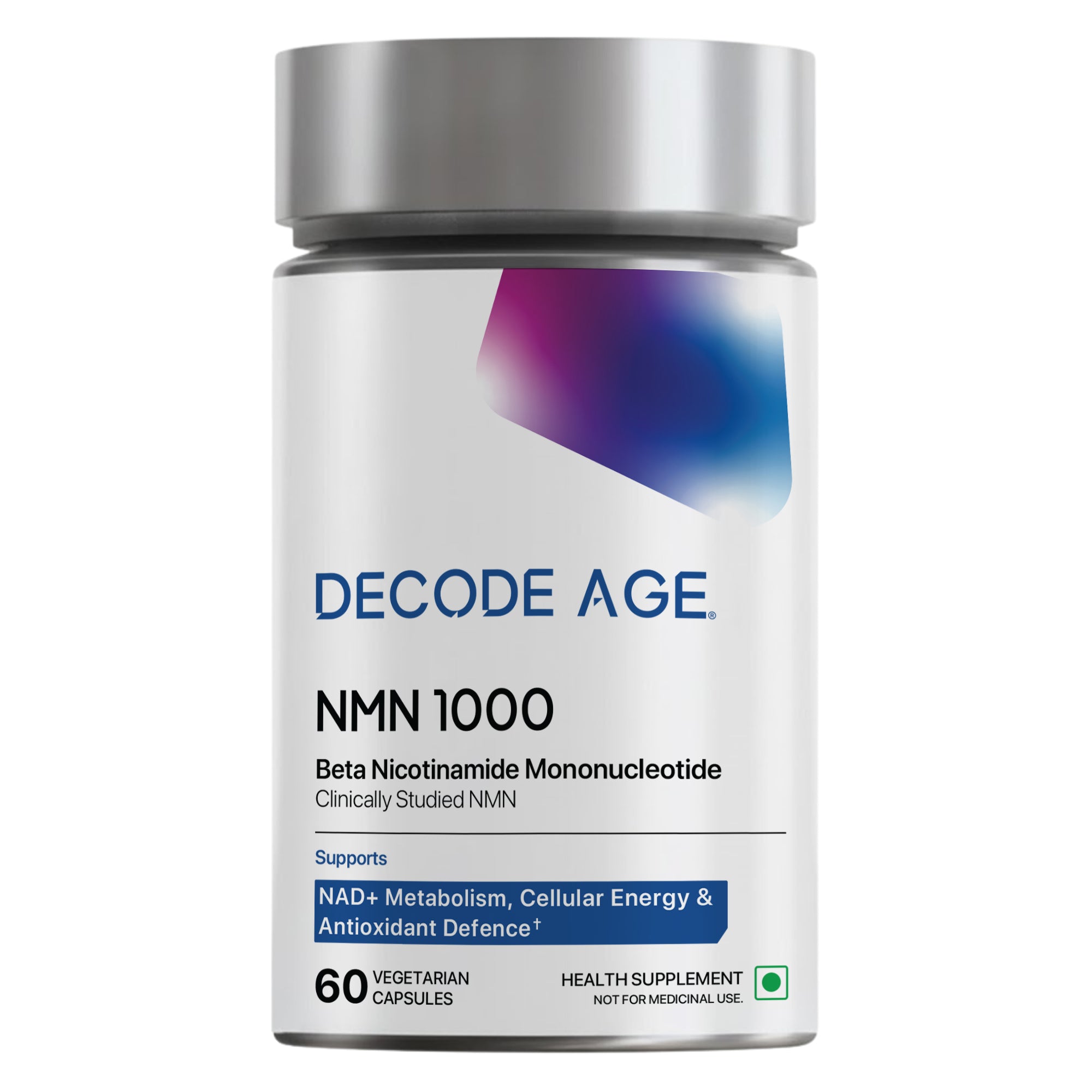
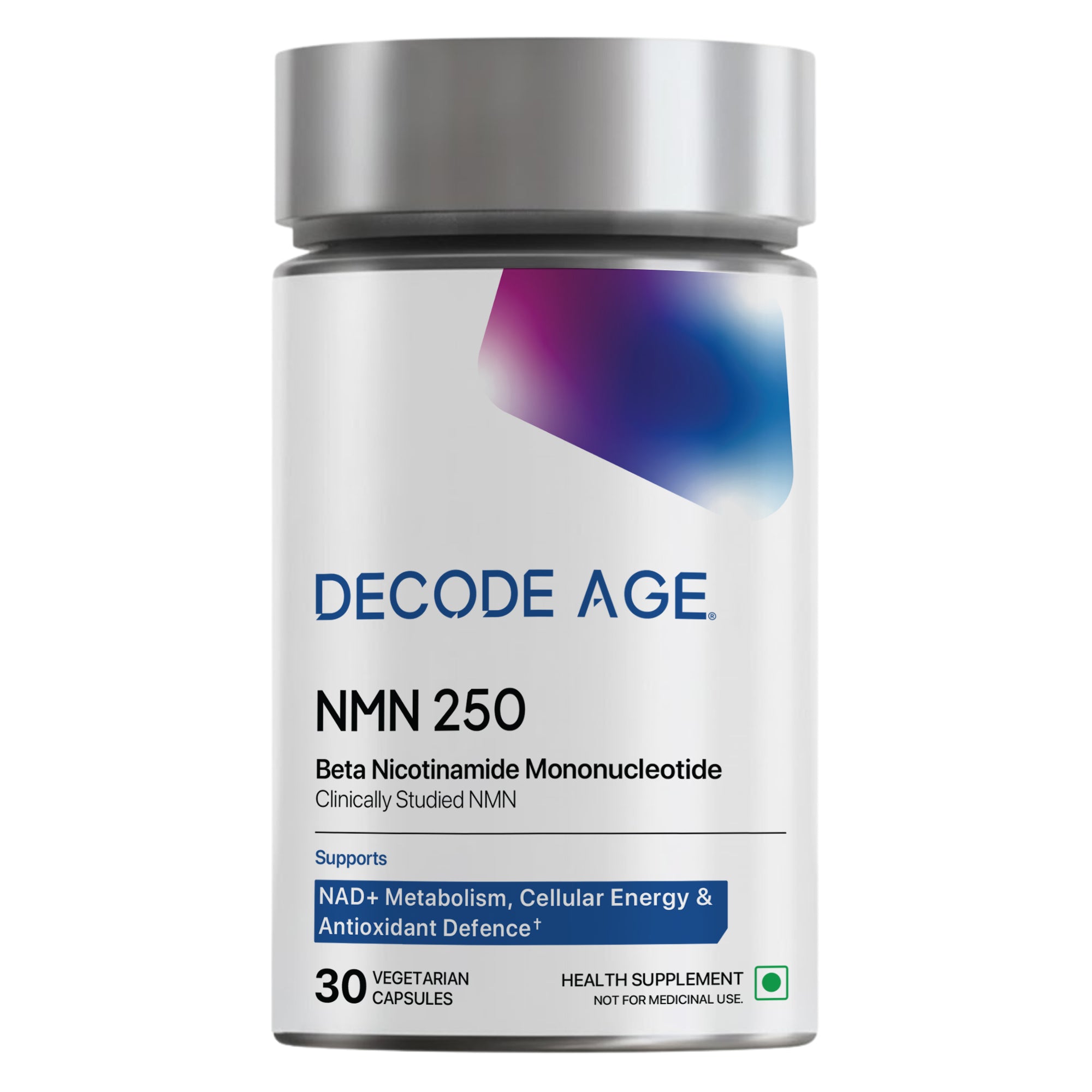
Decode Age NMN uses Uthever® β-NMN as its active ingredient. That gives the formula a branded β-NMN with defined purity, stability, and human study data linked to the ingredient.
Those same checks should be part of any NMN buying checklist.
How to Choose a High-Quality Beta-NMN Supplement
Now that you know β-NMN is the biologically relevant form, product quality is where the buying decision actually happens. A label can look right and still tell you very little. That’s the catch. The checks below help you move from theory to a practical way to judge what you’re buying.
What to Check Before You Buy: A Practical Checklist
Use the table below to separate label wording from product quality.
| Buying Criterion | Why It Matters |
|---|---|
| Ingredient identity | The label should clearly say "Beta-NMN" or "β-NMN." That tells you the product refers to the biologically active form used in human research. |
| Branded ingredient | A branded β-NMN ingredient may help connect the raw material to a named source and a defined quality standard. |
| Purity information | Look for stated purity levels or batch-testing details. |
| Clinical evidence | Check whether the evidence matches the exact ingredient and dose used in the product. |
| Manufacturing standards | GMP-certified manufacturing helps support consistent quality control. Look for clear details on manufacturing and testing. |
If the label is vague, treat the product as unverified.
How to Read Labels and Evidence Claims Carefully
Start with the active ingredient. If the front label says only "NMN," don’t stop there. Check the ingredient panel or product details to see whether it is identified as β-NMN elsewhere. That small detail matters because it lets you compare products on the same scientific basis, not just on marketing language.
Evidence claims need the same careful read. A study on NMN means little if it does not match the ingredient form and dose on the label. The simplest way to check is this:
- Identify the ingredient
- Verify the source
- Match the evidence to the label
Think of it like buying medicine from a strip with half the name rubbed off. You wouldn’t guess. Supplements deserve the same level of care.
Conclusion: What Beta-NMN Really Means for Supplement Buyers
β-NMN is the naturally occurring, biologically active form of NMN. That’s the form used across most published research and human trials, so the word beta is scientific terminology, not a different ingredient. In plain terms, this is mostly about naming, not a change in chemistry.
Key Takeaways for Making an Informed Decision
If you're buying an NMN supplement, clear labelling matters more than the word beta on its own. What matters most is whether the product clearly states what it contains, how it was tested, and whether it lines up with the ingredient used in human studies.
Key points:
- Most NMN research uses the beta form.
- Label clarity matters more than marketing language.
Put simply, the beta label is less important than whether the supplement clearly matches the studied ingredient and meets the expected quality standard.
FAQs
What is Beta-NMN?
Beta-NMN is the naturally occurring, biologically active form of nicotinamide mononucleotide (NMN) present in living cells. The term “beta” describes its natural molecular structure. It does not mean the ingredient is newer or somehow upgraded.
In day-to-day use, most products labelled simply as NMN are usually referring to beta-NMN. It’s also the form most often used in scientific research.
Is Beta-NMN different from NMN?
Not really. Beta-NMN (β-NMN) is the form that occurs in nature and the one human cells use.
Most of the time, when a supplement label says NMN, it usually means β-NMN. The term “Beta” points to the molecule’s natural structure. It doesn’t mean the product is a separate type or some upgraded version.
What does the "Beta" mean?
In Beta-NMN, “Beta” points to the molecule’s natural biological form. It doesn’t mean a newer, stronger, or upgraded type of NMN.
Put simply, β-NMN is the form that occurs in living cells. In most cases, when scientific studies mention NMN, they’re referring to this form.
Is Beta-NMN naturally occurring?
Yes. Beta-NMN (β-NMN) is the form of NMN that occurs in living organisms and is used by human cells.
In scientific terms, “beta” refers to NMN’s natural biological structure. It does not mean it is a special upgrade or a chemically altered version.
Is Beta-NMN the form used in research?
Yes. Beta-NMN (β-NMN) is the naturally occurring, biologically active form of NMN. It’s also the form used most often in scientific research, including human clinical studies.
In many cases, products are labelled simply as “NMN”, but that usually means β-NMN unless the label says otherwise.
What is Uthever® β-NMN?
Uthever® β-NMN is one example of a clinically studied β-NMN ingredient mentioned in the article.
It appears after the science section for a simple reason: once readers know what NMN does, the next step is judging the ingredient itself. That’s where details like sourcing, purity, quality checks, stability, human clinical research, and manufacturing standards start to matter.
In plain terms, not all NMN supplements are assessed in the same way. An ingredient backed by human studies and tight production standards gives readers one more layer of context when comparing options.
Does Beta-NMN increase NAD+?
Current research suggests beta-NMN may help increase NAD+ because it is the naturally occurring, biologically active form of NMN that cells use.
Most published research, including human clinical trials, has focused on β-NMN. That said, results can differ from study to study, and the evidence is still developing.
How do I choose a high-quality NMN supplement?
Choose an NMN supplement based on science, not glossy promises. The first things to check are ingredient quality, purity, third-party testing, clear labelling, and how the product is made.
It also helps to see whether the ingredient is backed by human clinical research and whether the product clearly explains its source and stability.




Leave a comment
All comments are moderated before being published.
This site is protected by hCaptcha and the hCaptcha Privacy Policy and Terms of Service apply.