



Morning or night, with breakfast or after dinner: collagen timing gets more attention than it deserves. The more meaningful question is whether your routine can handle it effortlessly. So, rather than building your routine around a strict clock, make collagen part of a moment you already own: your morning coffee, post-workout shake, or evening wind-down. Consistency is the real ritual.
The research around skin indicates some possible benefits for moisture and elasticity, but findings vary across products, dosages, study groups, and outcomes. A 2023 meta-analysis found a potential benefit for hydration and elasticity, while also identifying biases across the evidence base.
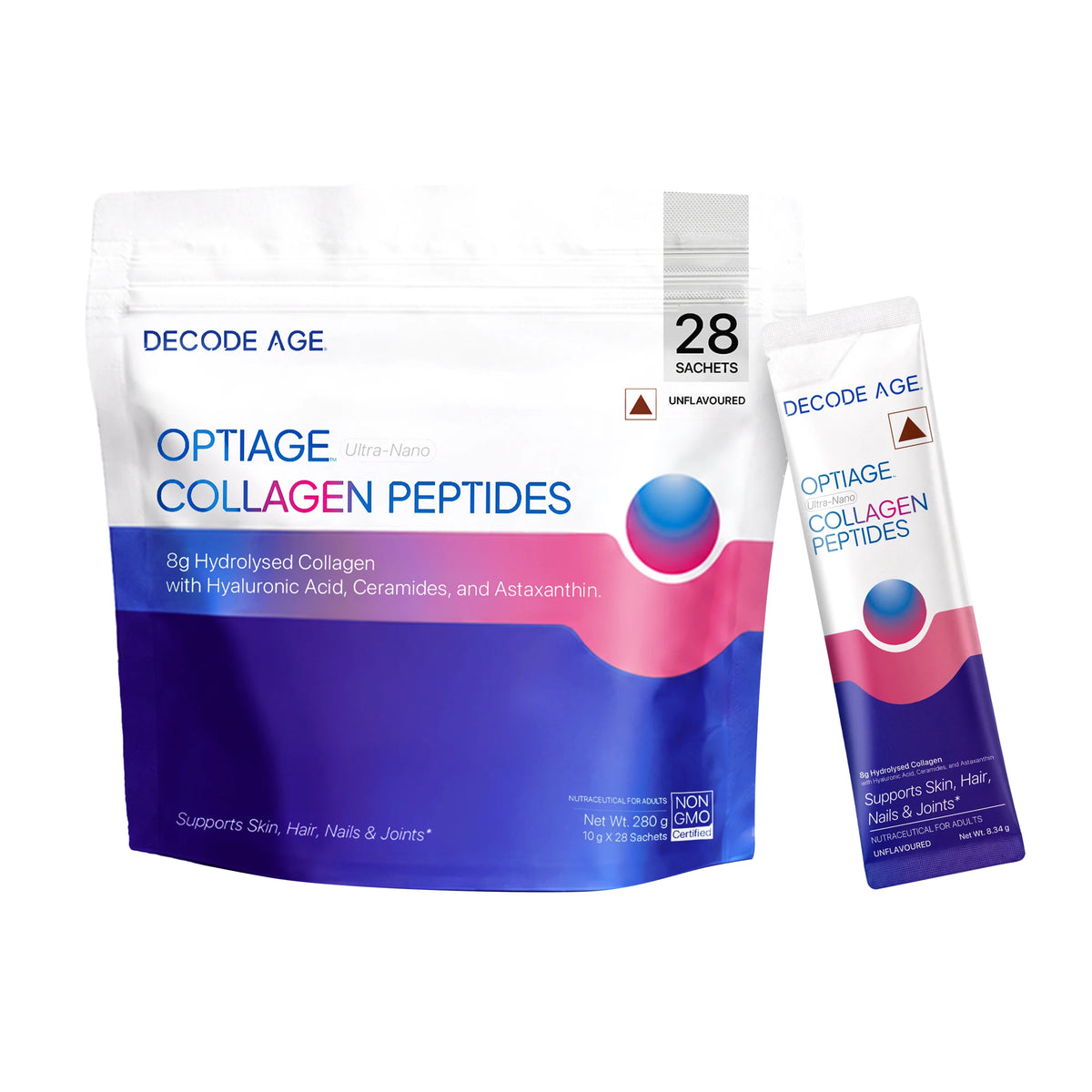
Shop Now: OptiAge™ Marine Collagen Peptides
Does Collagen Work When Taken With Food?
Collagen is a protein that is digested into peptides and amino acids after consumption. However, no strong evidence suggests that taking collagen with breakfast makes it ineffective or that it must be taken on an empty stomach.
If a morning meal suits you, use it. The best time to take collagen is usually the time that fits your routine without making breakfast harder.
Easy Ways to Add Collagen to Breakfast
| Breakfast routine | Simple way to use collagen |
|---|---|
| Smoothie | Blend it with fruit, yoghurt, or milk. |
| Oats or daliya | Mix it into a cooked bowl once it is ready to eat. |
| Curd or yoghurt | Stir it into a thicker breakfast bowl with fruit and seeds. |
| Overnight oats | Mix thoroughly when preparing the oats, then refrigerate as usual. |
If your powder clumps, try mixing it first with a small amount of liquid before adding the rest, or use a frother.
If you already have a collagen routine, our guide to how to use collagen powder covers common food and drink options in more detail.
Does Coffee Reduce Collagen's Benefits?
If coffee fits into your breakfast plans and your product can be consumed with hot beverages, it can be a convenient choice. The more useful question is whether coffee suits you. If it causes acidity, worsens reflux or replaces a breakfast that would normally keep you satisfied, consider moving collagen to a smoothie, oatmeal, or yoghurt.
What Can You Realistically Expect?
Collagen is not an instant “glow” supplement, and it is not a substitute for a balanced diet, adequate total protein, sleep, sun protection or resistance training.
The research is more encouraging for some skin hydration and elasticity measures than for dramatic changes in hair, nails, energy or ageing. A recent review also highlighted that the trials are varied and often small, which means results should be interpreted carefully. Read the review here.
For joint concerns, evidence from osteoarthritis studies suggests collagen derivatives may help some people with symptoms, but they are not a replacement for medical assessment, rehabilitation or prescribed treatment. An updated meta-analysis found no higher rate of adverse events than control, but the right choice still depends on your health context.
A Simple Morning Collagen Routine
- Pick one breakfast habit you already repeat most days.
- Use the serving size printed on the label.
- Pair collagen with a balanced breakfast, not as a replacement for one.
- Give the routine time before judging it. Avoid changing five other things at once.
- Stop and seek advice if you experience an allergic reaction or persistent digestive discomfort.
Collagen is not a complete protein. It is relatively low in essential amino acids such as leucine, so it should not become the main protein source in your breakfast. Keep the rest of the meal nourishing too, whether that means eggs, dairy, soy, dals, nuts, seeds or another protein-rich food.
For a broader view of where collagen may fit, see collagen benefits for skin, joints and ageing and the Decode Age collagen resource hub.
What Should You Do Before Starting Collagen?
Consult a qualified health professional or pharmacist before using a new supplement if you are pregnant or breastfeeding, have a fish, shellfish or bovine allergy, have serious kidney or liver disease, or are managing another medical condition. It is also important to check the product source and complete ingredient list, especially if the product contains ingredients beyond collagen peptides.
Remember that collagen provides protein and calories. If you add it to black coffee during a calorie-free fast, you are no longer consuming a calorie-free drink.
Key Takeaway
Taking collagen with breakfast is a practical option for many people. There is no strong evidence that you must take it at a particular time of day. Choose a format that suits your routine, use it consistently, and keep your expectations realistic and evidence-led.
FAQs
Can I Take Collagen With Coffee?
Usually, yes, provided the product label says it is suitable for hot drinks.
Can I Take Collagen With Oats or Curd?
Yes. Both can be practical breakfast options if the powder mixes well.
Should I Take Collagen Before or After Breakfast?
There is no strong evidence that either is universally better. Choose the option you can maintain.
Does Collagen Break a Fast?
Yes. Collagen contains protein and calories, so it is not compatible with a calorie-free fast.
How Long Should I Try Collagen Before Deciding if It Suits Me?
Trials often run for around 8 to 12 weeks, but the right decision also depends on your goal, tolerance, and the specific product.


Leave a comment
All comments are moderated before being published.
This site is protected by hCaptcha and the hCaptcha Privacy Policy and Terms of Service apply.