



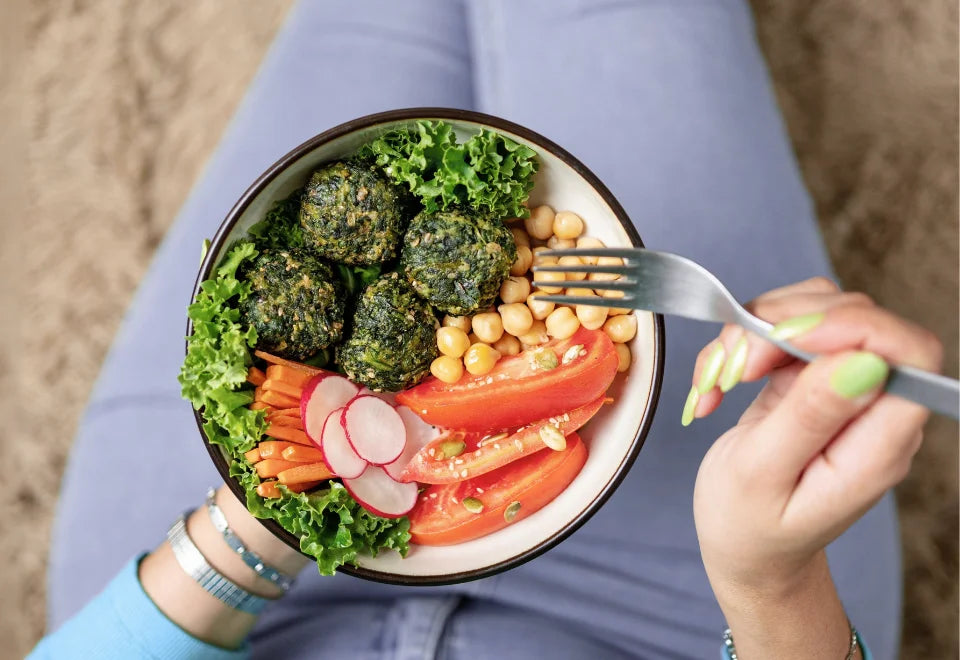
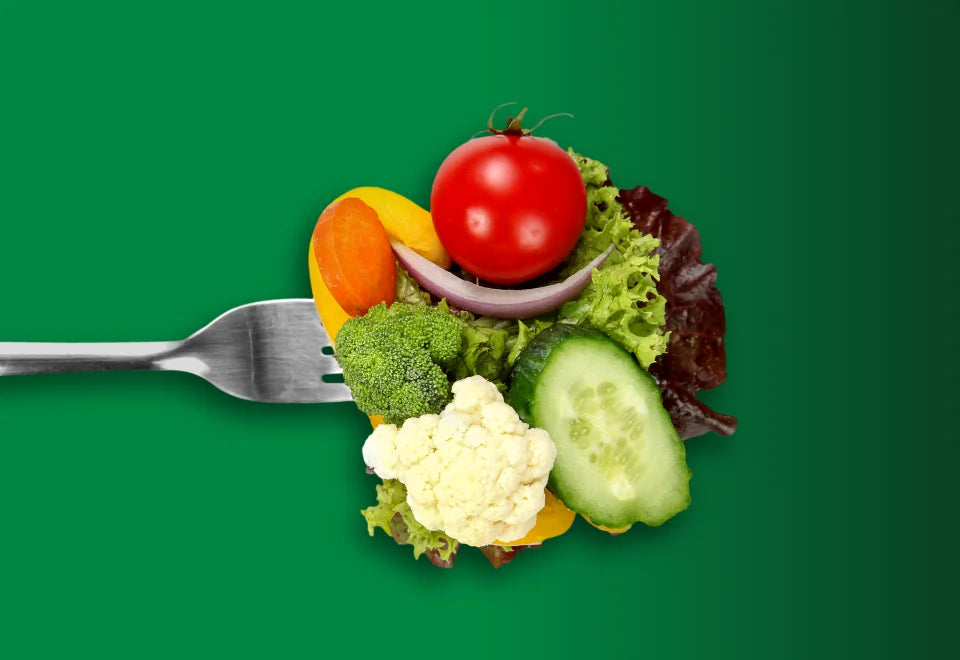
If you're after NMN foods that naturally support NAD+, the short answer is: broccoli, edamame, avocado, cabbage and tomatoes are the most studied NMN food sources, each contributing a fraction of a milligram of NMN per 100g. None of them, alone or combined, comes close to matching a single standard NMN supplement dose, but they still play a genuine, cumulative role in supporting healthy NAD+ metabolism as part of a varied diet.
This guide ranks every well-documented NMN natural source by content, explains why the numbers vary so much from one NMN-rich food to the next, and lays out, honestly and with the evidence, whether food alone can meaningfully move the needle on your NAD+ levels.
Which Foods Contain NMN? Ranked by Content
Edamame, avocado and broccoli are the most reliable NMN rich foods identified in food-composition research to date, based on the foundational analysis by Mills et al. (2016) and confirmed by more recent plant-food screening (Soares Alegre & Pastore, 2025). The table below ranks the most-studied sources from highest to lowest measured NMN content.
| Food | Estimated NMN Content (mg/100g) | Why It's Beneficial |
|---|---|---|
| Edamame | 0.37–1.68 | Plant-based protein, isoflavones, niacin (another NAD+ precursor), folate |
| Avocado | 0.36–1.60 | Monounsaturated fats, potassium, vitamins C, E, K and B6 |
| Broccoli | 0.25–1.12 | Sulforaphane, vitamin C and K support detoxification pathways |
| Cabbage | 0.00–0.90 | Anti-inflammatory compounds, fibre, and vitamin K |
| Cucumber | 0.25–0.88 | High water content, mild antioxidant profile |
| Tomato | 0.26–0.30 | Lycopene, vitamin C, potassium |
| Mushrooms (shiitake, enoki) | ~0.001 | Beta-glucans, ergothioneine, gut and immune support |
A newer 2025 analysis in the journal CyTA – Journal of Food extended this picture, identifying broccoli and green beans as particularly rich NMN natural sources among plant foods, while wild chicory, banana and orange were found to be richer in nicotinamide riboside (NR), a related NAD+ precursor (Soares Alegre & Pastore, 2025). This is a useful reminder that NMN is only one of several dietary routes to NAD+: NR-rich foods matter too.
Why NMN Content Varies So Much Between Foods
The wide ranges in the table above aren't measurement error; they reflect real biological variation. Ripeness, freshness, growing conditions, storage time and even the specific analytical method used all shift how much NMN is measured in the same food from one study to the next (Mills et al., 2016). Cooking and processing can also degrade NMN further, since it's a heat- and light-sensitive compound, which is one reason raw or lightly cooked preparation is generally recommended for NMN in food to be preserved as much as possible.
This variability is exactly why relying on a specific "mg per portion" target from food is unrealistic. The same serving of broccoli grown in different conditions, or eaten a week apart, can differ several-fold in its actual NMN content.
What Are NMN and NAD+, in Plain English?
NMN (nicotinamide mononucleotide) is a small molecule your body uses as a building block for NAD+ (nicotinamide adenine dinucleotide), a coenzyme that every cell needs to produce energy, repair DNA, and keep hundreds of metabolic reactions running. NAD+ levels decline with age, and that decline is a large part of why interest in NMN, through food and through supplements, has grown so quickly (Bieganowski & Brenner, 2004).
Think of NAD+ as the electricity running through your cells, and NMN as one of the raw materials your body converts into that electricity. You can't eat NAD+ directly in useful form, but you can eat foods that naturally contain small amounts of its precursor, NMN.
Is Dietary NMN Enough to Raise Your NAD+ Levels?
No single meal of NMN-rich foods will meaningfully shift your NAD+ levels, and recent mechanistic research explains why. A 2025 study published in Science Advances traced the metabolic fate of orally administered NMN and found that only a small portion is directly absorbed intact; most of it is broken down by gut bacteria and reassembled into NAD+ through an entirely different pathway before your body uses it (Yaku et al., 2025). That's true even at supplement-level doses of several hundred milligrams; the amounts found in a typical serving of NMN food sources, often well under 2mg per 100g, are smaller still.
That doesn't make NMN foods pointless. Consistent, varied intake of NMN- and NR-containing vegetables, fruits and legumes supports baseline NAD+ metabolism cumulatively over time, and these foods bring fibre, antioxidants and polyphenols that independently support cellular health and reduce oxidative stress. But if your goal is a measurable, clinically relevant rise in NAD+, diet alone is unlikely to get you there; supplementation is the evidence-backed route for that specific outcome.
NMN Foods vs NMN Supplements: What's the Difference?
The core difference comes down to dose and absorption efficiency. A randomised, placebo-controlled clinical trial of 300mg per day of Uthever® NMN, the form used in Decode Age NMN, found NAD+/NADH levels increased by 38% from baseline over 60 days, against 14.3% in the placebo group, in middle-aged and older adults (Okabe et al., 2022). Matching that intake through NMN food sources alone would require unrealistic quantities of vegetables and legumes eaten daily.
| Aspect | NMN Food Sources | NMN Supplements |
|---|---|---|
| Typical NMN per serving | Well under 2mg/100g | 250–300mg per dose |
| Absorption | Variable, largely microbiota-mediated | Standardised, clinically studied dosing |
| Other benefits | Fibre, antioxidants, polyphenols | Purified, targeted NMN only |
| Evidence for measurable NAD+ rise | Limited, indirect | Randomised controlled trial data |
| Convenience | Requires consistent dietary planning | Simple daily dose |
Neither approach is "wrong"; they serve different purposes. Food-based NMN natural sources contribute to a nutrient-dense diet with broad health benefits; supplements are the route with actual clinical trial evidence behind a specific NAD+ outcome.
Lifestyle Habits That Support Healthy NAD+ Levels
Diet is only one lever. Regular moderate exercise, adequate sleep, and avoiding excess alcohol have all been linked to healthier NAD+ metabolism independent of NMN or NR intake, largely by reducing the metabolic stress that depletes NAD+ in the first place (Rahman, Qadeer & Wu, 2024). Time-restricted eating and periods of caloric moderation have also shown NAD+-supportive effects in early research, though this is an area still being actively studied rather than settled science.
Common Myths About NMN Foods
"Eating enough vegetables can replace an NMN supplement." Not according to current evidence: the doses involved differ by several orders of magnitude, as shown above.
"Cooking destroys all the NMN in food." Cooking reduces it, but doesn't eliminate it; raw or lightly cooked preparation simply preserves more.
"More NMN in a food means a bigger, faster NAD+ boost." NMN is only useful once converted to NAD+, and that conversion is metabolically bottlenecked, so a higher starting number in a food doesn't translate to a proportionally larger effect (Yaku et al., 2025).
Conclusion
Broccoli, edamame, avocado, cabbage and tomatoes remain the best-documented NMN foods, and including them regularly is a sensible, evidence-aligned habit, though not because they'll dramatically shift your NAD+ levels on their own. The honest picture, based on current research, is that dietary NMN contributes cumulatively alongside a broader healthy-ageing approach, while measurable NAD+ increases are currently best supported by clinical-trial-backed supplementation such as Decode Age NMN. Whichever route you lean towards, the underlying goal, supporting healthy NAD+ metabolism as you age, is well worth pursuing with realistic expectations of what food alone can do.
FAQs
How to get NMN naturally?
The most reliable way is regular intake of NMN-containing vegetables and legumes, particularly edamame, avocado, broccoli, cabbage and tomatoes, alongside lifestyle habits like regular exercise and good sleep that support overall NAD+ metabolism. Diet alone provides only modest amounts, so this works best as a complement to, rather than a replacement for, other NAD+-supportive strategies.
What are the best natural sources of NMN?
Edamame, avocado and broccoli currently have the strongest evidence as NMN-rich foods, based on food-composition analyses. Cabbage, cucumber and tomatoes also contain measurable amounts.
Can you get enough NMN from food alone to raise NAD+?
Not meaningfully, based on current evidence. Clinical trials showing a measurable NAD+ increase have used doses of 250–300mg of NMN daily, far more than is realistically obtainable from food, where typical content is under 2mg per 100g.
Does cooking destroy the NMN in food?
Cooking reduces NMN content somewhat, since it's heat-sensitive, but doesn't eliminate it. Raw or lightly cooked preparation preserves more of the naturally occurring NMN in food.
Are NMN supplements safer or more effective than food sources?
Supplements aren't inherently "safer," but they do offer standardised, clinically studied dosing that food sources can't match. Food sources bring other nutritional benefits, including fibre, antioxidants and polyphenols, that purified supplements don't provide.
What foods have the highest NMN content?
Based on current research, edamame and avocado have shown the highest measured NMN content among commonly eaten foods, followed by broccoli and cabbage.
Is it possible to have too much NMN from food?
There's no evidence of this being a practical concern. The quantities of NMN in whole foods are far below any level associated with adverse effects.
How does NMN in food compare to NMN supplements for raising NAD+?
Food-based NMN contributes modestly and cumulatively to NAD+ metabolism over time, while supplements deliver a standardised dose shown in clinical trials to produce a measurable NAD+ increase. They're complementary rather than interchangeable.



1 comment
DR MANOJ KUMAR PATEL
Excellent Scientific research evidence mention here.it’s very helpful to me for Anti-aging & As a cell regeneration.
Leave a comment
All comments are moderated before being published.
This site is protected by hCaptcha and the hCaptcha Privacy Policy and Terms of Service apply.